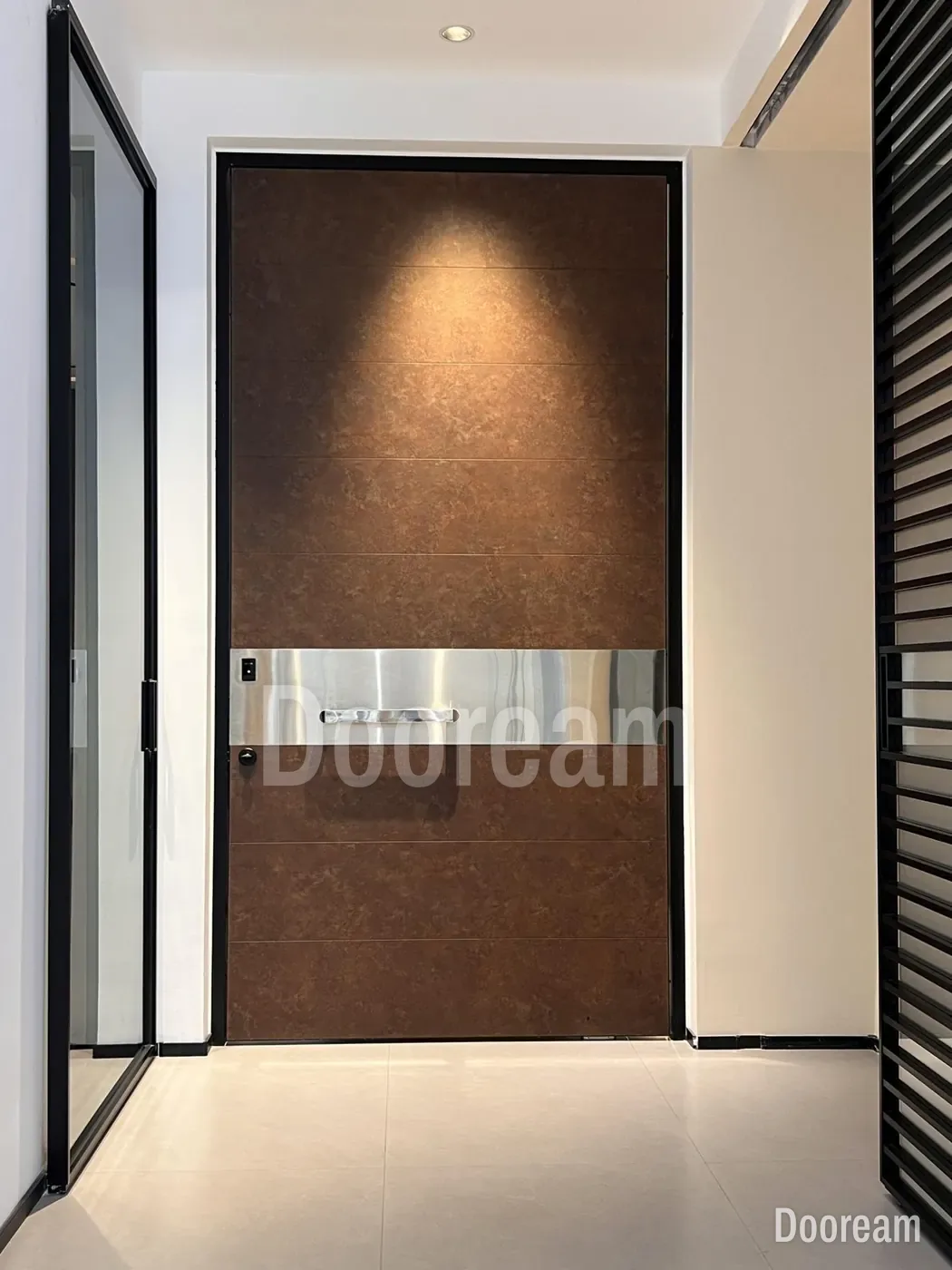
Short answer: run it as a project business, not a stock business. You own the client: survey, brief, quote, drawing approval, payments, import, delivery, local installation and aftercare. The factory designs, makes, checks and crates each door to the approved drawing. Start with one display door, one trained installer, a forwarder who knows your route, and client payments that match the factory’s.
Who buys these doors, and what do they expect?
Three groups buy custom cast and carved aluminium armoured doors and large pivot doors: villa owners, their architects, and developers. All three expect a door made to the drawing of one opening, a design they approve before anything is made, and a long run from first meeting to installed door.
- Villa owners decide slowly, often with family, and want to touch the finish and try the lock. Expect design rounds.
- Architects specify rather than buy, and need drawings, details and test evidence; see our submittal checklist and pivot door CAD details.
- Developers want several doors to one specification, on the programme’s dates.
A door made for one opening rarely fits another, so a cancelled order is hard to resell; the client’s signed drawing is your protection.
What does a dealer actually do in the chain?
The dealer runs every step the client sees, from the site visit to aftercare, and gives the factory a clear brief and an approved drawing. The factory turns that drawing into a finished, checked and crated door. Put every handover between the two in writing.
- Survey and measure the opening and floor levels (how to measure).
- Write the brief: type, face, finish, lock, opening direction.
- Quote a price that includes freight, duty, tax, delivery and installation.
- Get the drawing approved by the client and any architect.
- Pay the deposit, after checking the factory on your first order.
- Check the finished door before the balance (pre-shipment inspection).
- Import and deliver it (crating and shipping).
- Install it with local installers, then look after it: adjustments, locks, warranty claims.
Our ordering guide covers the factory side.
Which jobs are the dealer’s and which are the factory’s?
The dealer owns the client and everything that happens in the dealer’s country. The factory owns the door, from approved drawing to closed crate. Where a job touches both, such as the drawing or the final check, agree in writing who signs it off.
| Task | Dealer | Factory (as we work) |
|---|---|---|
| Sales | Showroom, catalogue, site visits | Trade buyers only; no direct sales to homeowners |
| Design | Collects the brief, presents options | First design direction free, usually within one working day |
| Price | Sets the client price, landed and installed | Quotes EXW Wuyi, from opening size and design |
| Drawing | Gets client and architect approval | Draws the door; makes nothing before approval |
| Payment | 50% deposit, 50% before shipment | Starts production on approval and deposit |
| Production | Approves photos and video, or inspects | 35–45 days; checks every stage |
| Freight and customs | Forwarder and broker | Under EXW, the commercial invoice and help with clearance papers; SABER product documents |
| Installation | Local installers | Installation drawings, remote guidance; no site crews |
| Aftercare | First contact for the client | Two-year warranty from shipment |
Do you need a showroom door?
Yes, if you sell to villa owners. They buy what they can touch and open, and a photo does not show a carved face’s depth or how a large pivot door swings. With us, the display door is bought at the normal price; after that, 5% of every order is credited to you until it is paid back.
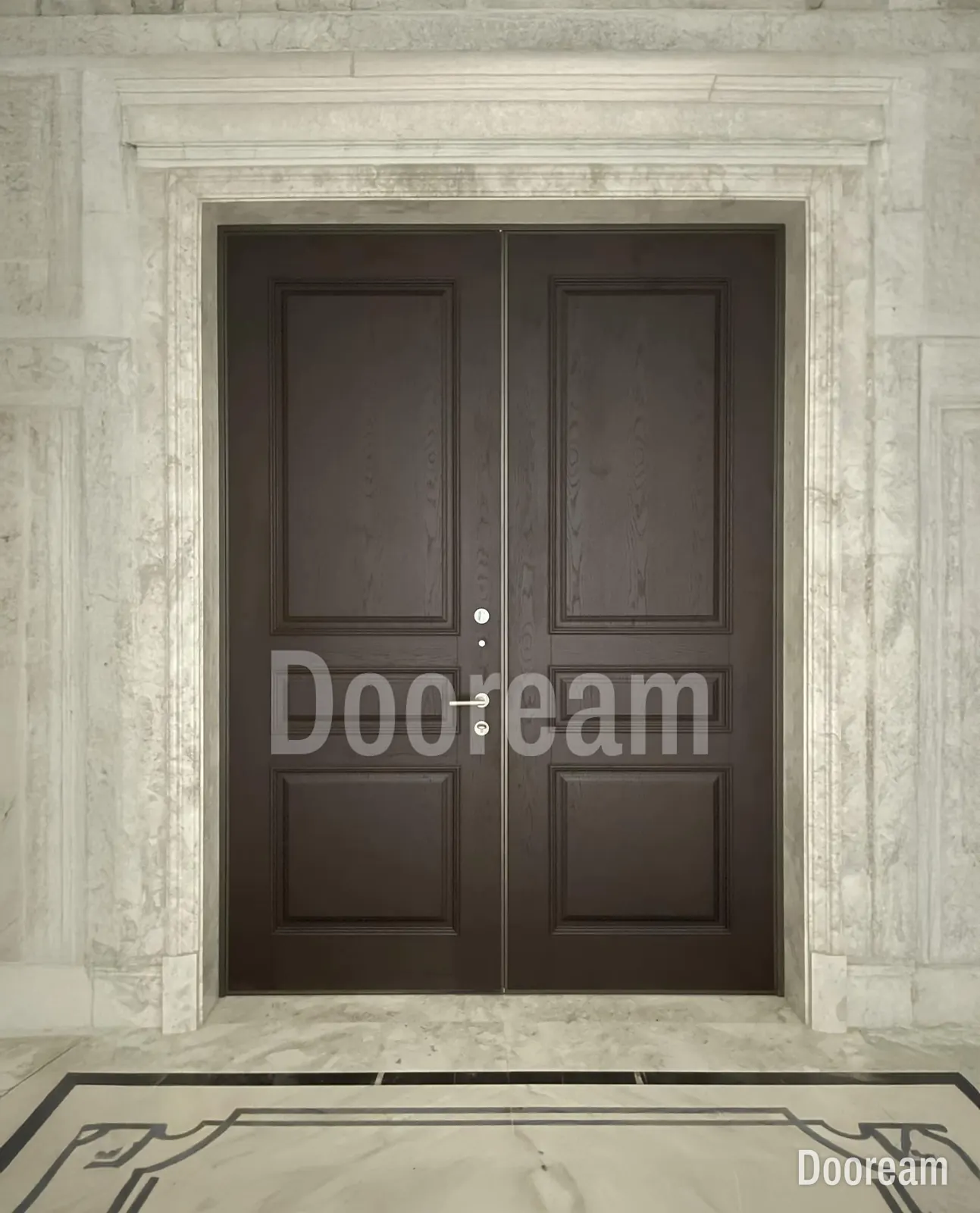
- Display door. Choose the type your market buys most, a pivot door or a double door, with a working smart lock. A pivot door needs a floor fixing exactly below the top pivot (floor preparation).
- Samples. A 20 × 20 cm carved and painted aluminium sample shows relief and finish; a scale sample door shows the real construction.
- Catalogue. Use only designs and photos you have written permission for; ask owners before publishing a private home.
- Video. Film the display door for clients who cannot visit; for a large project, ask the factory for a live video tour.
City protection can be discussed at 200 doors a year.
Can you sell the doors under your own brand?
Yes. OEM labelling is available, so you can sell the doors under your brand rather than ours. Brand marks, design and photo ownership, consistent repeat orders and exclusivity are covered in our guide to OEM and private-label entrance doors. Settle them before your first catalogue.
How should you plan cash flow and the timeline?
You pay the factory in full before the door leaves China; your client may pay the last part only at handover. Plan that gap. With us, you pay 50% at drawing approval and 50% before shipment. Production takes 35–45 days; shipping, customs and delivery follow and vary by route.
| Stage | Time | What you pay out |
|---|---|---|
| First design direction | Usually within one working day | Nothing (free) |
| Design rounds, drawing approval | Depends on the client | Nothing |
| Production | 35–45 days | 50% deposit |
| Check before shipment | Photos and video, or a visit | 50% balance |
| Sea freight | Varies by route; ask your forwarder | Freight, insurance |
| Customs | Varies by country and paperwork | Duty, import tax, broker |
| Delivery, installation | Local | Delivery, lifting, installers |
- Match client payments to your outgoings: a deposit at sign-off covering the factory deposit, a second payment before the balance, the rest at handover.
- Currency: we quote in US dollars, so your exchange-rate risk runs from quote to balance.
- Warranty gap: our two years run from shipment; if yours runs from handover, the weeks in between are yours.
- Landed cost: see EXW price vs landed cost; for the Gulf, check the route on every order (Saudi Arabia and UAE guide).
How do you build an installer network?
Your installers fit every door. We do not send crews; we supply installation drawings for every order and remote guidance during installation. So the installer must be used to heavy doors, ready before the crate arrives, and reachable by video call.
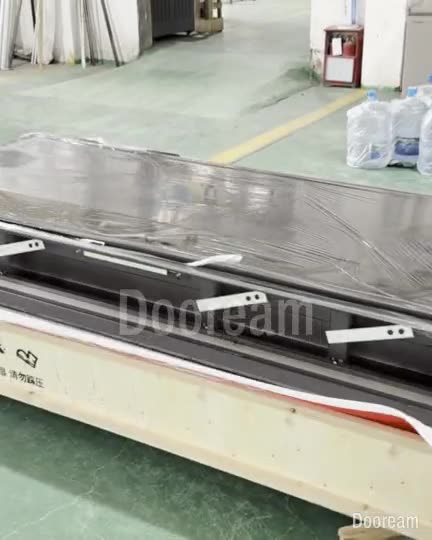
Each installer needs:
- the approved and installation drawings before the door ships;
- crate size and gross weight, to plan unloading and lifting;
- the finished floor level agreed, and on a pivot door the floor and head fixings ready;
- the hardware documents: FritsJurgens pivot hinge on our pivot doors, KFV, G-U or Wintech smart lock; see locks and pivots;
- a phone for a video call with the factory, and a handover sheet.
Start with one lead installer per city, trained on your display door. Give them our guides on installing a pivot door and pivot door problems.
What import paperwork do you need?
Most imports use four documents: a commercial invoice, a packing list, a bill of lading and a certificate of origin. Under EXW, the seller provides the commercial invoice and, at your request, risk and cost, helps you obtain the documents needed for clearance.
| Document | What it does |
|---|---|
| Commercial invoice | The goods and price; customs uses it to work out duty |
| Packing list | Each crate’s contents; customs may check the cargo against it |
| Bill of lading | Contract with the carrier; an original may be needed to collect the goods |
| Certificate of origin | A signed statement of origin; some countries require it, and free-trade rates rely on it |
By market:
- Saudi Arabia. SASO’s technical regulation for doors and windows lists aluminium doors. The importer needs a certificate of conformity from a SASO-accepted body, then a SABER shipment certificate for each shipment. We supply the product documents for SABER registration.
- Australia. See pivot doors for Australia and our AS 2047 guide.
- United States. For cargo arriving by ship, an Importer Security Filing is due no later than 24 hours before loading at the foreign port.
- European Union. Importers need an EORI number to lodge customs declarations.
- Ratings. Check what your jurisdiction requires and ask for test evidence. We hold no EN 1627 rating, no Australian Standards, US, Canadian or hurricane certification, and make no fire-rated doors; lab testing can be arranged, usually at the buyer’s cost.
What should you do in the first 90 days?
If the display door’s drawing is approved and the deposit paid by about day 15, production ends between about day 50 and day 60. Whether it reaches your floor by day 90 depends on the route, so plan everything else around that door.
Days 1–30
- Check the factory; order finish samples or a scale sample door.
- Choose the display door, prepare the bay, approve the drawing, pay the deposit.
- Appoint a forwarder and customs broker, register to import (an EORI number in the EU), and work out a typical door’s landed cost.
Days 31–60
- Choose a lead installer; send them the display door’s installation drawings.
- Write client terms: payment stages, drawing sign-off, lead time, warranty.
- Check the finished display door on photos and video; pay the balance.
Days 61–90
- Inspect the crate; install the door with your installer and our remote guidance; film it.
- Show architects and developers your samples; quote first projects.
How does this work with Dooream?
We sell complete doors to trade buyers only, from one door, each made to a drawing. Quotes are EXW Wuyi; payment is 50% deposit, 50% before shipment; production takes 35–45 days. Installation drawings come with every order; the warranty is two years from shipment. See our dealers page.
Sources, checked November 2026: International Trade Administration, Common export documents; ICC Knowledge 2 Go, Incoterms 2020, EXW (A1 and A7); SASO, Technical Regulation for Doors, Windows and their Accessories (Arabic); SABER, training guide for shipment certificates; U.S. Customs and Border Protection, Importer Security Filing FAQ; European Commission, EORI number.
Quick answers
What does a dealer do when selling custom entrance doors made in China?
The dealer owns the client. That means the survey and measurement, the design brief, the quote, getting the drawing approved, paying the factory, importing, delivery, installation by local installers and aftercare. The factory designs, draws, makes, checks and crates the door, and supplies installation drawings and remote guidance.
How long does it take from order to an installed door?
With us, the first design direction is free and usually comes within about one working day, but drawing approval depends on your client. Production takes 35–45 days after drawing approval and the 50% deposit, and the other 50% is paid before shipment. Then add shipping, customs, delivery and installation, which vary by route and country.
How does a showroom display door work with Dooream?
You buy the display door at the normal price. After that, 5% of every order is credited to you until the display door is paid back. City protection can be discussed at 200 doors a year.