Short answer: OEM means the factory builds your design to your specification under your brand; ODM means you sell the factory’s own designs, adapted, under your brand, and the factory usually keeps the design; private or white label means an existing product with your name on it. For doors made to a drawing, put the rest in writing: design and photo ownership, approved samples, specifications and any exclusivity.
What do OEM, ODM and private label mean for entrance doors?
The terms describe who designs the door and whose name is on it. In OEM, the factory builds your design to your specification and puts your trade mark on it. In ODM, you sell the factory’s design, adapted, under your brand. Private and white label mean an existing product sold under your name.
| OEM | ODM | Private or white label | |
|---|---|---|---|
| Who designs | You, or a designer you pay | The factory; you change size, finish, logo and details | The factory |
| Who usually owns the design | You, if the contract assigns it | The factory, unless the contract says otherwise | The factory |
| Liability if a defect causes damage | In the EU: the brand on the door, the importer and the factory | Same as OEM | Same as OEM |
| Typical use | An established brand with its own range | A new brand building a range quickly | Standard products; rare for doors made to a drawing |
The EU’s IP Helpdesk describes OEM as one company commissioning another to make products to its specifications and put a trade mark on them. Global Sources describes ODM as manufacturers designing and making products that clients then brand, usually keeping the design. PLMA defines private label as goods sold under a retailer’s brand; a white label is made by one company and sold by another under its own name. Factories often call both OEM and ODM “OEM”, so ask which they mean.
Using the factory’s design does not move liability to the factory. Under the EU product liability directive, anyone who puts their name or trade mark on a product presents themselves as its producer, the importer counts as one too, and an injured customer can claim against any of them. Contracts decide ownership; local law decides liability. We are not lawyers: take legal advice in your own country.
What can carry your brand on an entrance door?
Almost everything your customer sees or receives: a logo plate or a mark on the door, the crate labels, the manual and installation drawings, the warranty card, and your photos and catalogue. The hardware cannot. A FritsJurgens pivot hinge or a KFV, G-U or Wintech lock stays its maker’s product, with its maker’s name and documents.
| Item | Your brand? | What to agree |
|---|---|---|
| Logo plate on the leaf or frame | Yes | Size, material, finish and position, on the drawing |
| Mark carved or engraved into the face | Yes | Part of the face design; on a cast face, part of the mould |
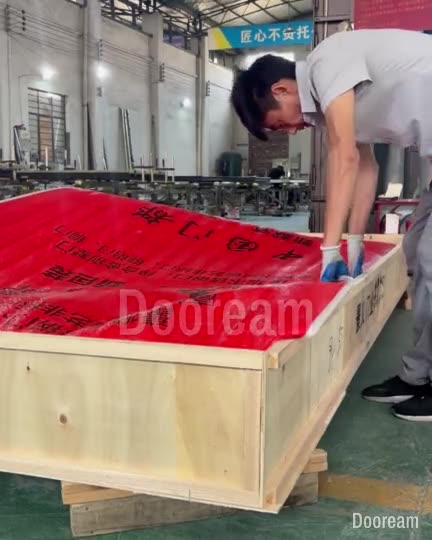
| Crate labels and packing | Yes | Your name, order and door numbers, handling marks |
| Manual, installation drawings, warranty card | Yes | Layout, language, who checks it, and how your warranty matches the factory’s |
| Photos and catalogue | Only photos you own or may use | Written permission for each set |
| Pivot hinge, lock, cylinder | No | They keep their makers’ names and documents; see locks and pivots |
| Country of origin | Must be true | Marked wherever your import rules require it |
Register your trade mark where you sell, and consider China: the EU’s IP Helpdesk advises filing there early, before the OEM agreement, even if every product is exported. In the United States, for example, CBP requires the English name of the country of origin in a conspicuous place, as permanently as the product allows. If a label names another place that could mislead the buyer, such as a city in a brand name, “Made in” and the country must appear close to it, in comparable letters. Elsewhere, ask your customs broker.
Who owns the designs and the photos?
Whoever the contract says. A factory usually keeps the designs it creates, and a design it made for another client may belong to that client or be promised to them, so it is not the factory’s to offer you. If you want to own your range, commission it, pay for it and get the ownership in writing.
- Every design you are shown: ask who drew it, who owns it and who has exclusivity on it.
- Adapted factory designs: Harris Sliwoski, a law firm, notes that a Chinese factory that designed a product will claim the underlying design, and that it is common to agree it will not sell your customised version to any other buyer. Get that in writing.
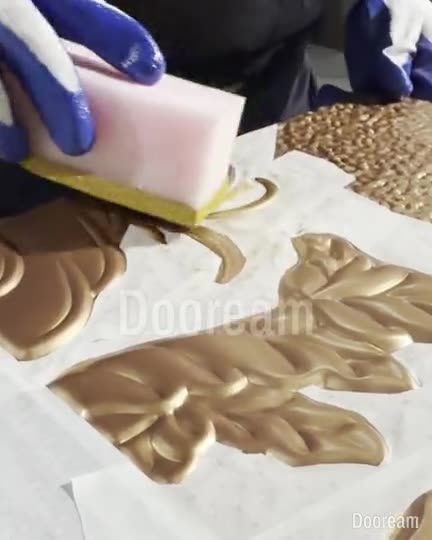
- Your own designs: agree who owns the drawings, the 3D carving files and, for a cast face, the mould.
- Photos: the factory’s showroom and workshop photos are usually the factory’s. Agree which ones you may use and for how long, and whether the factory may show your designs or name your brand. Ask owners before publishing a private home.
How do you keep doors the same over repeat orders?
With a reference you can hold and a specification you can read. The approved sample fixes colour and finish, the written specification fixes everything else, and each order is checked against both before it ships. Without them, small changes in paint, hardware or packing creep in between orders.
- Approved samples. Sign and date matching finish samples, one for the factory and one for you. Inspectors call this the golden sample and compare production against it.
- One specification per model. Face design and file version, finish code, gloss, construction, hinge and lock models, seals, logo plate, packing and documents, with a version number and date.
- One drawing per door. It fixes each door’s size, opening direction and hardware.
- Changes in writing. A new lock or paint is a new version, approved by both sides first.
- Hand finishes. Hand-applied patina and hand-sanded relief vary slightly, so agree what counts as a match before the first order.
- Checks. Check the factory before the first deposit, and inspect each order against drawing, specification and sample before the balance.
How is exclusivity in a city or country usually handled?
Usually in exchange for volume. A factory gives up other dealers in your area only if your orders make up for them, so protection is tied to a number of doors a year, in a defined territory, for a set term. Harris Sliwoski describes the same trade: committed volume for each year of exclusivity.
Put in writing:
- the territory: a city, region or country, defined precisely;
- the products: every door, or named designs;
- the volume: doors a year, and whether ordered, paid or shipped doors count;
- the term, start date and yearly review;
- what happens if the volume is missed, for example the protection ends;
- how enquiries from your territory are handled, including projects specified by architects elsewhere;
- design exclusivity, as a separate clause: the factory does not sell your designs to anyone, anywhere.
Ask a lawyer in your country to check these clauses.
What are the steps from first sample to repeat orders?
Start small, and let each step leave something you keep: approved samples, a showroom door, a first project, then a specification sheet that every repeat order refers to. The first project carries most of the risk, so it comes after the samples and the showroom door.
- First contact. Your market, showroom, customers and intended range.
- Check the factory before paying anything, with our four checks.
- Samples. A finish sample, then a scale sample door with the real construction if you want to see the build.
- Range and rights. Choose adapted and commissioned designs, agree ownership and exclusivity, and work out the landed cost of a typical door.
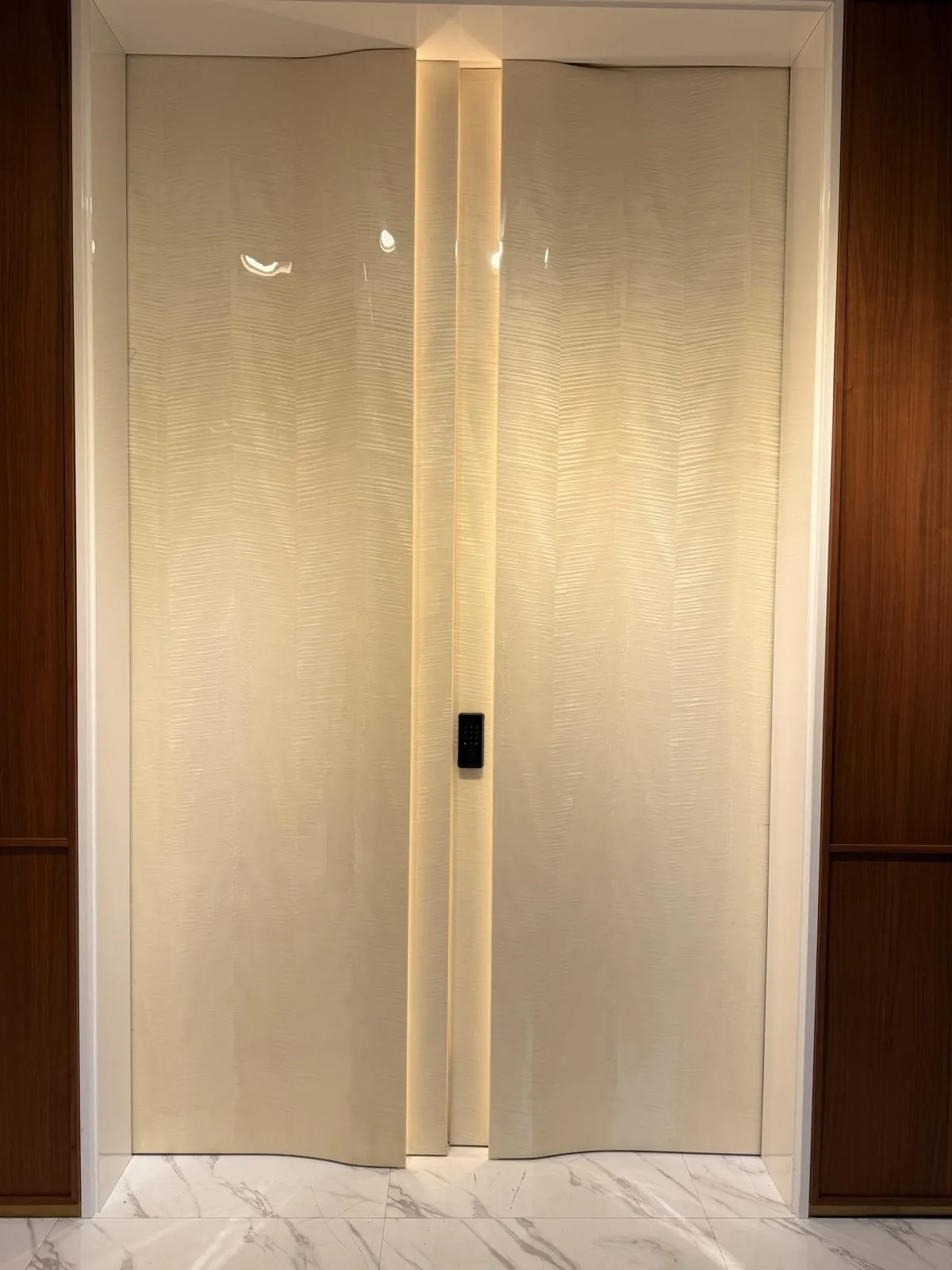
- Showroom door. One full-size door, like the Ivory Wave above: your sales tool and quality reference.
- First project. Drawing, approval, deposit, production, inspection and shipping, as in our step-by-step guide.
- Specification sheet. Every approved detail per model, including your installers’ requests.
- Repeat orders. Each order names the specification version and sample; changes only in writing.
- Yearly review. Volume against exclusivity terms, designs added or retired, specifications updated.
How does this work with Dooream?
OEM labelling is available. We sell to trade buyers only, from one door, each made to a drawing. Samples can be a 20 × 20 cm carved and painted aluminium sample, a scale sample door using the real construction, or a full-size sample door. A showroom sample door is priced as a regular order; once it is on display, each later order is discounted by 5% until its cost is returned. City protection can be discussed from annual sales of 200 doors, on terms agreed by both parties. Production takes 35–45 days after drawing approval and deposit, and the warranty is two years from shipment. See our dealers page or contact us.
Sources, checked November 2026: EU IP Helpdesk, Guide to IPR protection in China for the OEM industry and IP protection when working with OEMs in China; Global Sources, What is original design manufacturing?; Harris Sliwoski, Who owns your product design?; PLMA, Private label today; Oxford Learner's Dictionaries, white label; EUR-Lex, Directive 85/374/EEC on product liability; U.S. Customs and Border Protection, Marking of country of origin on U.S. imports; HKTDC Sourcing, What is a golden sample?
Quick answers
What is the difference between OEM, ODM and private label doors?
OEM means the factory builds your design to your specification and puts your brand on it. ODM means you sell the factory's own designs, adapted, under your brand, and the factory usually keeps the design. Private or white label means an existing product sold under your name. The contract decides who owns what.
Can a door factory let me use designs it made for other clients?
Often not. A design made for another client may belong to that client or be promised to them, so it is not the factory's to offer. Ask who owns every design you are shown, commission your own range if you want to own it, and agree in writing who may use each design and photo.
How do door brands get exclusivity in their city or country?
Usually in return for volume, meaning a set number of doors a year in a defined territory, for a set term, with a yearly review and a rule for what happens if the volume is missed. With us, city protection can be discussed from annual sales of 200 doors, on terms agreed by both parties.