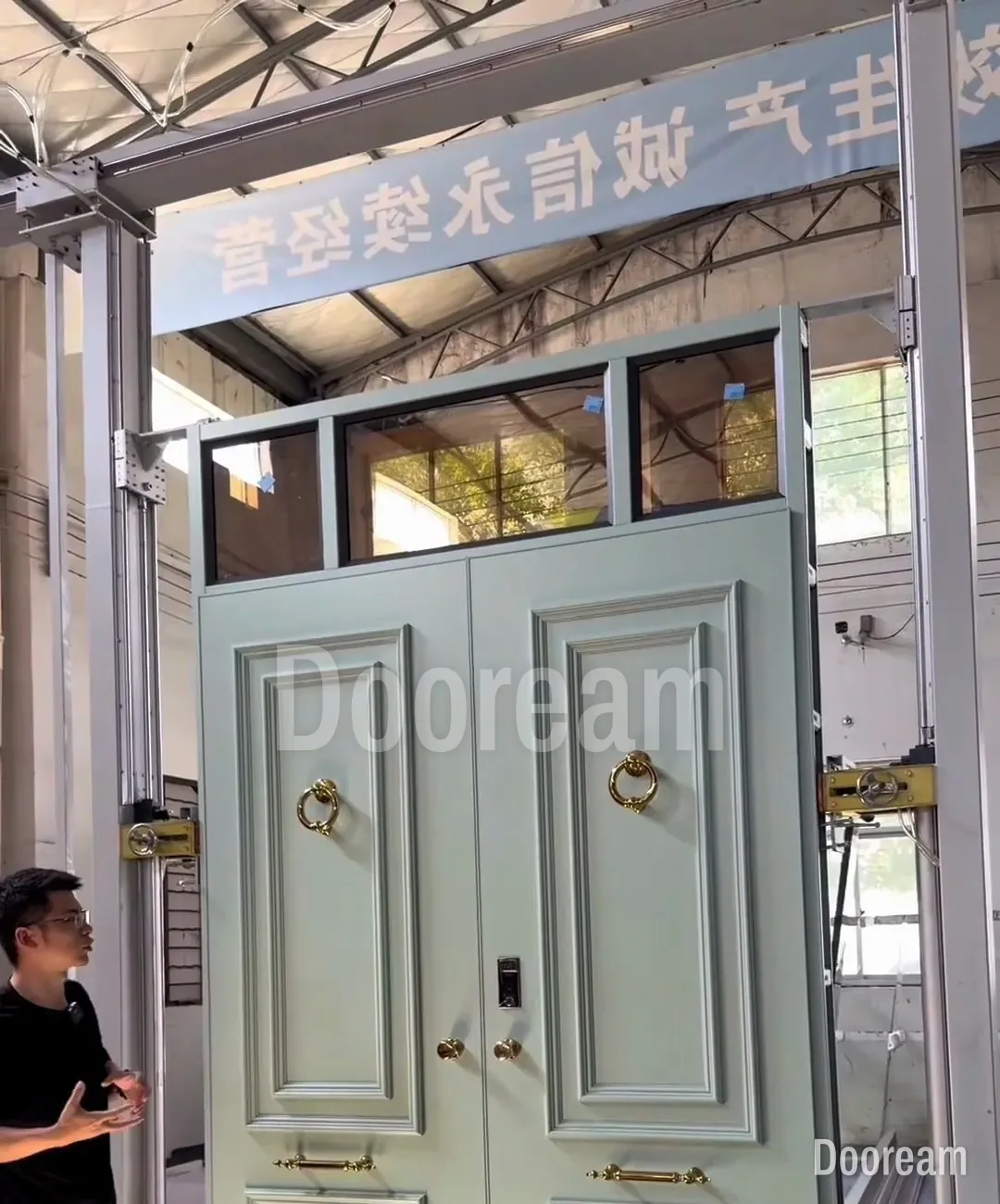
Short answer: check the finished door against the approved drawing before it is crated and before the balance is paid. Measure it, open and close it, try every way the lock opens, look at the finish in daylight, and count the accessories. We send photographs and video of every finished door for your confirmation, and you or your inspector can also check it at our factory.
Why inspect before crating?
Once a door is crated and collected, any fix means unpacking, shipping parts or sending it back. Under EXW terms the risk has also passed to you when the door is collected. The cheapest moment to find a problem is in the workshop, with the door standing up and the people who made it next to it.
Who can do the inspection?
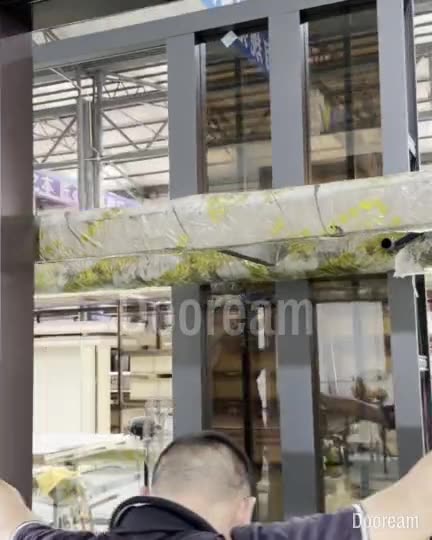
- You, on a video call. Our video tours run Monday to Saturday, 14:00 to 18:00 Beijing time. Ask for daylight, a tape measure in the shot and close-ups.
- Your own agent in China, if you have one.
- A third-party inspector. Companies such as SGS, Bureau Veritas, Intertek and QIMA offer pre-shipment inspections and write a report with photos. For one custom door every unit is checked; the sampling plans used for large batches do not apply.
What should you give the inspector?
- The approved drawing, signed, with every size, the opening direction and the hardware.
- The order confirmation or contract, with the finish, lock and accessories listed.
- A finish reference: the colour name, a sample or a photo you approved.
- Your packing requirements, if you have any beyond the standard crate.
What should the inspector check?
| Check | How |
|---|---|
| Sizes | Measure the leaf, the frame and the overall size, and compare them with the drawing |
| Opening | Opening direction, in or out, and the pivot or hinge side, seen from outside |
| Face and finish | Pattern as approved, even colour in daylight, no scratches, runs or chips, edges finished |
| Movement | The door swings smoothly, closes fully and stays flat along its edges |
| Pivot or hinges | Hold-open positions and closing speed work as agreed |
| Lock | Every opening method works: fingerprint, PIN, card, app and key; count the keys and cards |
| Seals | Fitted all round, and any drop seal lowers when the door closes |
| Accessories | Handles, floor and top plates, screws, spare keys and installation drawings all present |
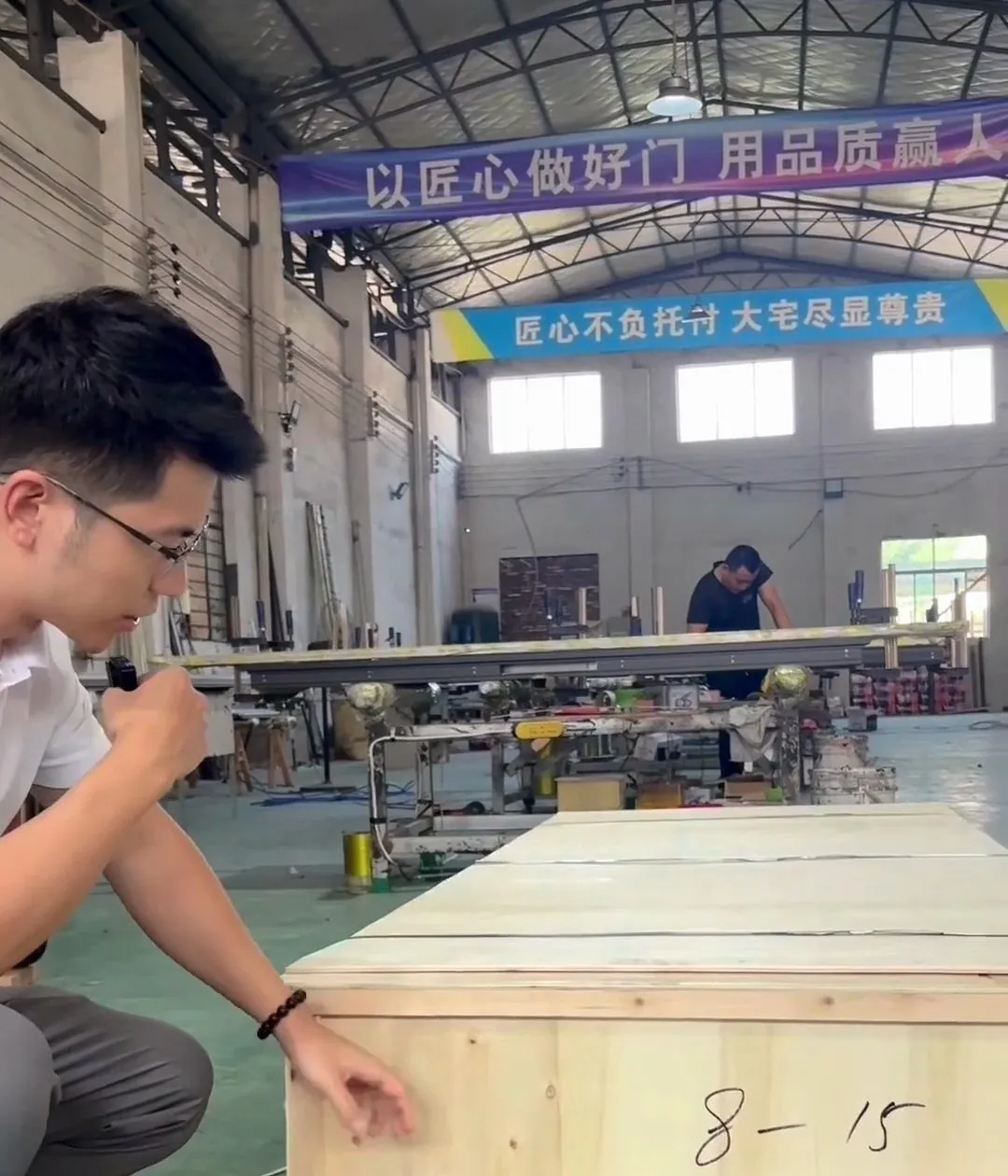
| Packing | Protection on the face, a strong crate, an ISPM 15 stamp on solid-wood crates, and labels |
What happens after the check?
Write down anything to fix, agree when it will be done, and ask for photos or a second call to confirm it. When everything matches the drawing, sign off in writing. The door is then crated. Our guide on crating and shipping explains what happens next and what to do if a door arrives damaged.
Quick answers
When should a custom door be inspected?
When it is finished and assembled, before it is crated and before the balance is paid. Once the door is crated and collected, every fix costs far more, and under EXW terms the risk has already passed to the buyer.
Do I need a third-party inspection company?
Not always. Many buyers check a custom door on a live video call, or send their own agent. For a large project, an independent inspector gives you a written report against your drawing. Companies such as SGS, Bureau Veritas, Intertek and QIMA offer pre-shipment inspections.
What should the inspector check on a door?
Everything on the approved drawing. Sizes, opening direction and pivot or hinge side, the face and finish, the hardware and lock working, the seals, the accessories and documents, and the packing.