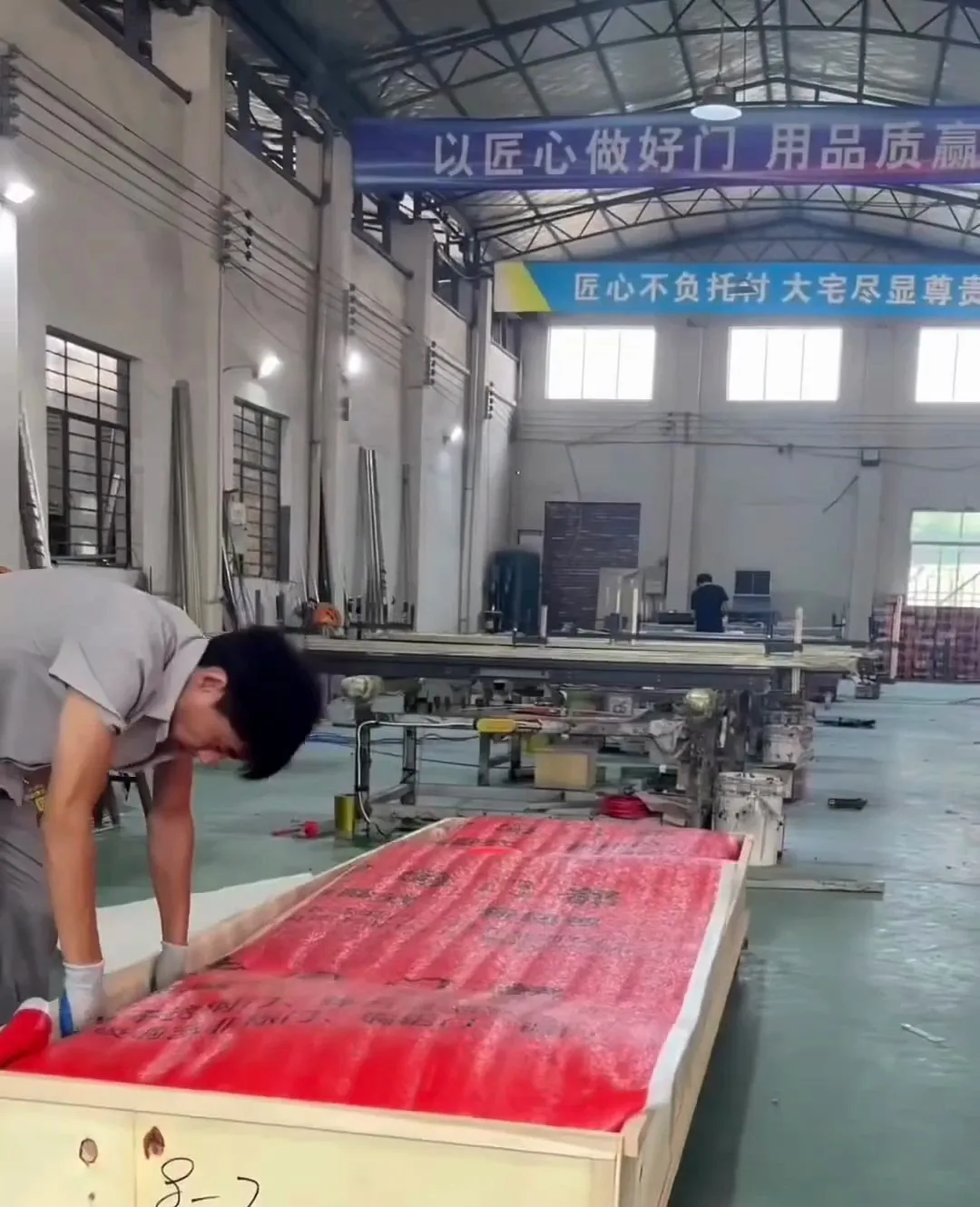
Short answer: a large entrance door is wrapped, cushioned and packed in a wooden crate that holds it still in the container. The crate, the paperwork and your insurance all matter. If a door arrives damaged, photograph everything before you sign, note the damage on the delivery receipt, and tell your insurer and the supplier straight away.
How is a door packed for shipping?
Before shipment we send photographs and video of the finished door for your confirmation. The door is then protected with blankets and foam and packed in a wooden crate. The photographs are useful later: if there is damage on arrival, they show the door left the factory in good condition.
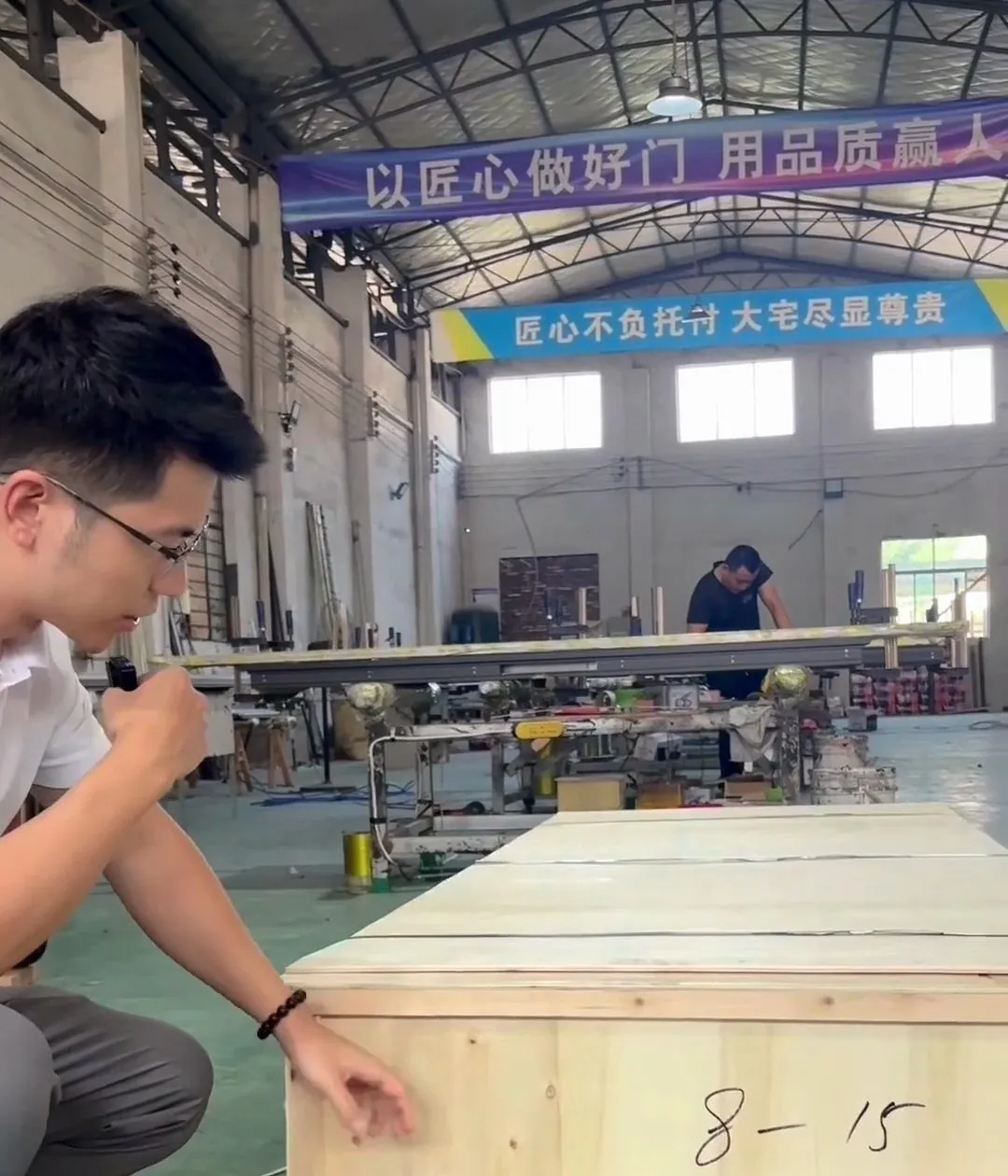
What does the ISPM 15 mark on a crate mean?
Many countries only accept solid wood packaging that meets ISPM 15, the international standard for wood packaging. The wood must be debarked and either heat treated, with the core reaching at least 56 °C for at least 30 minutes, or fumigated with methyl bromide. It is then stamped with the IPPC mark, which shows the country code, the treatment provider and the treatment code (HT or MB).
Plywood, OSB and other processed wood are exempt. Some countries, such as Australia, check timber packaging closely, so ask your forwarder what your port needs before the door is crated.
Who carries the risk on the way?
| Trade term (Incoterms 2020) | Where risk passes to you | Who arranges insurance |
|---|---|---|
| EXW (Ex Works) | When the goods are made available at the seller’s premises | You |
| FOB (Free on Board) | When the goods are on board the ship at the port of shipment | You |
| CIF (Cost, Insurance and Freight) | When the goods are on board the ship at the port of shipment | The seller, at minimum cover (Institute Cargo Clauses C) |
Our prices are EXW, so your forwarder collects the crate and you choose the insurance. For a custom door, ask for cover on Institute Cargo Clauses (A), the broadest standard cover. Under CIF the seller only has to buy the minimum cover, Clauses (C).
What should you do if a door arrives damaged?
- Look at the crate before you sign. If it is broken, crushed or wet, write that on the delivery receipt.
- Photograph everything before and while you open the crate: the outside, the markings, the packing and the door.
- Keep the crate and packing until the claim is settled.
- Tell your insurer and your forwarder as soon as possible. Policies set time limits for notice.
- Send the photographs to the supplier with the order number, so the damage can be compared with the photographs taken before shipment and a repair or replacement part can be planned.
Sources, checked October 2026: ISPM 15; Aceris Law, Incoterms in international trade; ITG, Incoterms 2020 information sheet.
Quick answers
How are large doors packed for shipping?
The door is wrapped to protect the finish, cushioned with foam, and packed in a wooden crate that holds it still in the container. We protect doors with blankets, foam and a wooden crate.
What is the ISPM 15 stamp on a wooden crate?
ISPM 15 is the international standard for wood packaging. Solid wood must be debarked and heat treated (core at least 56 °C for 30 minutes) or fumigated with methyl bromide, then stamped with the IPPC mark. Plywood, OSB and other processed wood are exempt.
Who pays if a door is damaged in transit?
That depends on the trade term and your insurance. Under EXW the risk passes to the buyer at the seller's premises, and under FOB and CIF it passes once the goods are on board the ship. Cargo insurance on Institute Cargo Clauses (A) gives the broadest cover.