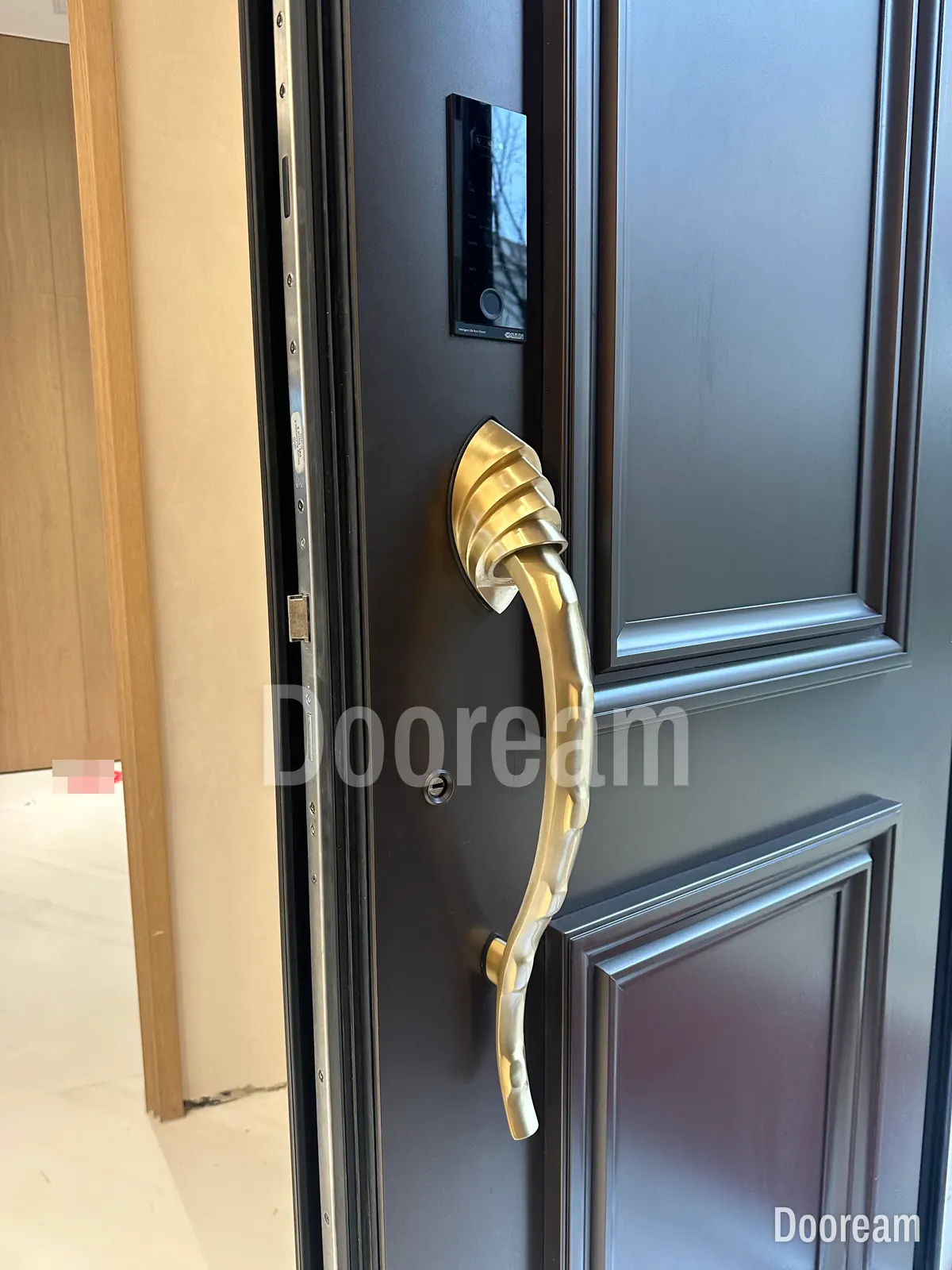
Short answer: a useful door warranty names its start date, gives a period for each component, says who pays parts, freight and labour, and explains how to claim. Expect exclusions for poor installation, damage on site or by people, wrong cleaning, harsh sites without the right finish, changes and normal wear. Hardware makers’ warranties run to the factory; consumer law sits on top.
What should a door warranty spell out?
Six things: when it starts, how long each component is covered, who pays for parts, freight and labour, the remedy, response times, and how to claim. If one is missing, you find out at the first claim. Compare them across factories with our quote comparison table.
- Start date: shipment, delivery, installation or handover. From shipment, the weeks at sea and in a site store count too, so plan delivery close to installation.
- Period per component. “Two years” should say which parts it means.
- Who pays: parts, freight, duty on parts, the installer’s time and lifting gear.
- Remedy: repair, a part, a new door or a credit, and who chooses. FritsJurgens, for example, keeps the choice to repair, replace or credit the invoice price.
- Response times: to acknowledge a claim and to ship parts, in working days.
- Claim route: the contact, the language and the evidence needed.
What should each component’s cover look like?
Each component fails in its own way, so ask the same things of each: what can go wrong, how long it is covered, and who acts when it fails. A “whole-door” warranty is clear only once you know which parts it names and which it leaves out.
| Component | Typical faults | What to ask |
|---|---|---|
| Structure and frame | Bowing, joints opening, out of square | How much bow, in mm, counts as a defect (bowing) |
| Leaf and face | Face lifting from the core, cracks in the face | Is the face covered with the leaf, for the same period? |
| Finish | Blistering, flaking, chalking, fading | Coating system, how failure is judged, cleaning and site conditions (coastal finishes) |
| Pivot hinge | Loss of closing control | Brand and model; inside the door warranty; who adjusts it? |
| Lock, lock body, cylinder, latch | Jamming, bolts not throwing | Brand and model; separate periods for mechanical and electronic parts? |
| Glass sealed units | Misting between the panes | A separate seal period; who fits a heavy replacement? |
| Smart lock electronics | Dead reader, motor or board failure | Electronics period, app support, batteries (smart locks) |
| Seals and drop seal | Wear, tears | Wear parts? Spares supplied? (seals) |
Sealed glass can carry its own warranty. VELUX says clouding between the panes of an insulating glass unit means a break in the inner seal, and gives a 20-year seal warranty on roof windows and skylights made after 1 January 2000, claimed with the serial number.
What do factories usually exclude?
Exclusions hand you the risks the factory cannot control: installation, site, cleaning, climate and use. Most are fair. Ask how each would be proved, and check that it names a cause, such as abrasive cleaners, not a symptom, such as scratches, which a real defect could also cause.
- Installation not to the drawings or instructions. FritsJurgens’ warranty depends on the hinge being installed and maintained as instructed; SIEGENIA excludes deficient construction work and unsuitable building ground.
- Damage on site or caused by people: other trades, scaffolding, impacts.
- Abrasive or solvent cleaning (aluminium door maintenance).
- Coastal, pool or chemical exposure without a finish chosen for it; describe the site at quote stage.
- Misuse: forcing the lock, letting wind slam the leaf (pivot door problems).
- Unauthorised modification: drilling, cladding, swapping hardware. SIEGENIA excludes changes or service work by the customer or third parties.
- Normal wear of seals, drop seals and handle finishes. SIEGENIA excludes natural wear.
- Batteries in smart locks.
- Transit damage, which belongs to cargo insurance under the Incoterm, not the warranty (shipping damage).
How do hardware makers’ warranties fit with the door maker’s?
Pivot and lock makers sell to door factories and distributors on trade terms, so their warranties run to that customer, from their own dates and with their own limits. You claim on the door warranty, so ask the door maker to cover the hardware within it and deal with the hardware maker itself.
- FritsJurgens (general conditions of sale, checked November 2026) warrants proper performance for two years from the date of receipt, provided the product is installed and maintained as instructed. Complaints must be made within three working days of delivery, or of when a hidden defect should reasonably have been found; improper transport, use, installation or storage ends the warranty.
- SIEGENIA, the group KFV belongs to, publishes terms of sale for business customers (AVB 2018; KFV has its own version). In SIEGENIA-AUBI’s version, defect claims expire after 12 months, or up to two years for electrical and electronic components. Obvious defects must be reported in writing within 8 days of receipt, and transport, labour and material costs of a fix are excluded where the law allows.
So a hinge’s two years can run out before the door’s warranty does, because its clock started before the door was built. And if trade terms do not pay labour, the door warranty must say who pays the installer.
How does consumer law sit alongside a contract warranty?
In many markets, a business selling to a consumer owes legal rights that no written warranty can remove. So for an imported door, the claim usually lands with the local dealer or builder, whatever the factory’s warranty says. These examples are general; check your own market’s rules.
- Australia. Consumer guarantees under the Australian Consumer Law apply automatically, last a reasonable time and cannot be taken away by a warranty. The ACCC says a written warranty against defects must state the business’s contact details, how to claim, how long it lasts and who pays the costs of claiming. The NSW Government says the importer is responsible for the guarantees if the maker has no place of business in Australia.
- UK. Citizens Advice says warranties add to legal rights, which can run for up to 6 years (5 in Scotland) if there is a fault; claims are usually easier in the first 6 months.
- EU. Consumers have a legal guarantee of at least 2 years from receipt. The seller repairs or replaces at no cost, a defect that appears within 1 year (2 in some countries) is presumed to have existed at delivery, and a commercial guarantee cannot reduce these rights.
Whether any of this applies to a dealer’s own purchase from a factory is a question for a local adviser.
What changes when the door is imported?
The factory is far away, so the warranty works only if someone local can diagnose, adjust and fit parts: usually the dealer and their installer. Match your terms to the factory’s, keep wear parts in stock, and file the documents that make a claim quick.
- One local contact. The dealer takes the client’s call and sends the factory a complete claim. Our dealer guide covers the gap between shipment and handover.
- Spare parts: seals, a drop seal, a cylinder and keys, batteries, and touch-up paint matched to the colour reference. Ask how long parts will be available, and who distributes the hardware locally.
- The installer’s warranty for workmanship, in writing.
- Documents: order number, shipment date, approved drawing, pre-shipment photos and video (inspection), hardware models and serial numbers, coating and colour reference, installation photos with gap readings, and a maintenance log.
To make a claim:
- Photograph and film the fault, with the date: the door closing, the lock throwing, the reader failing.
- Add the order number, shipment date and hardware serial numbers.
- Say when it started and what changed: a new floor, a cleaner, a storm.
- Send it in writing to the named contact, and keep the reply.
What should you check before signing?
Go through the factory’s written warranty with this list before you pay the deposit. Ask in writing about any line it does not answer: a gap is cheap to settle at quote stage, and expensive to argue over once the door is hung and a claim is open.
- One start event, dated on a document.
- A period for each component.
- Who pays parts, freight, duty and labour.
- The remedy, and who chooses it.
- Response times and the claim route.
- Exclusions that name causes, not symptoms.
- Installation drawings and care instructions attached.
- Hardware covered inside the door warranty.
- The finish named, with the site it was chosen for.
- Transit insured under the Incoterm.
- Your warranty to your client matched to the factory’s.
- Consumer law checked for your market.
How does this work with Dooream?
Our whole-door warranty runs for two years from shipment and covers the frame, lock, lock body, cylinder, latch, profiles and paint finish. Damage caused by people is excluded. For covered damage not caused by people, we supply replacement parts and cover parts, shipping and local labour. Before shipment we send photos and video of the finished door; keep them as a record. Your local installers fit it with our installation drawings and remote guidance. We fit FritsJurgens pivot hinges and smart locks from KFV, G-U or Wintech, or the hardware you choose (locks and pivots). The full wording is on our terms page; ask questions through our contact page.
Sources, checked November 2026: FritsJurgens, general conditions of sale and delivery (articles 4.1 to 4.4); SIEGENIA, terms and conditions of sales, delivery and payment (AVB 2018), section 8; ACCC, how warranties and consumer rights are connected; NSW Government, manufacturers and importers (updated 2 April 2026); Citizens Advice, claim using a warranty or guarantee; European Union, Your Europe, guarantees and returns (last checked by the EU 24 September 2024); VELUX, clouding or fogging between the panes of glass.
Quick answers
When should the warranty on a custom entrance door start?
The contract should name one start event (shipment, delivery, installation or handover), and that date should be on a document. A warranty from shipment also counts the weeks at sea and in a site store, so plan delivery close to installation. Ours runs for two years from shipment.
What do entrance door warranties usually exclude?
Installation that does not follow the maker's drawings or instructions, damage on site or caused by people, abrasive or solvent cleaning, harsh exposure without a finish chosen for it, misuse, unauthorised changes, normal wear of seals, and batteries. Damage in transit is a matter for cargo insurance, not the warranty.
Are the pivot hinge and the lock covered by their own makers' warranties?
Their warranties run to the makers' own business customers, on trade terms. FritsJurgens warrants proper performance for two years from the date of receipt, if the hinge is installed and maintained as instructed. SIEGENIA's terms set 12 months, up to two years for electronic components, and exclude labour where the law allows. So ask the door maker to cover the hardware within the door warranty.