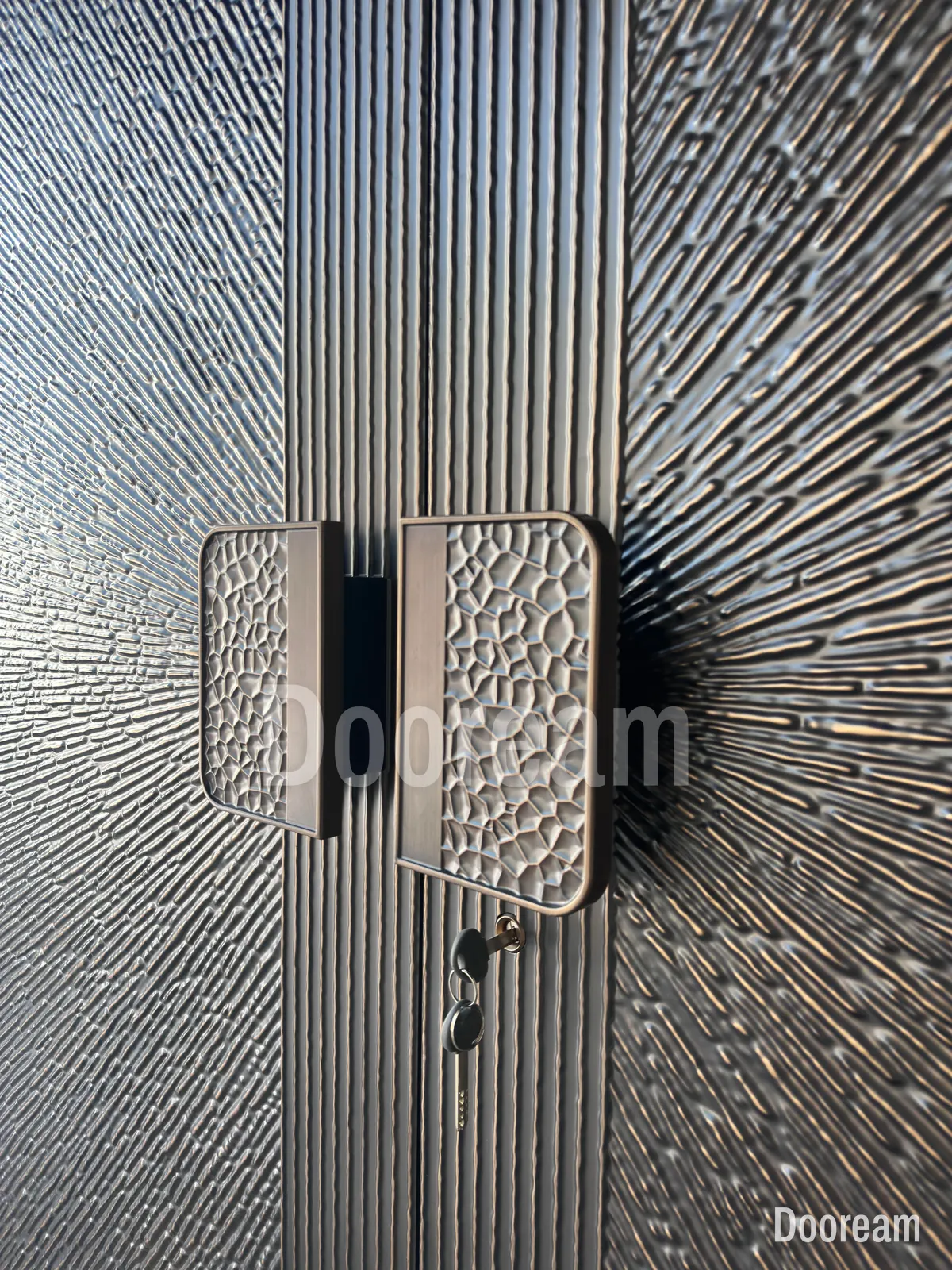
Short answer: wash the door with lukewarm water, a pH-neutral detergent and a soft cloth or brush, then rinse and dry it. Coating and aluminium-system makers ask for this anywhere from every 2 years inland to monthly by the sea. Keep seals and drain holes clean, have locks, hinges or pivots checked yearly, and never use abrasives, strong solvents, acids or alkalis.
How often should you clean an aluminium front door?
As often as the coating maker asks for your site, and more often if the door is sheltered. Schedules run from every 2 years inland, for the most durable powders, to monthly on the coast. Without a coater’s schedule, our rule of thumb for an entrance door is every 6 months inland and every 3 months near the sea.
| Maker | Inland | Coast or industry | Harshest sites |
|---|---|---|---|
| AkzoNobel Interpon (D1000, D2000, D3000), temperate climate | 12, 18 or 24 months | 6, 9 or 12 months, 500–2,000 m from the coast or a pollution source | 3, 6 or 9 months at 50–500 m |
| Dulux Powder Coatings (NZ) | Once a year | Every 6 months (medium sea spray) | Every 3 months (high sea spray, heavy industry) |
| Reynaers | Twice a year (rural) | About four times a year (city and coast) | |
| Technal (UK) | Every 3–4 months | Monthly (coastal or urban) |
AkzoNobel’s three ranges are its Qualicoat Class 1, 2 and 3 powders; in the tropics it asks for 3 months for all three at 50–500 m from the coast. AAMA’s cleaning guide adds that coastal, industrial and low-rainfall areas need more cleaning. For anodising, see our coastal finishes guide.
A sheltered door needs more washing, not less. AkzoNobel warns that rain does not wash wind-blown salt and pollutants off sheltered surfaces, so these can degrade faster than exposed ones. A door under a canopy is exactly that.
What should you clean it with, and what should you never use?
Lukewarm water with a mild, pH-neutral detergent (pH 5 to 8), applied with a soft cloth, sponge or soft natural-bristle brush, then a rinse with clean water and a dry cloth. Test any new cleaner on a hidden spot first. Clean in the shade, never on a hot panel: Dulux and TIGER Drylac both set 25 °C as the limit.
| Do | Never |
|---|---|
| Lukewarm water and pH-neutral detergent | Abrasive cleaners, polishes, scouring pads, steel wool, scrapers |
| Soft cloth, sponge, natural-bristle brush | Strong acid or alkaline cleaners; mixing cleaners |
| Rinse from the top down, then dry | Esters, ketones, chlorinated hydrocarbons, thinners |
| Wash off mortar, brick cleaner and sunscreen at once | Steam jets, or a pressure washer held close |
Solvents. Makers disagree: AkzoNobel allows a little white spirit where absolutely necessary, TIGER Drylac aromatic-free white spirit or isopropyl alcohol, while Dulux rules out white spirit, thinners and citrus cleaners. Ask your coater first, and keep solvents off seals; AAMA notes they can damage gaskets.
Pressure washers. AAMA’s guide uses water at moderate pressure, and TIGER Drylac rules out steam jets. A close jet can drive water past the seals, so use a garden hose and never aim a jet at seals, the lock or the threshold.
How do you clean a carved or cast relief face?
Brush rather than wipe. Dust, salt and pollen settle in the recesses, where a cloth pushes them deeper. Use a soft natural-bristle brush dipped in the detergent solution, work along the grooves, rinse from the top down so water runs out of the recesses, then dry the raised parts.
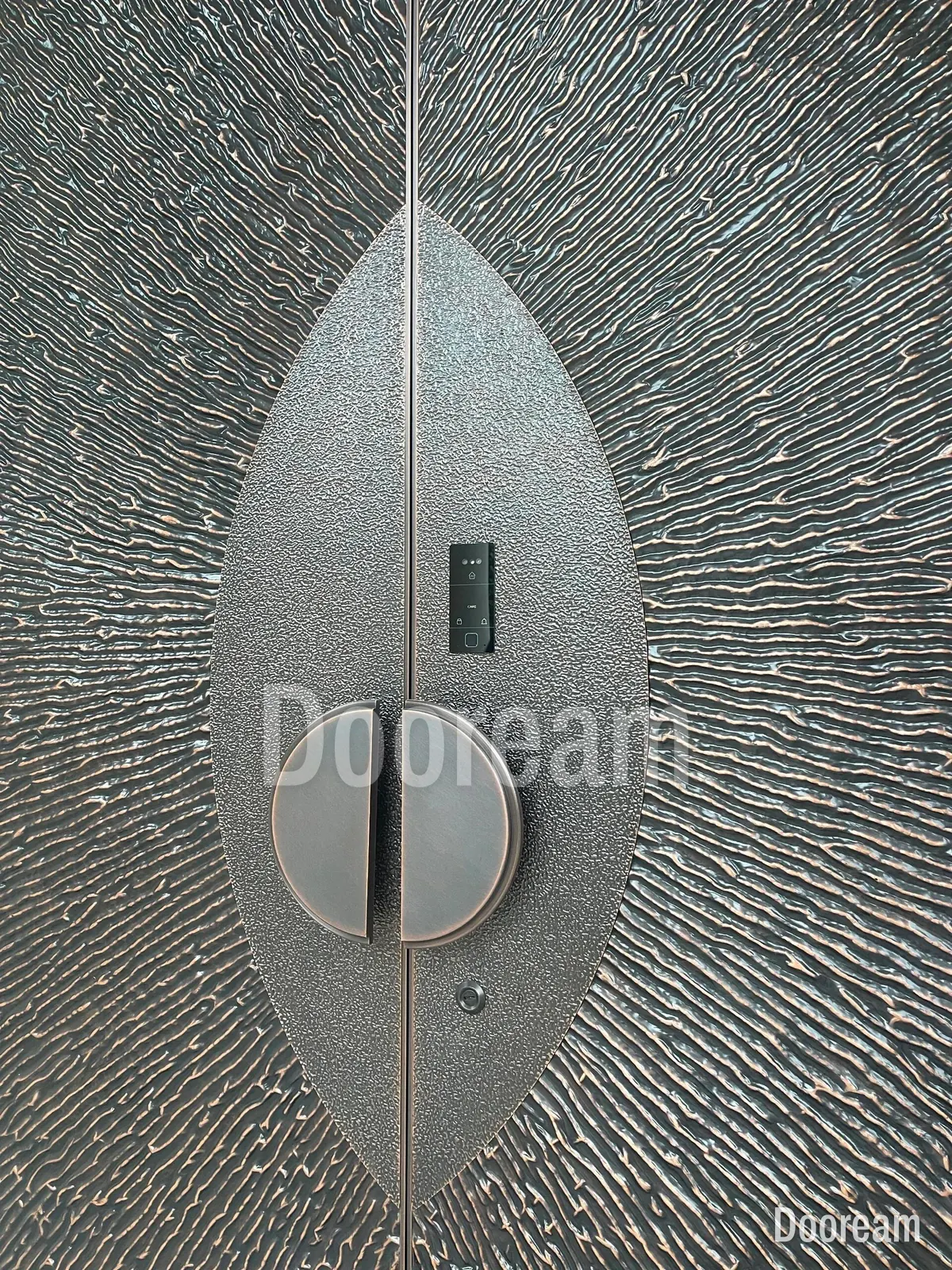
Go gently: Dulux warns against hard rubbing, especially on metallic finishes, and AAMA says it can change the texture or add shine. The high points wear first.
Patina, antique and brushed metallic finishes are layers of colour, often lighter on the high points and darker in the recesses, some applied by hand. Polishing removes the contrast. Never use cleaners made for brass, copper or silver; Technal warns against them on aluminium too. Sunburst, for example, has a brushed metallic paint. For how relief faces are made, see what is a cast aluminium door.
How do you look after seals, drainage and the threshold?
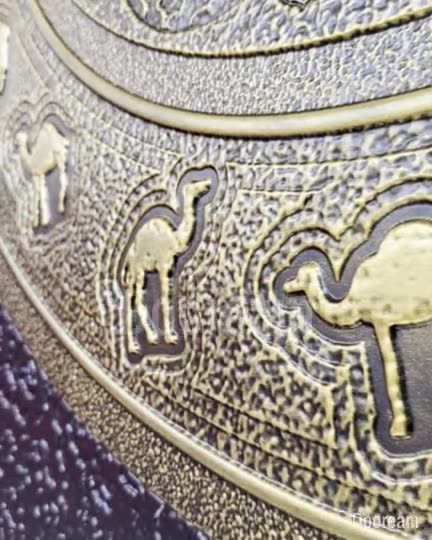
Keep the seals clean and the water paths open. Hydro asks for clean, undamaged rebate and brush seals and unblocked drainage holes; Technal says to check seals yearly for wear. Wipe seals with the detergent solution, never solvents. Replace any that are torn, flattened, shrunk at the corners or loose, with the exact profile from your supplier.
- Drop seal. With the door closed, the drop-down seal under the leaf should meet the floor along its whole length. Grit wears it out.
- Drains. Clear weep holes, sill channels and any drain outside with a soft brush, then pour in a cup of water and watch it run out. Hydro, Reynaers and Alspec all ask for drainage to be kept clear.
Water inside on cold mornings may be condensation rather than a leak. For how a pivot door is sealed, see pivot door sealing.
How do you maintain the locks, pivots and hinges?
Check them once a year, adjust rather than force, and lubricate only as the maker allows. A stiff handle, a key that is hard to turn or a door that no longer latches usually means the leaf has moved and needs adjusting, not oil.
- Multipoint lock. KFV ships its key-operated multipoint locks lubricated, asks for the moving parts to be checked once a year and allows only spray grease without solvents or resins. Do not paint the lock or work lever and key together; repairs are for a specialist. See multipoint locks explained.
- Smart lock. Change batteries at the first low-battery warning, make sure everyone knows the backup way in, and wipe the reader with a soft damp cloth. See smart locks on large and pivot doors.
- Pivot hinges. FritsJurgens describes its pivot hinges as maintenance-free. If the door closes too fast, slams or stops latching, System M+ has adjustable damping, latching speed and closing speed over the last 30°; have the installer set them.
- Hinges. Look for a dropped leaf: an uneven gap or a rubbing seal. Hydro includes hinge adjustment in its yearly check.
- Near the sea. Alspec asks for hardware maintenance every 6 months, and every 3 months in marine and industrial areas.
What does a maintenance schedule look like?
Weekly wipes of what hands touch, washing monthly or half-yearly depending on the site, and a yearly check of everything that moves or seals. The table is our suggestion for a sheltered entrance door; where your coater’s schedule is stricter, follow it.
| Item | Weekly | Monthly | Every 6 months | Yearly |
|---|---|---|---|---|
| Pulls, handles, reader | Wipe with a damp cloth | Wash | Check fixings | |
| Face and frame | Wash near the sea | Wash inland | Wash; inspect the coating | |
| Relief recesses | Brush out near the sea | Brush out | Check high points for wear | |
| Seals and drop seal | Clean; check contact | Replace worn lengths | ||
| Threshold and drains | Sweep away grit | Clear holes and channels | Water test | |
| Lock and keeps | Check near the sea | Check; lubricate only as allowed | ||
| Smart lock | Check battery level | Test the backup way in | ||
| Pivots or hinges | Watch closing and latching | Check gaps; adjust |
What should you check after the first year, and every year?
The first yearly check matters most: by then the building has settled, the seals have bedded in and the door has seen every season. Then repeat it yearly, or every 6 months on a busy entrance, as Hydro advises for public buildings.
- In low, raking light, look for chips, blisters, chalking or fading, especially low down and around the pulls.
- Wash the whole door, including its edges and top, and brush out the relief.
- Check every seal for tears, flattening and shrunken corners.
- Check the drop seal meets the floor all the way along.
- Clear and water-test the weep holes, sill channels and outside drain.
- Check the gap round the leaf is even, with no rubbing.
- Lock and unlock from both sides: handle and key should move freely and every locking point should meet its keep.
- Test the smart lock’s backup way in; change batteries if due.
- On a pivot door, check closing speed, damping and latching.
- Touch up chips that reach bare metal, and file the photos with the date.
How do you repair scratches and damaged coating?
Touch up small, shallow damage; recoat large or deep damage. TIGER Drylac says touch-up paint suits small, superficial damage and is matched to the original powder’s product ID or a sample, while extensive damage means stripping, pretreating and recoating the whole surface.
- Touch up early, before moisture creeps under the edges, above all near the sea.
- Ask your supplier for the coating system and colour reference first.
- Patina, metallic or relief damage needs a specialist refinisher; AkzoNobel likewise sends renovation to a specialised company.
Why keep maintenance records?
Because coating warranties can depend on them. AkzoNobel asks for cleaning records and says failing to follow its cleaning schedule voids its warranties. Log the delivery and installation dates, photos of the new door, each cleaning and yearly check with photos, the products used, and every adjustment or repair.
How does this work with Dooream?
Every door we make has a two-year warranty from shipment. Your local installer fits it from our installation drawings, with our remote guidance, so ask that installer to adjust it later too. Our locks come from KFV, G-U and Wintech and our pivots from FritsJurgens, so their instructions apply. Most of our models have fluorocarbon (PVDF) paint; each door page lists its finish. Send photos and dates of any problem through our contact page.
Sources, checked November 2026: AkzoNobel, Interpon D cleaning and maintenance (Issue 1, 2020), Guidance Note 6, cleaning and maintenance of powder coated architectural components (2022) and Interpon D warranties; Dulux Powder Coatings, care and maintenance of powder coated surfaces (2021); TIGER Drylac, cleaning recommendations and touch-up paints; AAMA, AAMA 609 & 610-09, cleaning and maintenance guide for architecturally finished aluminum; Reynaers, all about aluminium maintenance; Technal, care and maintenance; Hydro (Sapa), operation and maintenance; Alspec, care and maintenance; KFV (SIEGENIA), operating instructions, key-operated multi-point locks; FritsJurgens, pivot hinges and catalogue 2022.
Quick answers
How often should you clean an aluminium front door?
It depends on the site and the coating. AkzoNobel, for example, asks for its Interpon powders in temperate climates to be cleaned every 12 to 24 months inland, but every 3 to 9 months 50 to 500 m from the coast, depending on the range. A door under a canopy needs washing more often, because rain does not rinse off the salt and dirt that settle on it.
What should you never use on a coated aluminium door?
Abrasive cleaners, polishes, scouring pads, steel wool or scrapers, strong acid or alkaline cleaners, and solvents your coater has not approved. Use lukewarm water with a pH-neutral detergent (pH 5 to 8) and a soft cloth or soft brush, then rinse. Do not clean a hot door; Dulux and TIGER Drylac set 25 °C as the limit.
Do pivot hinges and multipoint locks need oiling?
FritsJurgens describes its pivot hinges as maintenance-free; if a door starts closing too fast or stops latching, the hinge is adjusted, not oiled. KFV ships its key-operated multipoint locks lubricated, asks for the moving parts to be checked once a year, and allows only spray grease without solvents or resins if the locking elements need it.