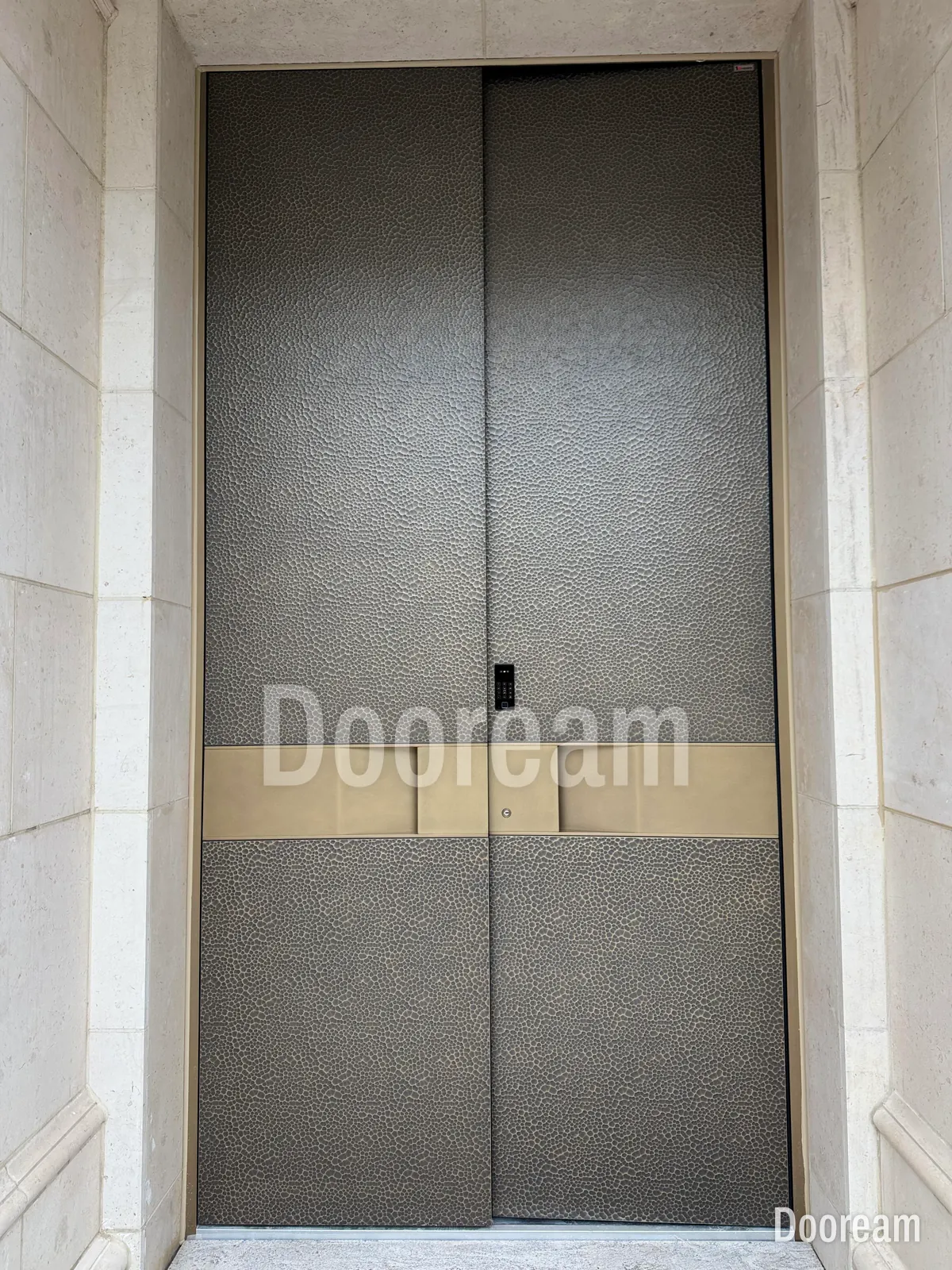
Short answer: plan maintenance in four layers: quick owner checks weekly or monthly, a visit every 3 to 6 months, a yearly check by the installer or a locksmith, and a fuller survey every 5 years. How often you wash depends on the site, from every 6 to 12 months for an exposed door inland to every 1 to 3 months close to the sea, in a city or in the desert. Log every visit with dated photos.
What should be checked, how often, and by whom?
Most of a large entrance door only needs looking at; a few parts need a trained hand. The table splits the work by interval and by who does it, for a hinged or pivot door. The how-to is in our guides to aluminium door care, seals and pivot door problems.
| Task | Weekly or monthly | Every 3–6 months | Yearly | Every 5 years | Who |
|---|---|---|---|---|---|
| Face, frame, relief | Wipe pulls and reader; wash monthly on harsh sites | Wash, by site table | Wash edges and top; inspect coating | Coating survey; touch up or renovate | Owner or handyman; coater |
| Sill, drains, floor plate | Sweep grit; clear drains | Pour in water to test | Check sill joints and outside falls | Hose-test the threshold | Owner; installer |
| Seals, drop seal | Brush off grit | Paper test; drop seal meets the sill | Replace torn or flat lengths | Renew any that have lost shape | Owner; installer |
| Hinges or pivots | Watch it close and latch | Gaps against handover readings | Gaps, plumb, closing; adjust | Floor plate, head and frame fixings | Installer |
| Lock, cylinder, keeps | Note any stiffness | Every bolt meets its keep | Moving parts checked | Full service; re-key if keys are lost | Locksmith or installer |
| Smart lock | Act on low-battery warnings | Test the key or emergency power | Users, updates, batteries | App support, spare parts | Owner; lock supplier |
| Glass, glazing gaskets | Clean | Look for misting | Beads secure, corners sealed | Owner; glazier | |
| Frame-to-wall sealant | Walk it in cool weather | Survey; renew failed lengths | Installer or sealant applicator | ||
| Closer or hold-open, if fitted | Speed and fixings | Full check | Installer |
The 3–6-month and 5-year columns are our suggestions; on a busy entrance, use the shorter interval. Reynaers puts door hardware on a 3-month cycle for intensive use, and Hydro asks for maintenance yearly on homes but every 6 months in public buildings.
How often should you wash the door on your site?
As often as the coating maker asks for your site, and more often when the door is sheltered. Rain rinses an exposed frame, but a door under a canopy or in a recess keeps its salt, dust and traffic grime. AkzoNobel warns that sheltered areas can be more at risk than exposed ones.
| Site | Our suggestion | What makers say |
|---|---|---|
| Inland, rain reaches the door | Every 6 months | AkzoNobel: 12, 18 or 24 months, by powder range. Reynaers: twice a year if rain-washed and not corrosive |
| Inland, under a canopy or in a recess | Every 3–6 months | Reynaers: otherwise at least 4 times a year |
| City, heavy traffic, industry | Every 1–3 months | Technal: monthly in urban areas |
| Coast, 500–2,000 m | Every 3 months | AkzoNobel: 6, 9 or 12 months |
| Coast, within 500 m | Every 1–3 months | AkzoNobel: 3, 6 or 9 months; 3 in the tropics. Technal: monthly on the coast |
| Desert or low rainfall | Brush weekly in the dust season; wash monthly and after sandstorms | AAMA: where rainfall is low, the surface gets little natural washing |
| Near a pool | Every 3 months | AkzoNobel: 3 months, more than 2 m from the edge |
AkzoNobel gives no interval within 50 m of the coast, where it says such proximity is not recommended, and no separate desert figure: its South African version groups arid with temperate climates. Where your coater’s schedule is stricter, follow it. For finish choice, see coastal and high-UV finishes.
What does the plan look like, date by date?
Put dates on the plan at handover and enter them in a calendar. The first year matters most: the building settles, the seals bed in and the door sees every season. Mark the date the warranty ends, too, and book a full check before it.
- Handover. The installer records gaps, closing time and photos (installer’s checklist); file them with a list of keys issued.
- First month. Wash off building dust and mortar; watch it close as the weather changes.
- Month 3 to 6. First interval visit.
- Month 12. First full yearly check, with adjustment.
- Before the warranty ends. A two-year warranty from shipment, like ours, counts the weeks at sea and in storage, so it ends before the second anniversary of installation. Report faults in writing.
- Years 2 to 4. Yearly checks, with interval visits between.
- Year 5, then every 5 years. The fuller survey.
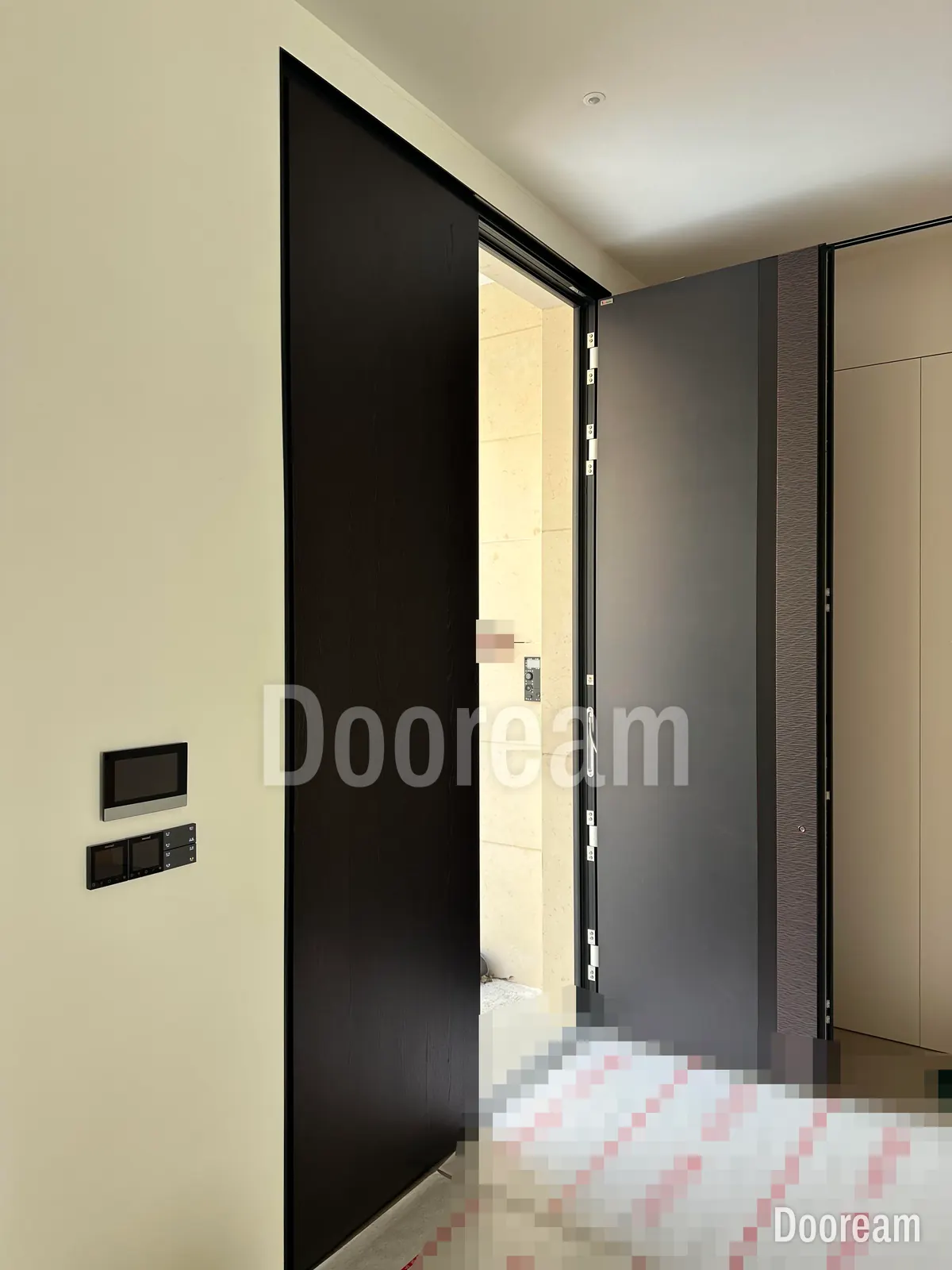
What do locks, smart locks, closers and pivots need?
Checks and adjustment, rarely oil. KFV asks for all moving parts of its key-operated multipoint locks to be checked once a year, and allows only spray-on grease without solvents or resins. Reynaers asks for safety-relevant door hardware, and door closers, to be checked at least yearly.
- Smart lock. Change all batteries at the first low-battery warning and log the date. Test the mechanical key or emergency power from outside every 3 to 6 months. Yearly, delete old users, install the maker’s updates and test every way in (smart locks on large doors).
- Pivot hinges. FritsJurgens describes its pivot systems as maintenance-free, tested to 500,000 cycles, with no lubrication or scheduled servicing. The installer checks the gaps and settings around them yearly.
- Closer or hold-open. Check fixings, closing speed and that the hold-open releases.
What about the glass and the sealant around the frame?
Check the glazing yearly: Hydro asks that glazing beads are secure and glazing seals well sealed at the corners. Misting between panes needs the glass supplier (why insulated glass fogs). Walk the frame-to-wall sealant in cool weather; Bostik advises assessing façade joints in the colder season, when damage is more visible, and replacing old joints rather than going over them.
What should you check after a storm or sandstorm?
Check the door before you use it hard. Wind can slam a leaf or drive rain past the sill, and sand left in the seals, sill and bolts is ground in with every swing. The full sandstorm list is in our desert guide. After any storm:
- Brush the sill, floor plate and seals; clear the drains.
- Look for water inside at the threshold (threshold leaks).
- Photograph any impact damage with the date.
- Check it latches and locks smoothly; a pivot door should hold open, not slam (pivot doors and wind).
- Wash off salt or sand within days.
What should you do before and after a long absence?
Prepare the door so the first person back can get in, and so grit is not ground in on the first swing. A holiday home’s door may stay shut for months in heat, salt or dust, with nobody to hear a low-battery warning.
- Before you leave: wash the door and clear the drains; fit new batteries and log the date; take a mechanical key and leave one with someone local; delete temporary codes; ask a caretaker to visit monthly in the storm or dust season.
- When you return: brush grit off the sill and seals before opening wide, test every way in, and watch the door close and latch.
How do you keep a maintenance log?
Keep one file with the door’s documents at the front: order number, shipment and installation dates, approved drawing, hardware models, colour reference and handover readings. Then add a line per visit: date, who, what was done, products used, readings, parts changed, and photos from the same fixed positions.
Some makers tie warranties to maintenance. AkzoNobel asks for cleaning records and says failure to follow its cleaning schedule nullifies any warranties. TIGER Drylac calls regular maintenance a prerequisite for warranty claims. FritsJurgens warrants its hinges for two years from receipt, provided they are installed and maintained as instructed. Read the conditions of your own warranty (door warranties) and ask what maintenance it expects.
A one-page checklist to print
Print this and keep it at the front of the log. At each visit, write the date and the initials of whoever did the work. Washing follows the site table, so write your own interval in that row.
| Check | When | Date | By |
|---|---|---|---|
| Sweep sill and floor plate; clear drains | Weekly to monthly | ||
| Wash face, frame and relief | By site | ||
| Seals, drop seal, gaps | 3–6 months | ||
| Mechanical key or emergency power | 3–6 months | ||
| Lock moving parts and keeps | Yearly | ||
| Smart lock users, updates, batteries | Yearly | ||
| Glazing and frame-to-wall sealant | Yearly | ||
| Closer and hold-open, if fitted | Yearly | ||
| Coating check; photos from fixed points | Yearly | ||
| Five-year survey | Every 5 years |
How does this work with Dooream?
Our warranty runs for two years from shipment and covers the frame, lock, lock body, cylinder, latch, profiles and paint finish; damage caused by people is excluded, and for covered faults we pay for the parts, shipping and local labour (terms). Our pivot doors use FritsJurgens pivot hinges and our smart locks come from KFV, G-U or Wintech, so those makers’ instructions apply. Your local installer fits the door from our installation drawings with our remote guidance, so ask them for the yearly check. File our pre-shipment photos and video in the log, and report faults with dated photos via our contact page.
Sources, checked November 2026: AkzoNobel, Guidance Note 6, cleaning and maintenance of powder coated architectural components (Issue 3, September 2022) and Interpon D cleaning and maintenance guidelines, South Africa (Issue 1, July 2020); AAMA, AAMA 609 & 610-09, cleaning and maintenance guide for architecturally finished aluminum; TIGER Drylac, cleaning recommendations; Technal, how to look after aluminium windows and doors (Middle East); Reynaers, operation, care and maintenance manual (01/2013), section 4; Hydro (Sapa), maintenance instructions (2021); KFV (SIEGENIA), operating instructions, key-operated multi-point locks (03.2020); FritsJurgens, support and general conditions (article 4.2); Bostik, inspection, maintenance and repair of sealant joints.
Quick answers
How often should an entrance door be serviced?
Look it over every 3 to 6 months, and have the moving and sealing parts checked by the installer or a locksmith once a year. Hydro asks for yearly maintenance on homes and every 6 months on public buildings, and KFV asks for the moving parts of its multipoint locks to be checked once a year. How often you wash the door depends on the site, from every 6 to 12 months for an exposed door inland to every 1 to 3 months close to the sea, in a city or in the desert.
What should be checked on a front door every five years?
We suggest a fuller survey on top of the yearly check. Have the coating looked at, with a coater if it is worn, and renew any seal or drop seal that has lost its shape. Survey the frame-to-wall sealant along its full length, have a locksmith service the lock and cylinder, and check the smart lock's app support and spare parts. Then have the installer check the floor plate, head and frame fixings. This is good practice, not a maker's rule.
Can skipping maintenance affect a door warranty?
It can. AkzoNobel says failure to follow its recommended cleaning schedule nullifies its coating warranties, and FritsJurgens warrants its pivot hinges provided they are installed and maintained as instructed. Read the conditions of the warranty you hold, and keep a dated log with photos of every clean, check and repair.