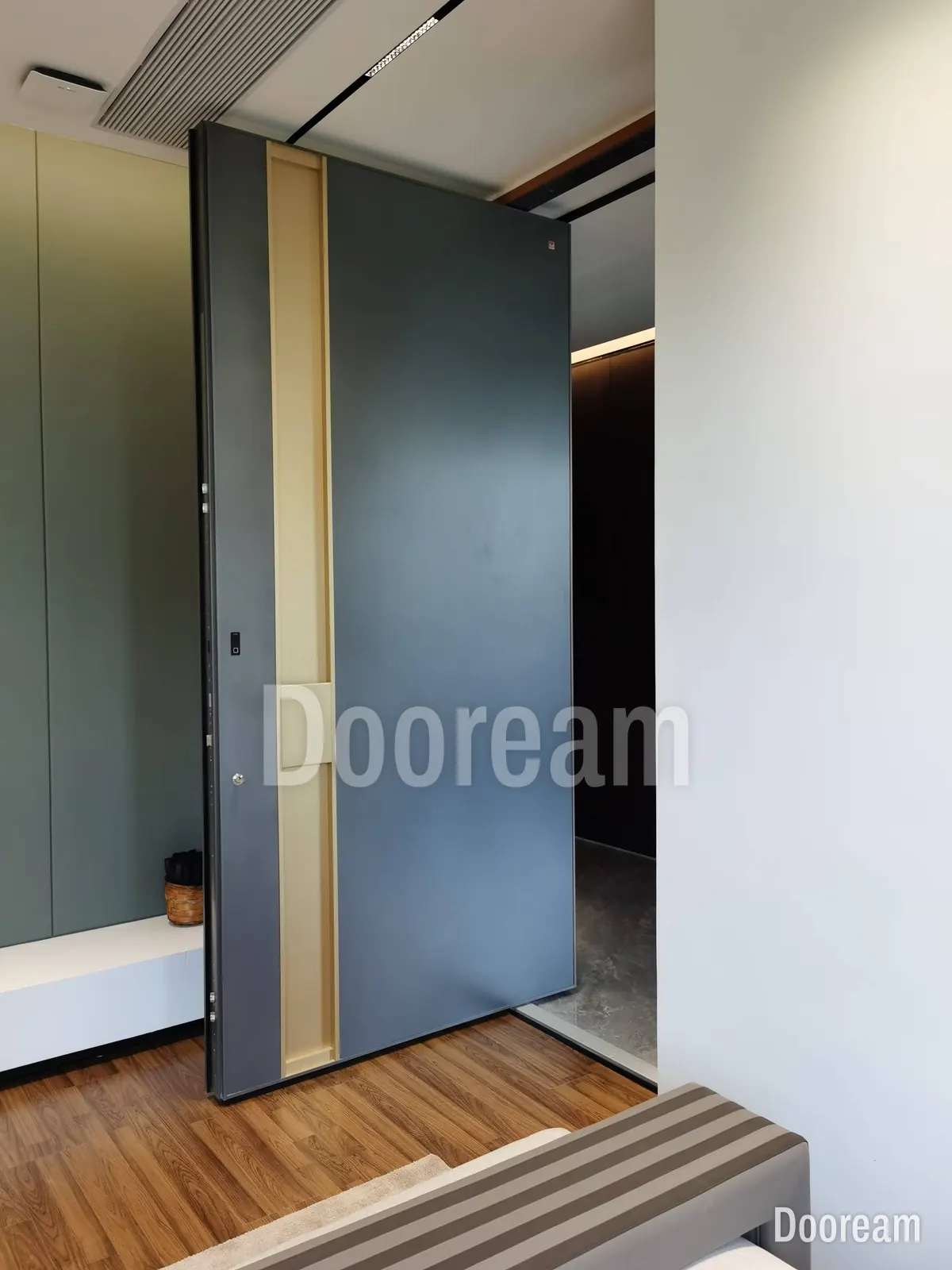
Short answer: most pivot door problems come from something moving around the hinge, not the hinge failing: the floor rises, the head sags, seals wear or lock keeps fall out of line. Check the gaps first, then the floor plate, seals and keeps. A hydraulic pivot hinge adjusts closing speed, latching and leaf position by millimetres or degrees; it needs no oil and cannot correct a floor or head that has moved.
What goes wrong with pivot doors, and who fixes it?
The table lists common symptoms on a large pivot entrance door, the likely cause, what to check first and who fixes it. With the FritsJurgens hinges our pivot doors use, the floor plate sets the gap under the leaf and the hinge adjusts only a little, so many symptoms trace back to the floor, head or frame.
| Symptom | Likely cause | What to check | Who fixes it |
|---|---|---|---|
| Scrapes the floor, or has dropped | Floor risen under the swing; head sagging; top pivot not fully extended | Bottom gap over the whole swing; top gap, 4–10 mm | Builder (floor, head); installer (plate, pivot) |
| Swings shut too fast or slams | Speed or damping too fast; wind or air pressure in the building | Let go from halfway, in still air, then with windows open | Installer |
| Will not stay open or will not stay closed | Wind beating the hold position; pivots not plumb; seals or lock resisting | Does it hold at 90° in still air? Does it creep? | Installer; designer if wind is the cause |
| Does not latch, or the lock does not engage | Latch Control too weak; keeps out of line after movement; seals too tight | Close slowly; watch each bolt meet its keep | Installer; lock specialist |
| Drifts, or sits proud of the frame | Leaf not parallel to the wall; top pivot not exactly above the floor pivot; leaf bowed | Straightedge across leaf and frame; plumb | Installer; door maker if bowed |
| Uneven gaps | Closing seam off-centre; frame or head moved | Gaps against the handover readings | Installer; builder if the structure moved |
| Draughts or water at the bottom | Drop seal worn, gritty or not lowering; drain blocked | Paper test; a cup of water into the drain | Owner (drain); installer (seal) |
| Noise or squeak | Seal dragging; grit on the floor plate; a bolt rubbing its keep | Where in the swing it starts; rub marks | Installer; hinge maker if it is the hinge |
| Smart lock battery or power problems | Flat batteries; failed supply or a cable pinched at the top pivot | Low-battery warning; backup key; power at the head | Owner (batteries); electrician (wiring); lock supplier (electronics) |
Rule out grit, a new rug, a blocked drain and flat batteries first, then measure the gaps; change hinge settings last.
FritsJurgens warns that standard drop seals are calibrated for hinged doors and may not work with pivot geometry; pivot drop seals, such as athmer’s Schall-Ex L-15/30 WS Pivot, have an adjustable actuator. See pivot door sealing, threshold water leaks and smart locks on pivot doors.
What can you adjust on a hydraulic pivot hinge?
Closing speed, damping, latching force and the leaf’s position in the frame, each within a small range. Hold-open positions are usually built into the system, and many pivot hinges have no height adjustment. What can be set depends on the exact product, so check its documents first.
| Adjustment | FritsJurgens System M+ | Floor spring, e.g. dormakaba BTS 80 |
|---|---|---|
| Closing speed | 30° Speed Control, the last 30° to 0° | By valve |
| Damping | Damper Control: opening damping and soft close together | Mechanical backcheck (V, VF, EMB) |
| Latching | Latch Control: extra speed just before closing | By valve, 7° to 0° (VF, EMB) |
| Closing force | No setting listed; the weight class is chosen for the leaf | By screw, EN 3–6 (V, VF) |
| Hold-open | Fixed: 0° and 90°, and −90° on double-acting doors | Adjustable on V and EMB, from 75° |
| Leaf parallel to the wall | Squared or round floor plate turns 2.5° each way; Flush plate: none | Not given |
| Closing seam | Top pivot moves 5 mm each way | Not given |
| Height | None listed; the floor plate sets the gap, 11 mm (squared or round) or 7 mm (Flush) | No setting given; spindle extensions add floor clearance |
Free swing needs a different system, such as FritsJurgens System One, chosen at design stage.
Follow the maker’s instructions for the exact model. FritsJurgens says a door can be adjusted without help with the right tools, and its service team gives step-by-step instructions. On a heavy entrance door, let the installer do it, with that system’s adjustment card:
- Turn in small steps; test after each.
- Adjust on a still day, with seals and lock final; FritsJurgens notes that wind pressure, temperature and seal and lock resistance affect System M+ damping and latching.
- Recheck in the opposite season.
- Beyond the range, correct the frame, floor or plate position instead.
What should you never do to a pivot door?
Never oil the hinge, put solvent in the lock, force the lock, add weight to the leaf or lift the leaf off without proper gear. Each of these turns an adjustment into a repair. Most of the rules below come from the hinge and lock makers’ own documents.
- Oil the hinge. FritsJurgens says its pivot systems are maintenance-free, tested to 500,000 cycles, with no lubrication or scheduled servicing required.
- Use oil or solvent on the lock. KFV’s key-operated multi-point locks have long-term lubrication; if more is needed, KFV allows only spray-on grease without solvents or resins. Never paint the lock.
- Oil the floor plate, drop seal or sill. Oil holds grit, and grit wears them.
- Force the lock. KFV allows at most 150 N on the lever handle, says a lock showing signs of force must be replaced, and leaves repairs to KFV or a specialist company.
- Add weight. A heavier face, cladding or a mirror can take the leaf past its hinge class. FritsJurgens says lateral force at the pivots decides the class, and specifying on weight alone risks under-rating the system. Ask the door maker first.
- Lift the leaf off without lifting gear and a plan, or carry it by the lever handle, which KFV forbids (lifting a leaf).
- Drill through the leaf with the lock fitted; KFV forbids it, and cables run inside.
What maintenance does a pivot door need, and how often?
Little, but regularly: keep grit away from the floor plate and seals, compare gaps and lock with the handover readings, and have the installer check everything yearly. FritsJurgens hinges need no scheduled servicing, so the schedule covers what is around the hinge. On a busy entrance, we suggest halving the intervals.
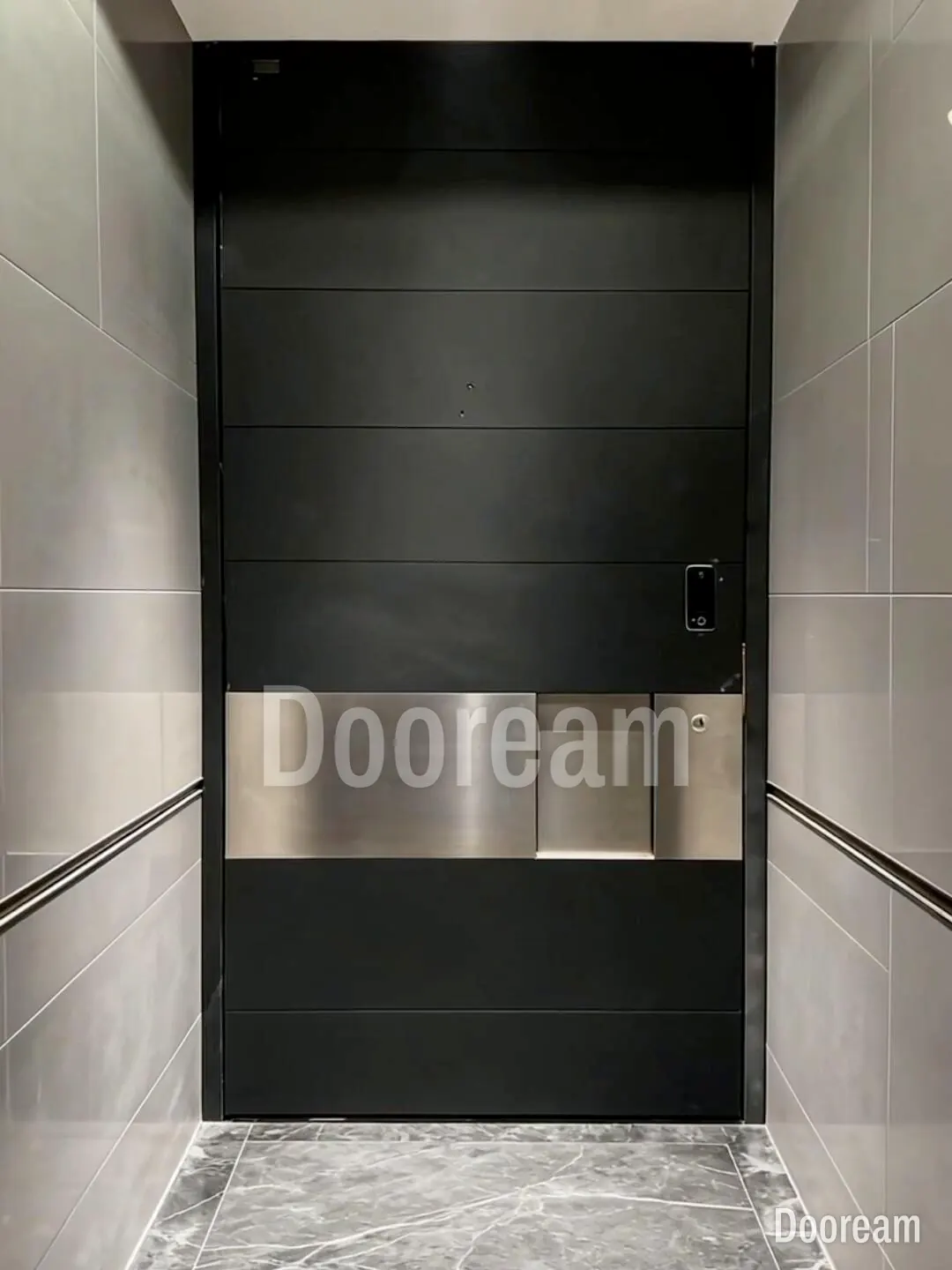
At handover, record a baseline: top gap at both sides, bottom gap at the pivot and the far end of the swing, side gaps at mid-height, and closing time from halfway open. Photograph each reading; drill bits make cheap gap gauges.
Monthly (owner or facilities)
- Sweep the floor plate, threshold and floor under the swing; clear the drain.
- Open to 90°: the door should hold. Let go from halfway: it should close and latch without slamming.
- Smart lock: check the battery level; wipe the reader.
Every 6 months (facilities or installer)
- Seals and drop seal: paper closed in the door should grip everywhere; look for tears and flattening.
- Lock: every bolt meets its keep without force; keeps tight.
- Gaps and closing time against the handover readings.
- Fixings: pulls, handles, keeps and visible frame fixings; floor plate firm.
Yearly (installer)
- Full gap survey, and a plumb check from floor plate to top pivot.
- Closing settings reset if the door has changed.
- Locks checked as their maker asks (KFV: all moving parts yearly).
- Backup key tested.
- Finish inspected and washed (aluminium door maintenance).
When is the floor or the building the cause?
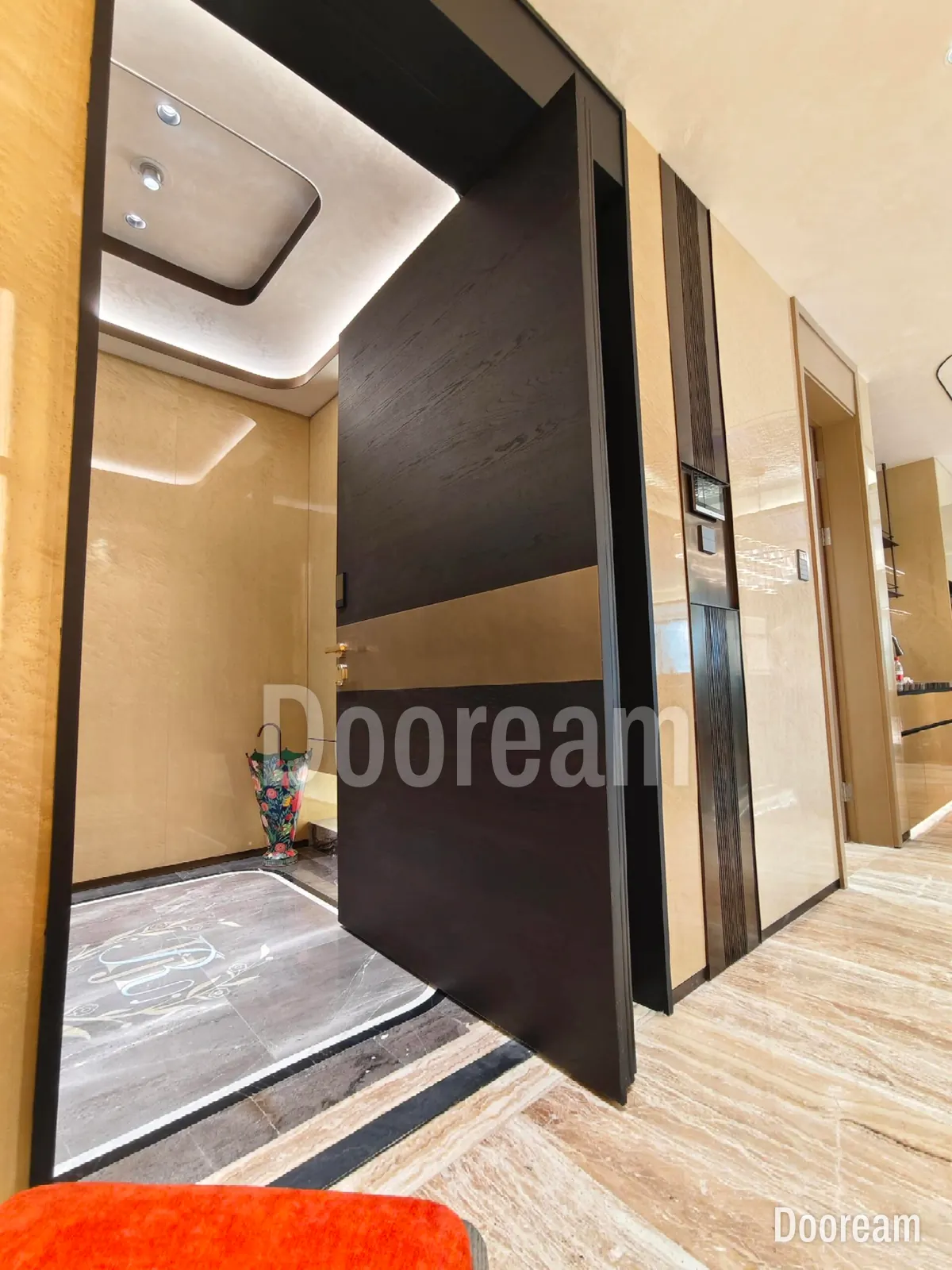
When the gaps change over months, not overnight, and adjustment no longer brings them back. A hinge corrects millimetres and degrees; a sagging head, a rising floor or a moving frame needs a building fix first, and then the installer re-sets the door.
- Top gap closing: the head is sagging. FritsJurgens gives 4–10 mm and warns: “In all situations, beware of sagging.”
- Scraping at one part of the swing: the floor under the sweep has risen, from a new tile, threshold, rug or a curling screed (uneven floors).
- Loose plate or cracked finish round it: the floor cannot take the point load, or a joint runs under it (preparing the floor).
- Change after the first heating season: the heated screed moved (underfloor heating).
- Change in a new building’s first year: drying and settlement; the first yearly check matters most.
Does wind cause pivot door problems?
Yes. A gust can push a leaf past its hold position, slam it or stop it closing, and adjustment alone rarely cures an exposed entrance. FritsJurgens recommends inward opening for exterior pivot doors. The causes and design fixes are in pivot doors and wind.
How does this work with Dooream?
Our pivot doors run on FritsJurgens pivot hinges, with smart locks from KFV, G-U and Wintech, so those makers’ instructions apply. Your local installer fits and services the door from our installation drawings, with our remote guidance. The warranty runs two years from shipment. For a problem, send photos or a video, gap readings and when it started via our contact page.
Sources, checked November 2026: FritsJurgens, support (maintenance and adjustment), System M+, System M+ technical documentation (04/2026), pp. 5, 8, 12–13 and 20–25, installation video manual, exterior pivot doors and M+ in depth: Damper Control; KFV (SIEGENIA), operating instructions, key-operated multi-point locks (03.2020), pp. 4–6 and 15–16; dormakaba, BTS 80 technical product brochure (December 2025) and BTS 80 / BTS 75 V product sheet (spindle extensions); athmer, Schall-Ex L-15/30 WS Pivot spec sheet.
Quick answers
Why does my pivot door slam or close too fast?
On a hydraulic hinge such as FritsJurgens System M+, the soft close is set with Damper Control, the speed over the last 30° with 30° Speed Control, and Latch Control adds speed just before the door closes. FritsJurgens notes that wind pressure, temperature and the resistance of seals and locks also change how the door closes. Have the installer adjust in small steps, following the maker's instructions for the exact system.
Why is my pivot door scraping the floor?
Usually because something has moved into the gap under the leaf. With FritsJurgens hinges the floor plate sets that gap, 11 mm with a squared or round plate and 7 mm with a Flush plate, and no height adjustment is listed. A rising floor, a new tile or rug, a sagging head or a top pivot not fully extended shows up as scraping.
How often does a pivot door need maintenance?
Monthly, clear grit from the floor plate, threshold and drain and watch the door close. Every 6 months, check seals, drop seal, lock engagement, gaps and fixings. Yearly, have the installer check everything against the handover readings. FritsJurgens says its hinges need no lubrication or scheduled servicing.