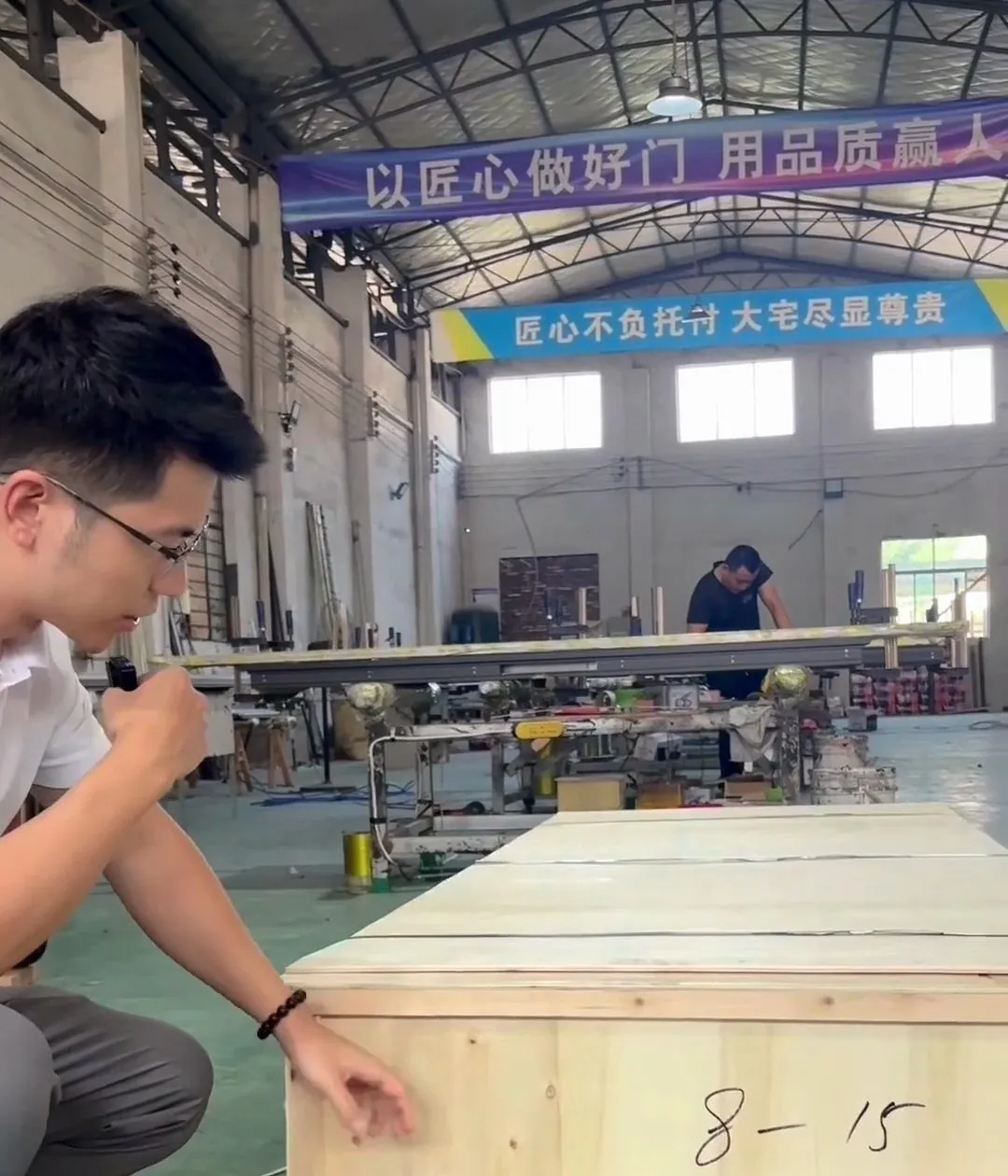
Short answer: for a crated door in a container, use FCA if your forwarder books the freight, or CPT or CIP if the seller does. ICC says FOB, CFR and CIF suit goods loaded on board a ship, not containers handed to a carrier at a terminal. EXW works if your forwarder handles export clearance and loading; avoid DDP where duties are high or changing.
Which Incoterm should I use for an imported entrance door?
For a crated door in a container, the usual choice is FCA if you appoint the forwarder, and CPT or CIP if the seller arranges the freight. EXW also works when your forwarder can clear the door for export in China. FOB, CFR and CIF are sea-only rules, and DDP hands your import duty and paperwork to the seller.
An Incoterm sets where risk passes, who pays each cost and who handles export and import formalities. It does not settle ownership or payment; the contract does. Write the term with its place and edition, as in “EXW Wuyi Incoterms 2020”. ICC warns that omitting the year can cause problems.
Is Incoterms 2020 still current, or is there an Incoterms 2030?
Incoterms 2020 is still the current edition in November 2026. ICC’s 2026 workplan, published in January 2026, says it will “begin work on the revision of the Incoterms rules, laying the groundwork for Incoterms 2030”. By October 2026 there was no draft text and no launch date. There is no “Incoterms 2025”.
What does each term mean for a crated door in a container?
The table follows one crate from a factory in China to your site. Under the C rules the seller pays the freight to your country, but you carry the risk from loading in China: if the crate is damaged at sea, you make the claim. FAS, the eleventh rule, is sea-only; ICC points container users to FCA.
| Term | Risk passes to you | Loading at factory | Export clearance | Main freight | Insurance | Import clearance, duty | Unloading at the end |
|---|---|---|---|---|---|---|---|
| EXW (Ex Works) | Placed at your disposal at the factory, not loaded | You | You; seller only assists | You | Your choice | You | You |
| FCA (Free Carrier) | Handed to your carrier at the named place | Seller, if at the factory | Seller | You | Your choice | You | You |
| FOB (Free on Board) | On board the ship in China | Seller | Seller | You | Your choice | You | You |
| CFR (Cost and Freight) | On board the ship in China | Seller | Seller | Seller, to your port | Your choice | You | You |
| CIF (Cost, Insurance and Freight) | On board the ship in China | Seller | Seller | Seller, to your port | Seller: Clauses (C), 110% | You | You |
| CPT (Carriage Paid To) | When handed to the first carrier | Seller | Seller | Seller, to the named place | Your choice | You | You |
| CIP (Carriage and Insurance Paid To) | When handed to the first carrier | Seller | Seller | Seller, to the named place | Seller: Clauses (A), 110% | You | You |
| DAP (Delivered at Place) | At the named place, on the arriving truck | Seller | Seller | Seller | Seller’s risk | You | You |
| DPU (Delivered at Place Unloaded) | At the named place, unloaded | Seller | Seller | Seller | Seller’s risk | You | Seller |
| DDP (Delivered Duty Paid) | At the named place, cleared for import | Seller | Seller | Seller | Seller’s risk | Seller, with duty and taxes | You |
Why are FCA, CPT and CIP better than FOB, CFR and CIF for containers?
Because a container is handed to the carrier at a terminal or depot before it is loaded on the ship. ICC’s notes say FOB “is not appropriate where goods are handed over to the carrier before they are on board the vessel” and point to FCA instead. For CFR and CIF they point to CPT and CIP.
Under FOB the seller keeps the risk while the container waits at the terminal, out of its control. Under FCA the risk passes when the crate reaches your carrier, which matches what happens. Since 2020, FCA also lets the parties agree that the seller gets an on-board bill of lading, a change meant to make FCA easier to use instead of FOB.
What is the problem with EXW, and how do buyers handle it?
Under EXW the seller only places the door at your disposal at its premises. It need not load it or clear it for export; it only helps with documents, at your request, risk and cost. ICC notes that this may cause problems with loading and export clearance. Buyers handle it like this:
- Appoint a forwarder that can clear export in China, and ask what it needs from the factory.
- Get the invoice and packing list early, with each crate’s size and gross weight.
- Agree who loads. Risk passes before loading, so agree in writing who lifts the crate onto the truck and whose insurance covers it.
- Insure from the factory, not from the port.
- Book collection during production; see ordering custom doors from China.
- If export papers are a problem, ask for FCA. At the seller’s premises, the seller then loads your truck and clears export.
For what EXW leaves out of the price, see EXW price vs landed cost.
Why is DDP risky for door imports?
DDP gives the seller more obligations than any other rule: it clears the door for import and pays your duty and taxes. Duty is charged at the rate in force when the door is imported, weeks after the price was agreed. If the rate rises, the seller has priced that risk in or will want to renegotiate.
- Changing tariffs. For current US rates, see importing entrance doors into the USA.
- Unrecoverable tax. ICC warns the seller may pay tax it cannot recover from the buyer, which ends up in the price.
- Approvals. The importer, here the seller, declares the tariff code and handles approvals; in Saudi Arabia the importer registers the product on SABER (our SABER guide).
- ICC’s alternative: DAP or DPU, with import clearance left to you.
What insurance comes with CIF and CIP, and is it enough for a carved door?
Under CIF the seller only has to buy minimum cover, Institute Cargo Clauses (C). Under CIP it must buy Clauses (A), the broadest standard cover. In both, the sum insured must be at least the contract price plus 10%. For a carved or cast face, ask for Clauses (A) in the contract, whatever the term.
| Risk | Clauses (A) | Clauses (C) |
|---|---|---|
| Fire, sinking, collision, overturned truck | Covered | Covered |
| Damage while loading or discharging the ship | Covered | Not covered |
| Rain water; sea water entering the hold | Covered | Not covered |
| Theft | Covered | Not covered |
| Other physical damage, such as a dent from handling | Covered | Not covered |
| Insufficient or unsuitable packing | Excluded | Excluded |
Clauses (C) pay mainly for major casualties. A carved face is far more likely to be dented or scratched in handling, which only (A) covers. War and strikes need the separate Institute War and Strikes Clauses; under CIP the buyer can ask for them at its cost. Check them on 2026 Gulf routes (UAE import guide).
Does the Incoterm change the import duty?
Not the law, but what goes into the number. Each country sets in law which costs count in the customs value. The Incoterm on the invoice tells customs which of those costs the price already includes, so your broker knows what to add or deduct.
| Cost | United States | Australia | European Union | UAE (Dubai) |
|---|---|---|---|---|
| Door at the factory (EXW price) | Dutiable | Dutiable | Dutiable | Dutiable |
| Trucking and handling in China | Not added to an EXW price; dutiable in an FOB price unless shown separately and on a through bill of lading | Dutiable | Dutiable | Dutiable, part of CIF |
| Sea freight and insurance to your country | Not dutiable | Not dutiable; added for GST | Dutiable, up to the EU border | Dutiable, part of CIF |
| Costs after arrival | Not dutiable | Not dutiable | Not dutiable | Not part of CIF |
In a CIF country such as the UAE, buying EXW does not lower the duty: the broker adds freight and insurance to the port. In the US, an EXW price keeps the trucking in China out of the dutiable value. If freight and insurance add a fifth to the door’s value, a 5% duty on CIF equals 6% of the door alone. Ask for door, freight and insurance as separate invoice lines.
Checklist: choosing the term for a door order
- Who books the main freight? You: EXW or FCA. The seller: CPT or CIP.
- Can your forwarder clear export in China? If not, FCA instead of EXW.
- Who loads at the factory, and who unloads on site? Only DPU makes the seller unload.
- Insurance on Clauses (A), factory to site, at least 110% of the price, plus war and strikes on risky routes.
- Duty high or changing? Keep import clearance yourself: DAP rather than DDP.
- Term, place and “Incoterms 2020” on the quote, contract and invoice.
- Quotes compared on the same term (how to compare door quotes).
How does this work with Dooream?
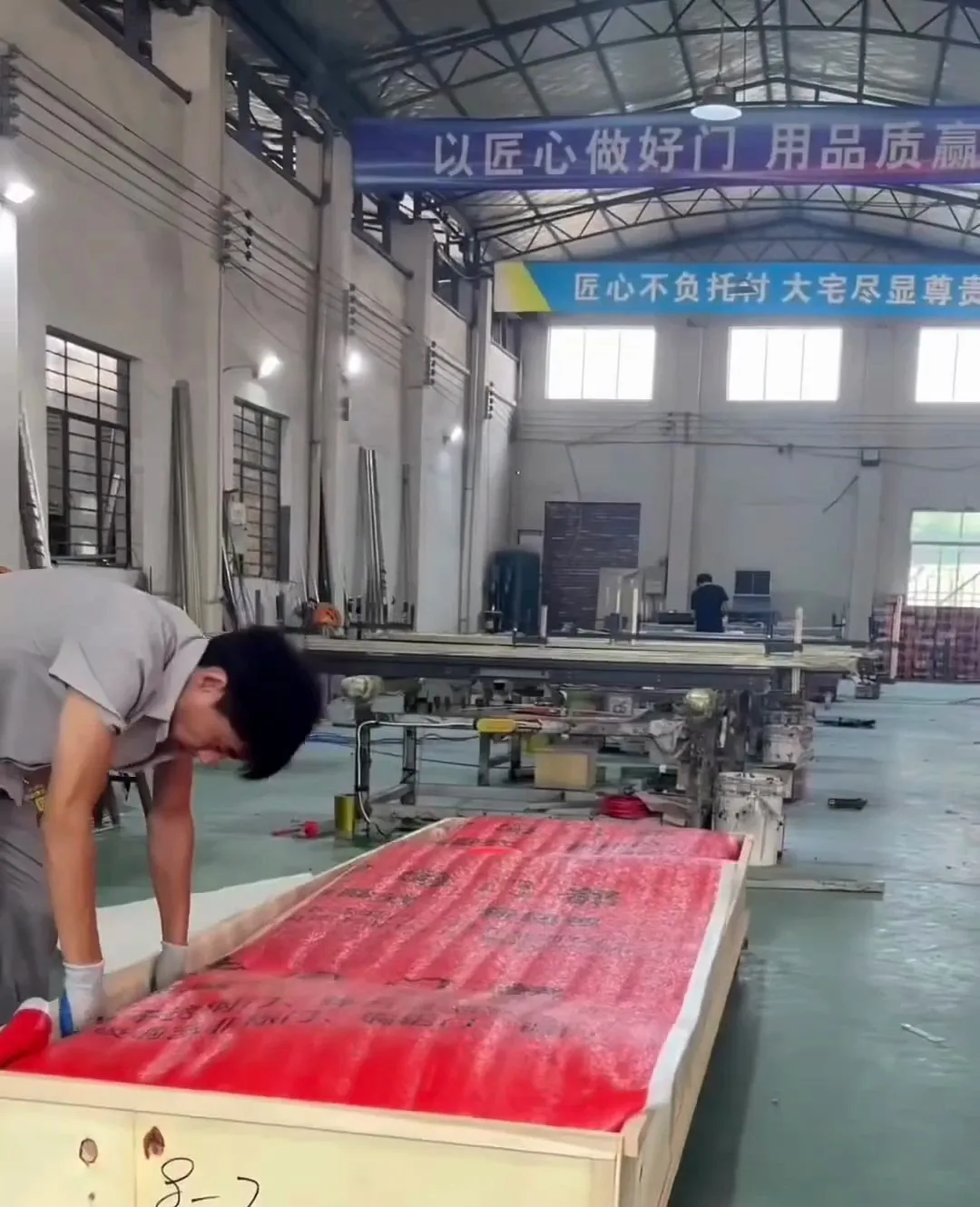
We quote EXW at our factory in Wuyi; your freight forwarder collects the door there. Production takes 35–45 days after drawing approval and the 50% deposit. We send photos and video of the finished door before shipment, and the other 50% is paid before it ships. Each door is packed in blankets, foam and a wooden crate. If you want another Incoterm, ask when you request the quote. Send your opening through our contact page.
Sources, checked November 2026: ICC Digital Library, Incoterms 2020 introduction, rules for any mode of transport, rules for sea and inland waterway transport and Incoterms 2020 Q&A; ICC Academy, FCA or FOB, CIP or CIF and Incoterms 2020 vs 2010; ICC, 2026 Global Policy Commissions Workplan (January 2026); DHL, what is known about the next Incoterms revision (October 2026); US Code, 19 U.S.C. 1401a, and US regulations, 19 CFR 152.103; Australian Border Force, value of imported goods; Finnish Customs, transaction value (EU rules); UAE Government, customs duty and tariff; MSIG, cover comparison between ICC (A), (B) and (C).
Quick answers
Which Incoterm is best for importing entrance doors in a container?
Usually FCA if your own forwarder books the freight, or CPT or CIP if the seller does. ICC advises against FOB, CFR and CIF when goods are handed to a carrier before they are on board the ship, as containers are. EXW works if your forwarder handles export clearance and loading is agreed. Avoid DDP when duties are high or changing.
What insurance does CIF include compared with CIP?
Under Incoterms 2020, CIF only requires the seller to buy minimum cover, Institute Cargo Clauses (C), while CIP requires Clauses (A), the broadest cover. In both, the sum insured must be at least the contract price plus 10%. For a carved or cast door, ask for Clauses (A) whatever the term.
Is there an Incoterms 2030?
Not yet. Incoterms 2020 is still the current edition in November 2026. ICC's 2026 workplan, published in January 2026, plans to begin work on the revision, laying the groundwork for Incoterms 2030. No draft text or launch date had been published by October 2026.