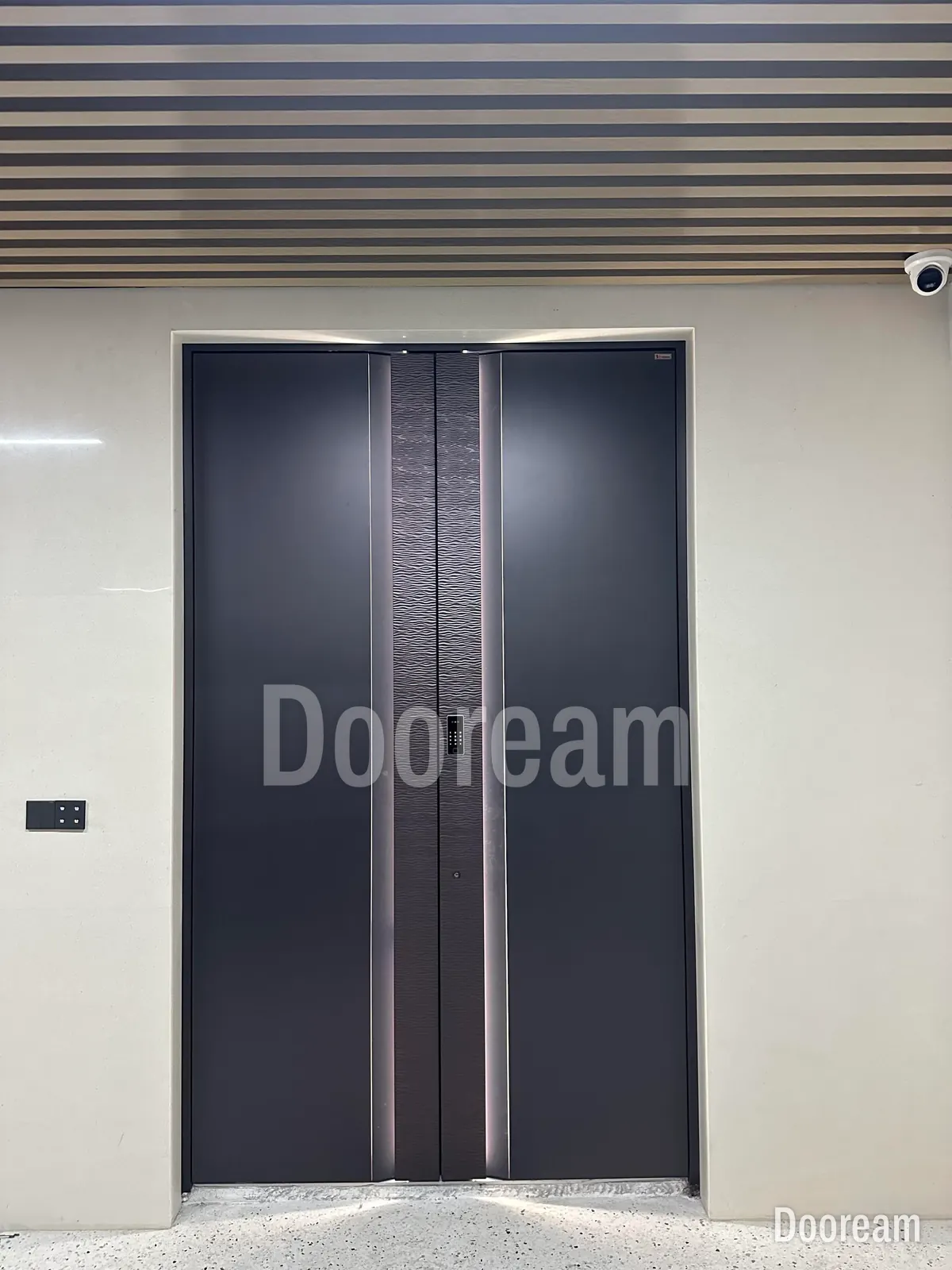
Short answer: the Saudi importer, not the factory, does the paperwork: a Product Certificate of Conformity (PCoC) on SABER from a SASO-accepted body, a Shipment Certificate (SCoC) for every shipment, then clearance on Fasah with duty and 15% VAT. Start the PCoC before production. In late 2026, ship to Jeddah, not Dammam.
For sizes, styles and heat, see our villa entrance doors guide. For the UAE, see importing entrance doors into the UAE.
Which Saudi regulation covers entrance doors?
SASO’s Technical Regulation for Doors, Windows and their Accessories covers doors and windows used in buildings, including fire-resistant ones. It was published on 27 November 2020, applied at ports and factories from 27 June 2021, and was first amended on 9 June 2023. Aluminium doors are tested to the Saudi standard SASO 1034.
| Requirement | What it means for an entrance door |
|---|---|
| Conformity route | Type 1a (type approval, ISO/IEC 17067) for ordinary doors; Type 3 for fire-resistant doors |
| Standards | SASO 1034 for aluminium doors; hardware standards such as SASO-EN 1303 (lock cylinders), SASO-EN 1906 (lever handles) and SASO-EN 1935 (hinges) |
| Main tests for aluminium doors | Visual inspection, dimensions, ease of operation, bending and frame, air permeability, watertightness |
| Factory | An effective environmental management system; ISO 14001 certification counts |
| Technical file | Declaration of conformity, risk assessment, country of origin, test reports, list of standards, instructions, photos |
| Label | In Arabic (another language may be added), with warnings and instructions, clear and hard to remove; SI units |
Two clauses are easy to miss. Meeting the regulation does not replace the Saudi Building Code. And any change to a certified product, other than a cosmetic one, cancels its certificate.
How does SABER work, step by step?
SABER is SASO’s online platform. Only importers, SASO-accepted conformity assessment bodies and Saudi customs use it. The importer opens an account, adds the product by HS code, and asks an accepted body for a PCoC. Then, for each shipment, the importer requests an SCoC linked to that product certificate.
- Open the account as a new user on SABER and activate it by email.
- Add the product by its HS code or name.
- Choose an accepted body from SABER’s list and send it the technical file. The importer can apply in the manufacturer’s name, with its consent.
- Review. The body checks the HS code, labels, test reports and other documents, and may examine a sample. It issues the PCoC on SABER, naming the manufacturer, product and models, country of origin and HS code. A PCoC is valid for one year and is charged per model.
- Shipment certificate. Before each shipment leaves, select the certified product and enter the invoice details (date, number, value, currency, supplier), the models, quantity and country of shipment. The body checks them and issues the SCoC.
A PCoC is grouped by product description, HS code, manufacturer and country of origin; if one differs, you need another. For doors made to drawing, ask the body first how it defines a model: by construction, or by each face design and size. Ask too whether fitted locks and hinges need their own certificates, and whether a smart lock falls under other regulations.
Which HS code: 7610.10 or 7308.30?
Doors are classified by material. HS 7610.10 covers doors, windows, their frames and thresholds of aluminium; HS 7308.30 covers the same of iron or steel. Both headings are listed in SASO’s doors regulation. Your customs broker decides the code, and it must be the same on SABER, the invoice and the customs declaration.
Our doors, for example, have an aluminium profile frame and honeycomb core between galvanised steel sheets, usually behind a carved aluminium face, so the code can be argued either way. Settle it before the PCoC, because a different code needs a different certificate. Look the code up in ZATCA’s Integrated Tariff e-service: search by word, heading or code, open Details, then Procedures for the full tariff details and any import conditions.
What duty and VAT will you pay?
VAT on imports is 15%. It is charged on the customs value, which is the price plus freight and insurance to the Saudi port, plus customs duty and other charges. The duty rate depends on the code. Saudi Arabia revised many rates from 27 November 2025, including for building materials, so use the tariff, not an old quote.
ZATCA calculates both from the customs declaration, and both are paid before clearance. The importer must be licensed to import. To turn our EXW price into a landed cost, see EXW price vs landed cost.
What labels and marks does the door need?
Two sets of rules apply. SASO’s regulation asks for a product label in Arabic, with warnings and instructions, clear and hard to remove. Customs asks for the country of origin on every imported item, in Arabic or English, by a permanent method such as engraving or embossing. A sticker is accepted only if it cannot be removed.
- On the door: a permanent “Made in China” mark. On a fine door, agree a discreet place before production, such as the hinge edge of the leaf or the frame rebate.
- Instructions: in Arabic, or Arabic and English.
- On each crate: gross weight, the consignee’s name or initials, consecutive numbers if there is more than one crate, and the country of manufacture.
- Certificate of origin: ZATCA says it is unnecessary when the origin is clearly established. Ask your broker whether they still want one.
Goods without proper origin marking may be re-exported or destroyed at the importer’s cost, or sometimes corrected in a customs area within two weeks against a fine. Inspectors may also take samples at the port for testing and charge the cost to the importer or manufacturer. Our crating guide covers packing and ISPM 15.

How do doors get to Saudi Arabia in late 2026?
Through Jeddah Islamic Port on the Red Sea. King Abdulaziz Port in Dammam is inside the Gulf, behind the Strait of Hormuz. On 11 November 2026 Al Jazeera reported Iran’s position that the strait stays shut until its conditions are met. Maersk’s update of 6 November accepted dry cargo for Jeddah but not for Dammam or Al Jubail.
- Riyadh and Dammam: Maersk moves Saudi imports on from Jeddah by land.
- Large crates: on 6 November Maersk suspended out-of-gauge cargo, which sticks out beyond the container, to all Saudi ports, including Jeddah. Check the crate fits; see pivot door size and weight.
- Red Sea risk: since declaring a blockade of Saudi-linked shipping in July 2026, the Houthis had attacked 10 commercial ships, most of them tankers, by 1 October (ACLED).
- Hormuz risk: monitors counted at least 37 attacks on ships in and near the strait in October 2026.
- Insurance: check that your cargo policy covers war risks on the route your forwarder books.
How long does it take from order to site?
Production takes 35–45 days from drawing approval and deposit; freight, clearance and land transport vary with the route. Run the PCoC alongside production, because the SCoC needs it and must be issued before the door ships, so a late PCoC holds a finished door at the factory.
| Step | Who | Time |
|---|---|---|
| Agree HS code, open SABER account, appoint broker and forwarder | Importer | Before ordering |
| Approve drawing, pay 50% deposit | Importer | Day 0 |
| Send product documents; apply for the PCoC | Manufacturer, then importer or agent | From day 0; depends on the body and any testing |
| Production | Manufacturer | 35–45 days |
| Photos and video of the finished door; pay 50% balance | Both | End of production |
| Request the SCoC with the invoice | Importer | Before the door ships |
| Collect the crate EXW Wuyi, ship to Jeddah | Forwarder | Ask for route and transit time |
| Customs declaration on Fasah; pay duty and VAT | Broker | At least 48 hours before arrival |
| Clearance and land transport to site | Broker, haulier | Varies |
| Installation | Local installers | After delivery |
What should the importer check?
Use this list from the first quote to clearance. Each line is something the conformity body, customs or the carrier will ask for; a missing one keeps the door at the factory or the port.
- Import licence, ZATCA identity (such as the commercial registration) and SABER account active
- HS code agreed with the broker and used everywhere
- Accepted body chosen; model definition, hardware and smart-lock questions answered in writing
- Technical file complete, including test reports and evidence of the factory’s environmental management, as the body asks
- PCoC issued, and still valid on the shipment date
- Arabic label, instructions and origin mark agreed before production
- Crate markings: gross weight, consignee, numbers, origin
- SCoC issued before the door ships
- Port, equipment and war-risk insurance confirmed
- Fasah declaration filed at least 48 hours before arrival; duty and VAT funded
- Installer booked, with the installation drawings
How does this work with Dooream?
We supply the product documents a Saudi importer needs for SABER registration. We do not register the importer or apply for the certificates; you or your agent do that through SABER and an accepted body. Prices are EXW at our factory in Wuyi, and your freight forwarder collects the door. Production takes 35–45 days after drawing approval and the 50% deposit. We send photos and video of the finished door before you pay the 50% balance, and pack it in blankets, foam and a wooden crate. Your local installers fit it with our installation drawings and remote guidance, and the warranty is two years from shipment. See villa doors for Saudi Arabia and the UAE or contact us.
Sources, checked November 2026: SASO, Technical Regulation for Doors, Windows and their Accessories (Arabic) and guide to the regulation (Arabic, 1 December 2024); International Trade Administration, Saudi Arabia requirements to certify imports (May 2021) and labeling and marking requirements (May 2026); ZATCA, Import Instructions, Integrated Customs Tariff user manual and VAT guideline on imports (May 2026); EY, Saudi Arabia amends its integrated customs tariff schedule (December 2025); CBSA, Customs Tariff 2026, chapter 73 and chapter 76 (HS descriptions); Maersk, Middle East Operational Update 53 (6 November 2026) and Changes to cargo routed via Jeddah (28 May 2026); Al Jazeera, Iran says Hormuz will stay shut until demands are met (11 November 2026); ACLED, Houthi gains around Bab al-Mandab (1 October 2026).
Quick answers
Which Saudi regulation covers imported entrance doors?
SASO's Technical Regulation for Doors, Windows and their Accessories, applied at ports since 27 June 2021. Aluminium doors are tested to SASO 1034 and need a Type 1a certificate of conformity; fire-resistant doors need Type 3. The importer registers the product on SABER.
What is the difference between a PCoC and an SCoC?
The Product Certificate of Conformity (PCoC) is issued per product by a SASO-accepted conformity assessment body after it reviews the technical file and test reports, and is valid for one year. The Shipment Certificate (SCoC) is requested on SABER for each shipment, before it ships, with the invoice details.
Can doors reach Saudi Arabia while the Strait of Hormuz is closed?
Yes, through Jeddah Islamic Port on the Red Sea. Maersk's update of 6 November 2026 accepted dry cargo for Jeddah but not for Dammam, moved Saudi imports on to Riyadh and Dammam by land, and suspended out-of-gauge cargo to all Saudi ports.