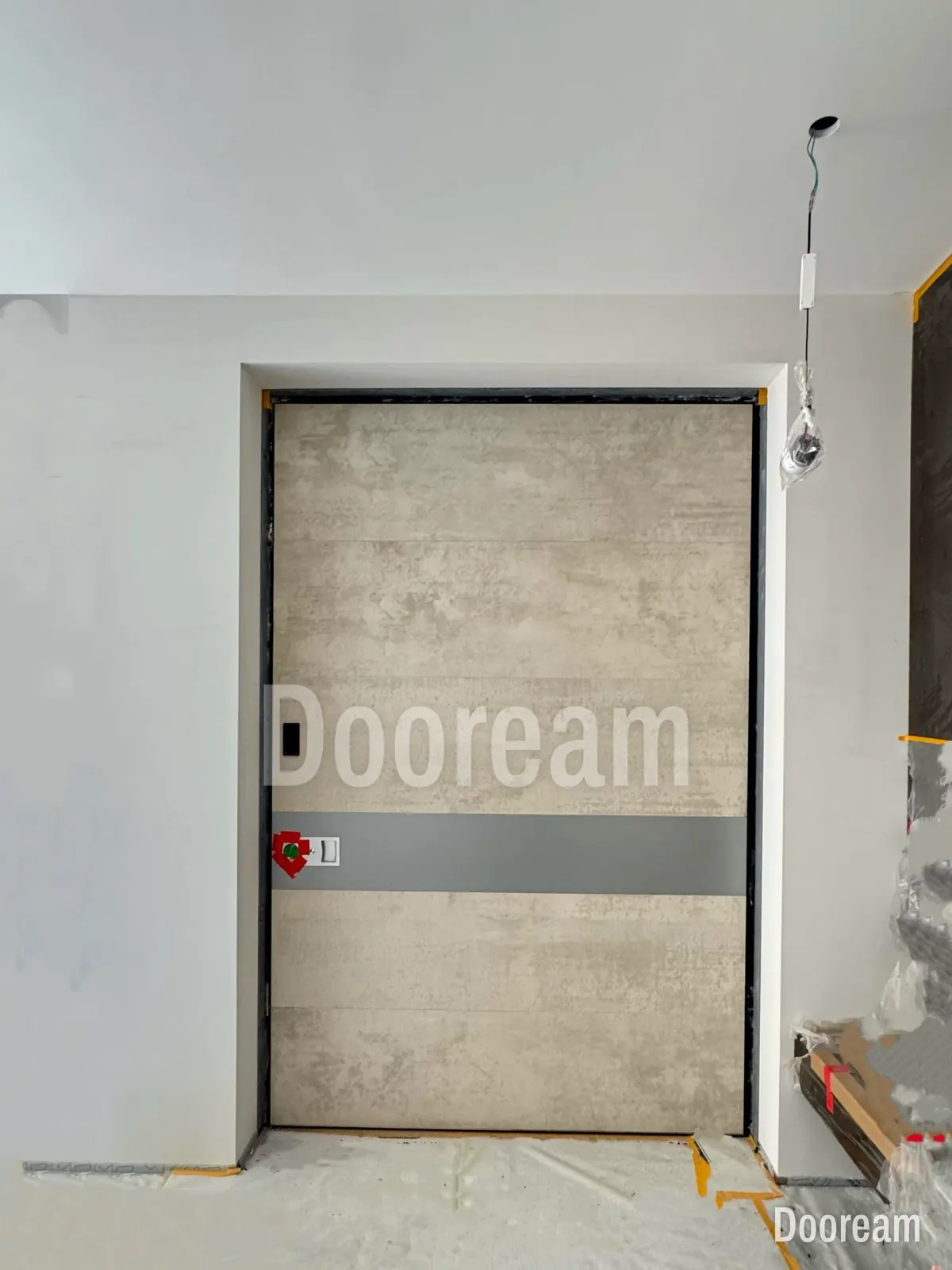
Short answer: yes, but not from every factory. Many set a minimum order quantity, because the drawing, setup, crate and freight paperwork cost about the same for one door as for ten. A factory that makes every door to drawing, as we do, can take one. It then usually travels by sea in a shared container (LCL), or with other goods your forwarder is already bringing from China.
Can you order just one custom entrance door from a Chinese factory?
Yes, from factories that make each door to a drawing. Many door factories set a minimum order quantity (MOQ), per design, size or container, so that every order covers its fixed costs. A factory that draws each door for its opening anyway has less reason to refuse one. We make from one door.
NetSuite defines an MOQ as the fewest units a supplier will sell at one time, set to cover fixed costs such as setup, administration and the supplier’s own raw-material minimums. For a factory making standard doors in long runs, one door interrupts the run. For a factory working to drawing, every order is already its own run.
Before you send drawings, ask:
- Is the minimum per order, per design, per size or per container?
- Is a one-door order built with the same construction, hardware and checks as a batch?
- How many drawing revisions are included?
How does a one-door order run differently from a batch?
The steps are the same: drawing, approval, deposit, production, checks, crating and freight. What changes is how the fixed work is shared and how the crate travels. The full sequence is in ordering custom doors from China. How long each stage takes, from enquiry to installed, is in custom entrance door lead time.
| Step | One door | A batch |
|---|---|---|
| Drawing | One full drawing, worked out for one opening | One drawing per door type; identical doors share it |
| Sample | A finish or construction sample; the door itself is the only full-size one | Often a first door approved as the benchmark for the rest |
| Production slot | Made alongside other orders; the clock starts at drawing approval and deposit | Same start; identical parts can be cut and finished together |
| Checks | Photos, video or an inspection visit for one door | One visit or one set of photos covers many doors |
| Crate | Built to that leaf and frame | Crates can be sized to fill a container |
| Freight | Usually LCL, or consolidated with other goods | Often a full container (FCL) |
| Paperwork | One invoice, packing list, customs entry and delivery | The same paperwork, spread over many doors |
On one door, a full-size sample means making the door twice. A small finish sample and the drawing are usually enough, with the finished door checked by photos, video or inspection before the balance. See door samples for what each sample proves.
How do you ship one door from China?
By sea, in one of three ways: LCL (less than container load) in a shared container; consolidated with other goods your forwarder is already bringing from China; or a full container when the crate is too big for LCL. Air freight only suits small parts. Transit times by market are in shipping doors from China.
LCL. Your crate shares a container with other shippers’ cargo. DHL says LCL is charged on weight or measurement (W/M), whichever is larger: weight in metric tonnes, volume in cubic metres. Maersk’s LCL terms count 1 m³ as 1,000 kg, and set a minimum cargo quantity of 1 weight-or-measure unit where their US filing clause applies. Ask your forwarder what minimum its tariff charges, because a crate below it pays the minimum.
For example, a crate of 2,700 × 1,500 × 400 mm is 1.62 m³. If it weighs less than 1,620 kg, it is charged on 1.62 W/M.
LCL also has size limits. Maersk’s LCL FAQ gives 3,000 kg and 29 m³ as the maximum for a single package, and 249 cm wide, 340 cm high and 610 cm long for a pallet. A longer crate, as for a tall pivot door, has to be agreed with the forwarder first or go by full container. DHL adds that non-stackable cargo can cost extra.
Local charges. An LCL shipment also carries charges at both ends. Flexport’s quotes list them as separate lines: terminal handling, container freight station (CFS) fees for consolidating at origin and unpacking at destination, document fees, import customs clearance and delivery trucking. Ask which are per cubic metre and which per shipment: a per-shipment fee weighs the same on one crate as on ten.
Consolidation. If you already buy other goods in China, your forwarder can ship the door with them. DSV describes its buyer’s consolidation as turning multiple LCL shipments into FCL shipments, with less handling at destination. The door then pays its share of one container, not LCL charges of its own.
Full container. For one large crate, a container of its own avoids the CFS handling. Hapag-Lloyd’s 20 ft general-purpose container is 5,900 mm long inside, with a door opening of 2,340 × 2,292 mm; its 40 ft version is 12,032 mm long inside.
Air. Air freight charges the higher of actual and volumetric weight, which Maersk gives as length × width × height in cm ÷ 6,000, a divisor it attributes to IATA; some carriers use 5,000. The example crate counts as at least 270 kg before its real weight. Air suits a spare cylinder, a handle or seals, not the door.
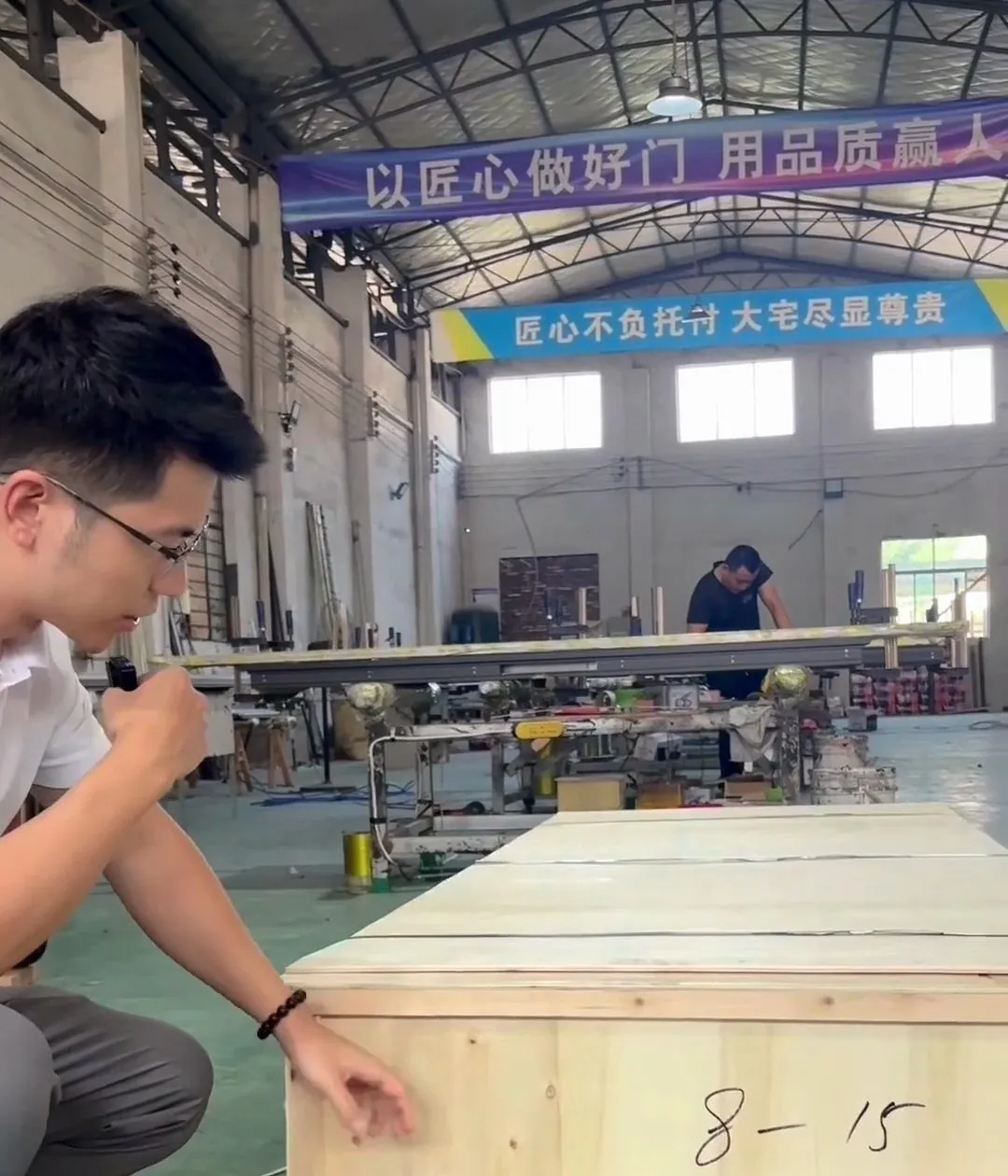
Under EXW terms, your forwarder collects the crate at the factory; see Incoterms for door imports. How the crate protects the door is in crating and shipping damage.
What costs more per door when you order only one?
The fixed costs. Drawing work, setup, the crate, freight minimums, inspection and import paperwork cost about the same for one door as for ten, so a single door carries all of them. The door itself is built the same way; only the shared costs change.
- Drawing work. The full drawing, and for a carved face the 3D file, is made for one door. On identical doors it is made once and shared.
- Setup. Setting up the CNC machine for a pattern, and the coating line for one colour, takes about as long for one door as for the first of many. A cast face needs a mould, which is why one-off designs are usually carved (cast vs carved faces).
- Crate. It is built to that door. A batch can share crate sizes and fill a container.
- Freight minimums. The LCL minimum, and fees charged per shipment at origin and destination.
- Inspection. QIMA says inspection fees depend on the service type, the factory location and the number of inspection days. One door still needs an inspector to travel to the factory.
To see the total, work out the landed cost from the EXW price, and compare factories on the same scope with our guide to comparing door quotes.
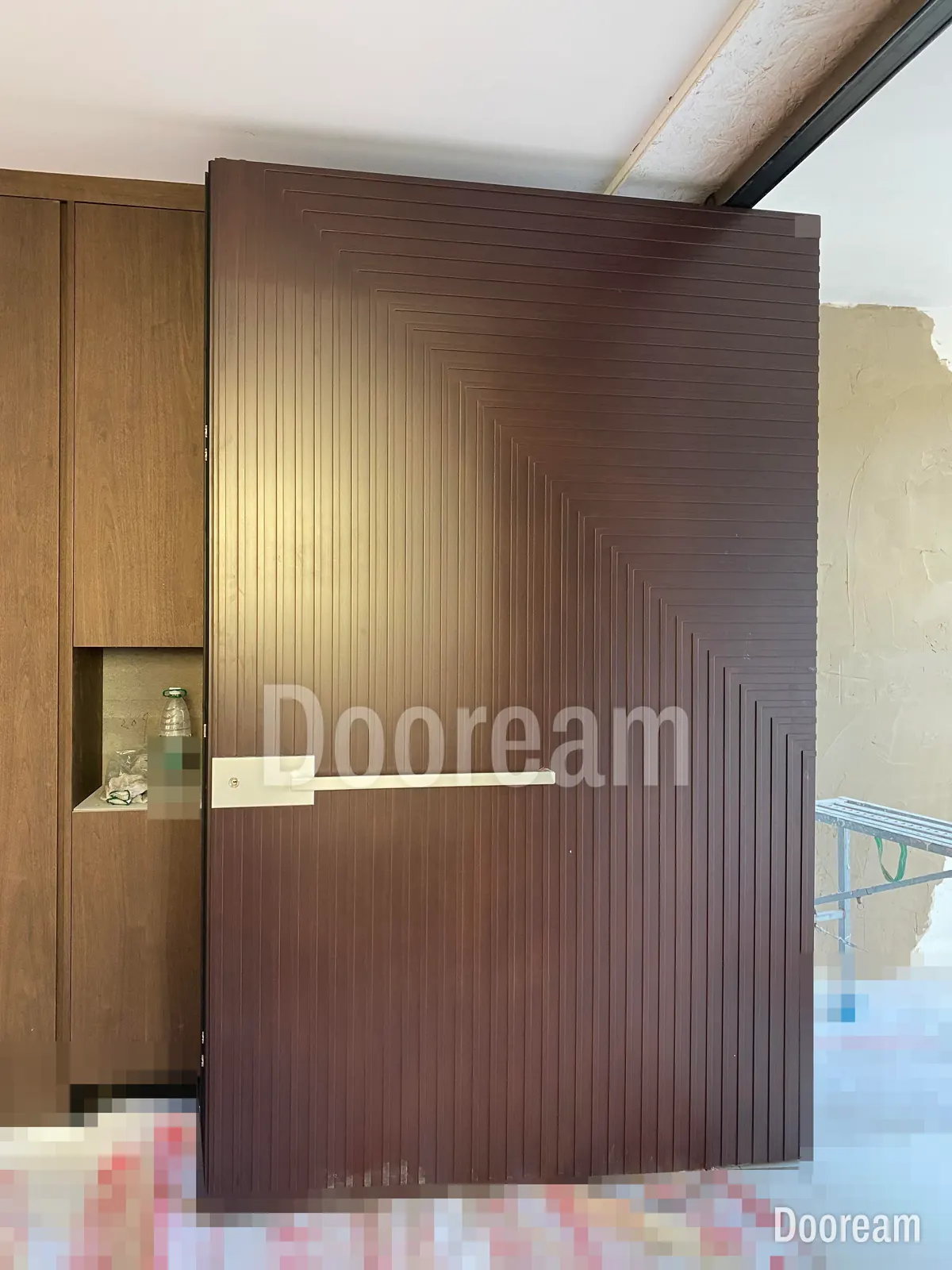
How do you keep a one-door order efficient?
Cut out the rounds that one door cannot share: redrawing, waiting for approvals, a second shipment for a forgotten part. Almost all of it is settled before production starts, by sending a complete brief, approving on time and planning the crate and freight early.
- One complete brief. Opening size and which size it is, opening direction, floor level, lock and finish, in the first message (what to send). Each gap is another round of drawings.
- Sign-offs on time. Production starts only when the drawing is approved and the deposit is in. Name one approver.
- The right sample. A finish sample, not a second full-size door, unless scale has to be judged.
- Crate size early. Ask for the crate’s outside size and gross weight before you approve the drawing, and check them against the forwarder’s LCL limits and the container doors.
- Consolidation. If you buy anything else in China, ship the door with it.
- Spares in the crate. Ask for spare keys, seals or touch-up paint to travel with the door, not by air later.
- Insurance from the factory gate, on cover that includes handling damage.
- Forwarder booked during production, so the crate meets the next LCL cut-off.
- Site ready. Time the delivery so the door goes from the port to the opening, not into storage.
How does this work with Dooream?
We make from one door, and every door is made to the buyer’s drawing. The first design direction is free, usually within one working day. We sell to trade buyers: dealers, architects, contractors and developers; homeowners order through their architect, contractor or dealer. Prices are EXW at our factory in Wuyi, Jinhua, Zhejiang, so your forwarder collects the crate and books LCL, consolidation or a full container. Payment is 50% deposit and 50% before shipment, and production takes 35–45 days after drawing approval and deposit. Before shipment we send photos and video of the finished door, and you or your inspector can check it at the factory; a video factory tour, Monday to Saturday from 14:00 to 18:00 China time, also shows it being made. Each door is packed in blankets, foam and a wooden crate, with installation drawings for your local installer. Send your opening through our contact page.
Sources, checked November 2026: NetSuite, Minimum order quantity (MOQ) (15 January 2025); DHL Global Forwarding, the cost drivers of LCL rates and less than container load; Maersk, terms for less than container load, what is the maximum CBM for LCL? and air cargo chargeable weight (10 March 2025); Flexport, common line items on quotes; DSV, buyer's consolidation; Hapag-Lloyd, container specification; QIMA, product inspections.
Quick answers
Can I order just one custom entrance door from a factory in China?
Yes, from a factory that makes each door to drawing. Many others set a minimum order quantity so that each order covers its drawing, setup and packing. We make from one door, for trade buyers such as dealers, architects, contractors and developers. Homeowners order through their architect, contractor or dealer.
How is a single door shipped from China?
By sea. Usually as LCL in a shared container, charged on weight or volume, whichever is larger, subject to the tariff's minimum; or consolidated by your forwarder with other goods you buy in China; or in a full container if the crate is too large for LCL. Air freight suits only small parts such as a cylinder or seals.
Why does one door cost more per door than a batch?
Because the fixed costs fall on one door. The drawing and any 3D carving file, the machine and colour setup, a crate built for that door, the LCL minimum and per-shipment fees, and any inspection visit cost about the same for one door as for several.