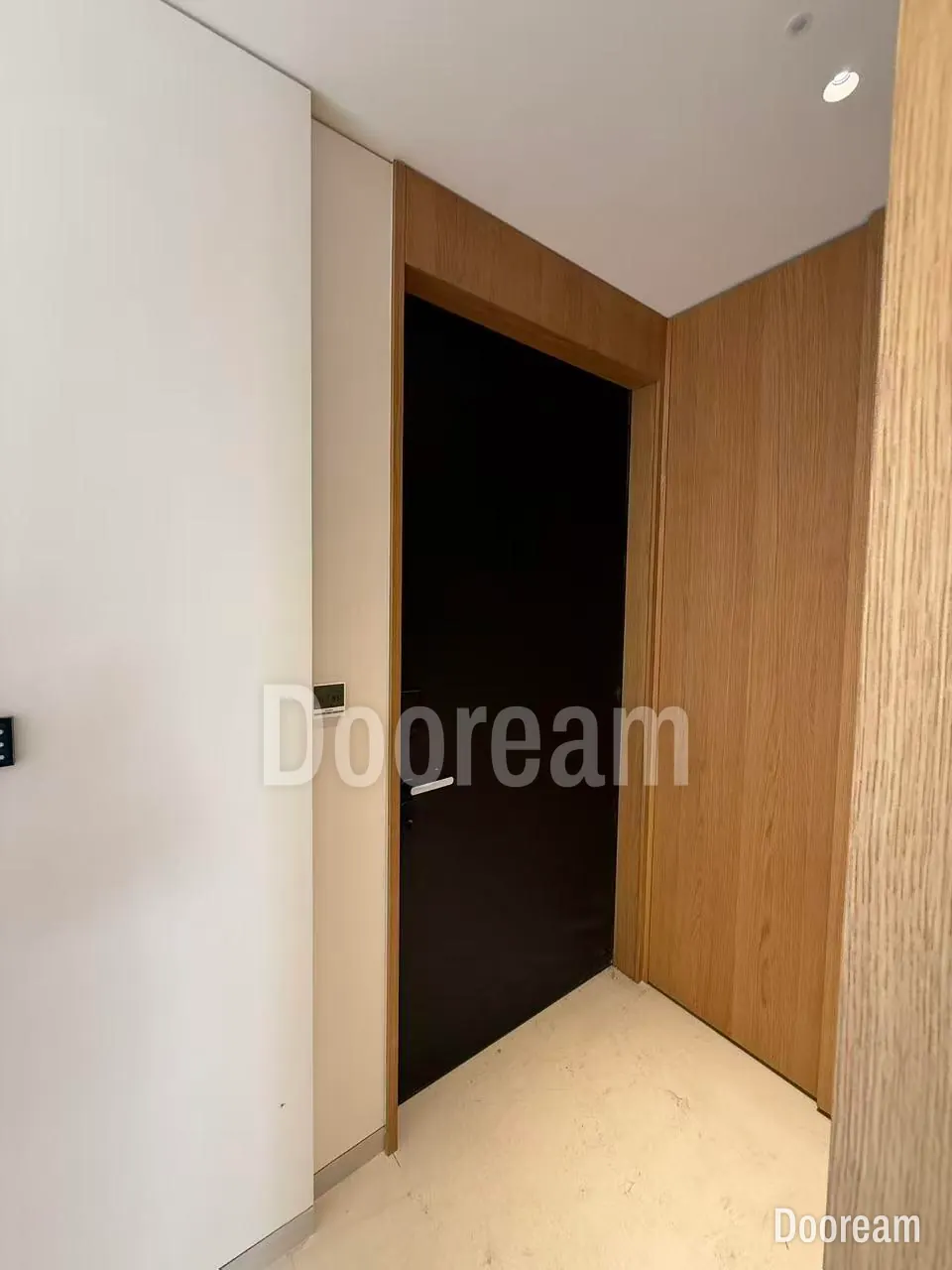
Short answer: a UK business imports the door as importer of record, with a GB EORI number and a customs broker. Aluminium doors (7610 10 00 00) pay 6% duty, steel doors (7308 30 00 00) none, and import VAT is 20%, which VAT-registered businesses can account for on their VAT Return. In England the door must also meet Part L, and on new homes Parts Q and M.
How do I import a custom entrance door from China into the UK?
Treat it as a trade import. A UK business, usually the dealer or builder, is the importer of record: it registers for an EORI number, appoints a broker or forwarder, and agrees the commodity code and the evidence building control will want before the factory starts. Homeowners buying through a builder should agree in writing who that is.
- Fix the rules: new dwelling or replacement, which nation, who signs off.
- Send the opening: see what to send a door manufacturer.
- Compare quotes on one basis: see how to compare door quotes.
- Approve samples and drawings.
- Agree the evidence: declaration of performance, U-value route and, for a new dwelling, a PAS 24 or equivalent test.
- Register: GB EORI, VAT, broker, commodity code.
- Pay the deposit; production takes 35–45 days after drawing approval and deposit.
- Ship: pay the balance; your forwarder collects (transit times).
- Clear and deliver: duty and VAT accounted for, crates checked on arrival (crating and damage).
- Install and sign off: scheme certificate or building control completion.
What duty and VAT does an entrance door from China pay?
On the UK Global Tariff, aluminium doors carry 6% third-country duty and iron or steel doors 0%; we found no preferential rate for China on either line. Import VAT is 20%, and HMRC tells you the amount once the declaration is in.
| Aluminium door | Steel door | |
|---|---|---|
| Commodity code | 7610 10 00 00 | 7308 30 00 00 |
| Duty, November 2026 | 6% | 0% |
| Import VAT | 20% | 20% |
- Which code. Our leaves have galvanised steel sheets either side of an aluminium profile frame with an aluminium honeycomb core, behind a face that is usually carved aluminium. Send your broker that breakdown. If the code is in doubt, they can ask HMRC for an Advance Tariff Ruling, a legally binding decision that takes 30 to 120 days.
- Values. Duty is charged on the door plus transport, insurance, loading and handling to the UK port; separately charged UK haulage and terminal charges can be left out, with evidence. VAT is charged on that value plus duty plus costs to the first UK destination.
Is there anti-dumping duty on aluminium doors from China?
Not on complete doors, as far as we can verify. The UK’s anti-dumping duty on Chinese aluminium extrusions runs from 17 December 2022 to 16 December 2027 and lists 29 commodity codes. 7610 10 00 00 is not one of them, and in November 2026 the UK Trade Tariff showed no anti-dumping measure on either door code.
- Scope. Unassembled bars, rods, profiles, tubes and pipes, whether or not cut, drilled or bent. Structures or parts of structures, subassemblies and finished goods kits are excluded.
- Rates. 0% to 15.6% for named exporters, 35.1% for all others.
- The risk. Loose profiles or frame parts for assembly in the UK could fall under a listed code. Ask your broker to check against the Trade Remedies Authority’s case AD0012.
What do you need to clear UK customs?
A GB EORI number, a customs declaration and a way to pay. A customs agent or transporter can make the declaration. Without the right EORI number, goods may have to be stored until you get one, so register before the door ships.
- EORI starting with GB for England, Wales and Scotland. Goods moving to or from Northern Ireland may also need one starting with XI.
- Postponed VAT accounting. A VAT-registered business declares import VAT on its VAT Return and reclaims it as input tax on the same return. A business that is not VAT-registered pays it and cannot reclaim it.
- Deferment. Regular importers can open a duty deferment account, which needs a bank guarantee.
- Port. London, helped by a fourth berth at London Gateway, and Felixstowe handled the most UK container traffic in 2025 (19.6 and 19.3 million tonnes). DP World calls Southampton a first or last call for container ships serving Northern Europe. Under EXW your forwarder collects and picks the port; see Incoterms for door imports.
What does the landed cost add up to?
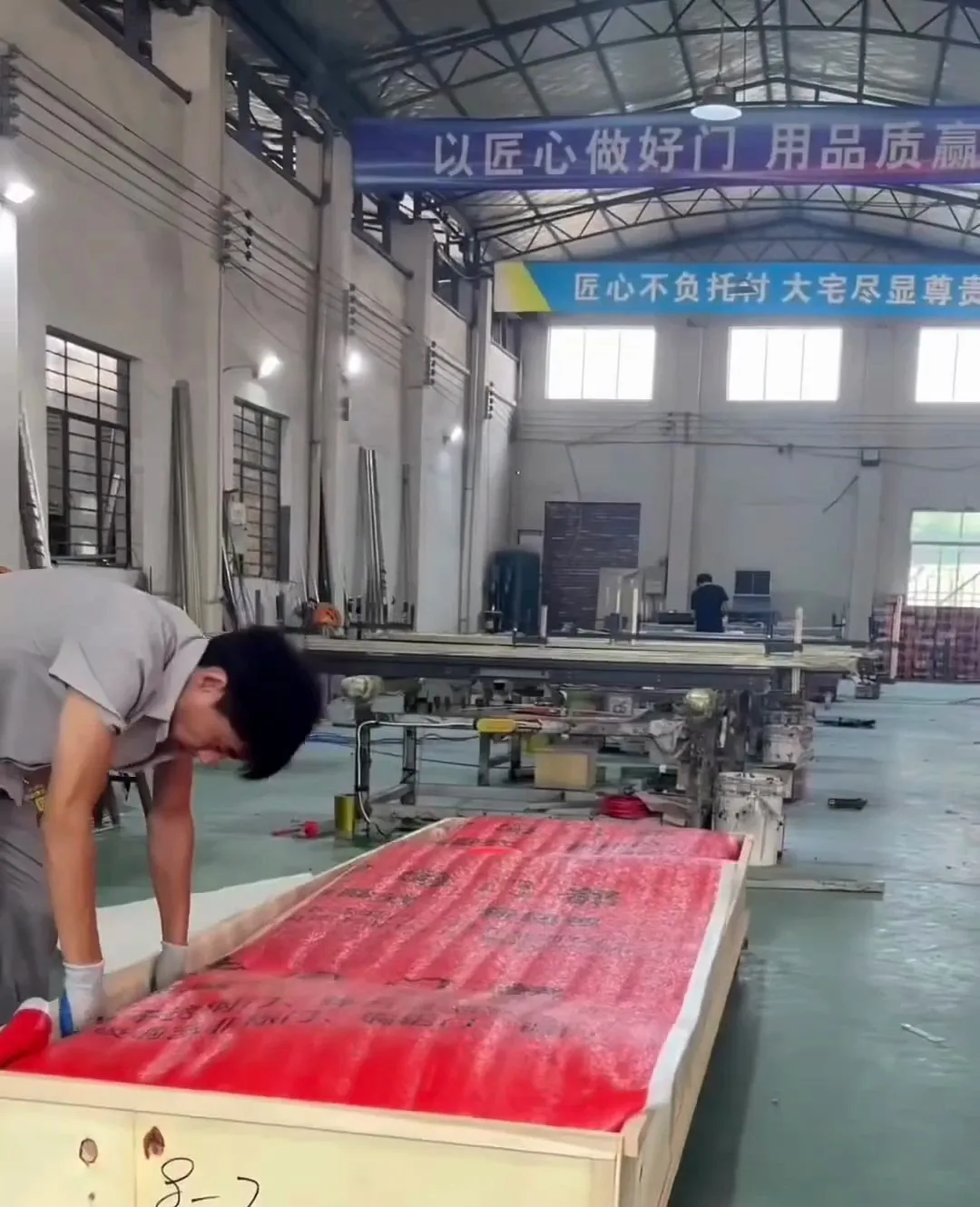
On an EXW quote the buyer pays everything after the factory gate, from export clearance to installation. Duty and VAT are percentages of values that already include the freight. The method is in EXW price vs landed cost.
| Step | What is paid | Basis |
|---|---|---|
| 1. Order | Door, hardware, crating | Factory quote |
| 2. China | Pick-up, export clearance, origin charges | Forwarder |
| 3. Sea | Freight, surcharges, insurance | Part of the customs value |
| 4. UK port | Terminal handling, broker’s fee | Forwarder, broker |
| 5. Duty | 6% aluminium, 0% steel | Customs value |
| 6. Import VAT | 20% | Customs value + duty + costs to first UK destination |
| 7. Delivery | Haulage, unloading | Haulier |
| 8. Compliance | Lab tests, building control or scheme certificate | Lab, building control, installer |
| 9. Installation | Fitting, making good | Local installer |
Does an imported door need UKCA or CE marking?
In Great Britain, construction products covered by a designated standard can carry UKCA or CE marking; in Northern Ireland, CE, or UKNI with CE. External pedestrian doorsets are covered by BS EN 14351-1:2006+A1:2016, so the manufacturer draws up a declaration of performance (DoP), runs documented factory production control and marks the door.
- CE stays recognised in GB. In September 2024 the government committed to keep recognising it for construction products.
- Your duties as importer. Put your name and address on the product, check the manufacturer’s assessment (AVCP), marking and labelling, and do not supply a door you have reason to believe does not comply.
Which Building Regulations apply to the door in England?
Part L limits the U-value of every new or replacement door. Part Q asks for a tested secure doorset on new dwellings. Part M sets the clear width and threshold at new dwellings’ entrances. Agree with building control what evidence it will accept before the factory starts.
| Approved Document | Applies to | What the door must show |
|---|---|---|
| L, Vol. 1 (2021, with 2023 amendments), Table 4.1 | New dwellings | U-value no more than 1.6 W/m²K |
| L, Vol. 1, Table 4.2 | New or replacement doors in existing dwellings | 1.4 W/m²K, or Doorset Energy Rating band B (C if over 60% of the internal face is glazed) |
| Q (2015) | Easily accessible doorsets of new dwellings | A design tested to PAS 24:2012, or a standard with similar or better performance, such as LPS 1175 Issue 7 security rating 2 |
| M, Vol. 1 | Principal private entrance of new dwellings | M4(1): 775 mm clear opening; M4(2): 850 mm and a 300 mm nib; threshold level or no more than 15 mm high |
- U-value evidence. Calculated at the actual size or a standard size (1.23 × 2.18 m up to 3.6 m², 2.00 × 2.18 m above), or hot-box tested to BS EN ISO 12567-1. A complete door with frame is a controlled fitting; a new leaf in the old frame is not. See our U-value guide.
- Part L 2026. New regulations and a 2026 Approved Document L apply from 24 March 2027 for most work. Projects notified before then and started before 24 March 2028 stay under the current rules.
- Part Q applies to new dwellings only. Its non-test route, Appendix B, covers timber doorsets up to 1000 × 2000 mm only, so a large aluminium door needs test evidence matching the door as built. The main door also needs a viewer, unless glass gives a view, and a chain or limiter.
- Part M. Under M4(2), a double door’s main leaf must give the width alone, and a pivot door’s clear opening is smaller than its leaf.
Who signs off a replacement door, and what changes outside England?
In England, a replacement door fitted by an installer registered with a competent person scheme needs no building control notice. The schemes authorised for doors in existing dwellings are Blue Flame Certification, CERTASS, Certsure, FENSA, NAPIT and ASSURE. Otherwise, apply to a building control body. Enlarging the opening is more than a swap; see replacing a villa front door.
- Wales has its own Approved Documents; a registered installer or building control signs the door off.
- Scotland works to Technical Handbooks. Replacing a door with its frame needs no building warrant but must still meet the standards; a new opening in an external wall needs one.
- Northern Ireland has its own Building Regulations (2012) and Technical Booklets, with F1 covering energy in dwellings; district councils check compliance.
How does this work with Dooream?
We quote EXW at our factory in Wuyi, or FOB Ningbo on request, and sell complete doors only. Your forwarder or broker handles freight, UK customs and delivery; your local installer fits the door with our installation drawings and remote guidance. Production takes 35–45 days after drawing approval and a 50% deposit; the other 50% is paid before shipment, and the warranty runs two years from shipment. We do not hold a PAS 24 or EN 1627 rating; where a project needs a test, it can be arranged at a lab, usually at the buyer’s cost. Any of our designs can be built with thermal-break construction, with PA66 polyamide insulating strips in the aluminium profiles. Send your opening through our contact page.
Sources, checked November 2026: UK Trade Tariff, commodity codes 7610 10 00 00, 7308 30 00 00 and 7610 90 90 10; HMRC, Taxation notice 2022/11, anti-dumping duty on aluminium extrusions from China; Trade Remedies Authority, case AD0012; GOV.UK, Get UK customs clearance when importing goods, Check which EORI number you need, VAT on imports, Delivery costs to include in the customs value and Apply for an Advance Tariff Ruling; Department for Transport, Port freight annual statistics 2025; DP World, Southampton; GOV.UK, Product marking by sector (31 March 2026) and Construction products regulation in Great Britain; BM TRADA, CE marking for external pedestrian doorsets; GOV.UK, Approved Document L, Volume 1, 2021 edition incorporating 2023 amendments, Building Circular 01/2026, Approved Document Q, 2015 edition, Approved Document M, Volume 1 and Competent person schemes; Welsh Government, Building regulations: doors and windows; Scottish Government, Technical Handbook 2022, domestic, section 0.5; Department of Finance (Northern Ireland), Building regulations technical booklets.
Quick answers
What duty and VAT does an aluminium entrance door from China pay in the UK?
On the UK Global Tariff, aluminium doors under commodity code 7610 10 00 00 carry 6% duty and steel doors under 7308 30 00 00 carry 0%, with no preference for China. Import VAT is 20% of the customs value plus duty and costs to the first UK destination. VAT-registered businesses can account for it on their VAT Return with postponed VAT accounting.
Is there UK anti-dumping duty on aluminium doors from China?
Not that we can find. The UK duty on Chinese aluminium extrusions, in force from 17 December 2022 to 16 December 2027, does not list 7610 10 00 and excludes structures, subassemblies and finished goods kits. In November 2026 the UK Trade Tariff showed no anti-dumping measure on either door code. Ask your broker to confirm before shipping.
Does an imported front door need PAS 24 in England?
On a new dwelling, usually yes. Approved Document Q asks for easily accessible doorsets tested to PAS 24:2012 or a standard with similar or better performance; its non-test route covers timber doorsets up to 1000 × 2000 mm only. It does not apply to replacement doors, but Part L does. We hold no PAS 24 rating; a lab test can be arranged, usually at the buyer's cost.