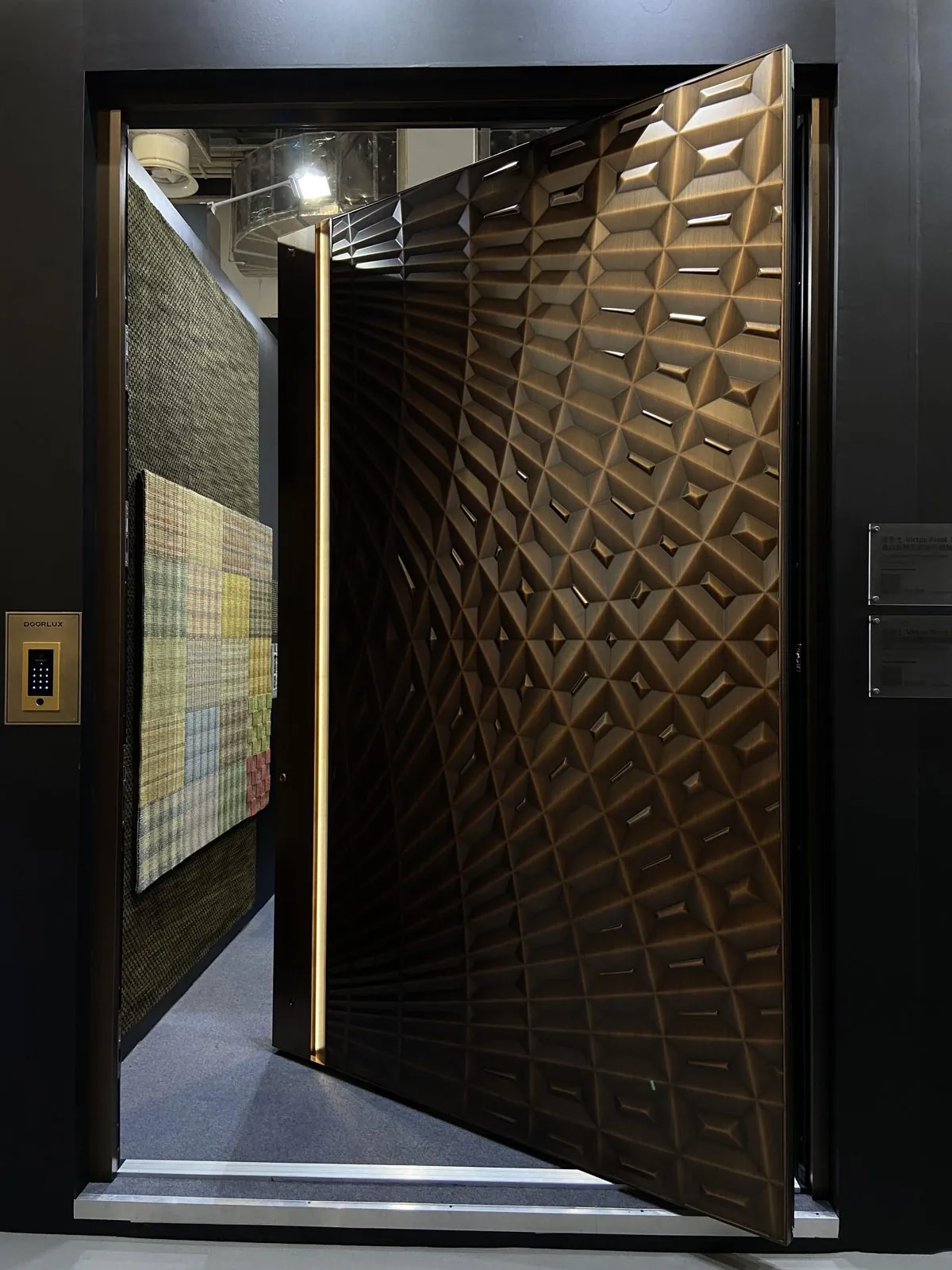
Short answer: both start as aluminium, but a cast face is poured into a mould and a carved face is cut from a solid plate by a CNC machine. Casting pays off for a pattern made again and again, and for shapes a cutter cannot reach. Carving suits one-off designs, crisp detail and changes without a new mould. Most of our faces are carved; some are cast. A third option, flat or bent aluminium sheet, is lighter and suits plainer designs.
How is a CNC-carved face made?
- Plate. A solid aluminium plate is clamped on the CNC table, and the design is loaded as a 3D file.
- Rough. A large cutter clears the material row by row, in several layers.
- Carve. A ball-nose cutter carves the full relief.
- Sand. The tool marks are sanded off by hand and the edges are tidied.
- Finish. The face is painted or coated.
The depth of the relief is limited by the plate. Our carved faces range from 8 mm, as on Black Warrior, to 30 mm on Contour and Facet Light.
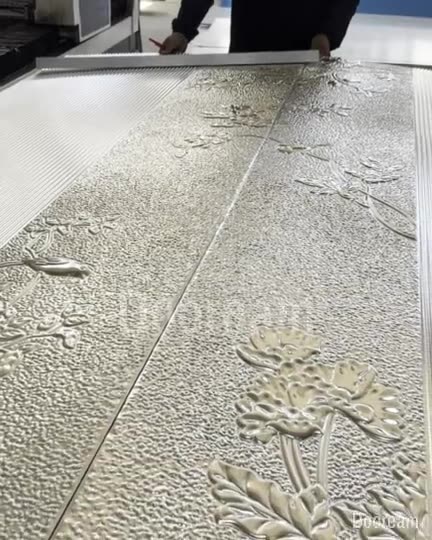
How is a cast face made?
- Melt. Aluminium is melted.
- Pour. It is poured into a mould shaped like the face.
- Cool. The metal cools and sets.
- Open. The mould is opened and the face is taken out and cleaned up.
- Finish. The face is sprayed.
A mould costs time and money before the first face is made, so casting suits patterns that are repeated. In return it can make shapes a cutter cannot, such as undercuts. Our Lattice door has an 8 mm cast face.
How do cast, carved and sheet faces compare?
| Cast | CNC-carved | Aluminium sheet | |
|---|---|---|---|
| Made by | Pouring into a mould | Cutting a solid plate | Cutting, bending or printing sheet |
| New design | Needs a new mould | Needs a new 3D file | Needs a new drawing |
| Best for | Repeated patterns, undercuts | One-off designs, crisp detail | Flat or gently curved designs, wood-grain prints |
| Relief depth | Set by the mould | Set by the plate thickness | Flat, or bent |
| Our examples | Lattice | Contour, Sunburst, Black Warrior | Grain Band, Ivory Wave |
What should you ask before choosing?
- How deep is the relief, and how thick is the face? Thicker faces allow deeper relief but add weight, which matters on a large pivot door.
- Is the design one-off or repeated? If you will order the same pattern many times, ask whether casting would be cheaper over the run.
- How is the face finished? The coating decides how the door weathers; see our guide on finishes for coastal and sunny sites.
- Can I see a sample? We make a 20 × 20 cm carved and painted aluminium sample for about USD 50, and a scaled door sample with the actual construction for USD 800.
Quick answers
What is the difference between a cast and a carved aluminium door?
A cast face is made by pouring molten aluminium into a mould. A carved face is cut from a solid aluminium plate by a CNC machine following a 3D file, then sanded by hand. Casting suits a pattern made again and again; carving suits one-off designs and changes without a new mould.
Which is better for a custom entrance door?
For a one-off design, carving is usually the practical choice because no mould is needed and the design can change until the drawing is approved. Casting makes sense for a pattern that will be repeated, or for shapes a cutter cannot reach.
Can I see a sample of the finish before ordering?
Yes. A 20 × 20 cm carved and painted aluminium sample from us costs about USD 50, and a scaled door sample using the actual construction costs USD 800.