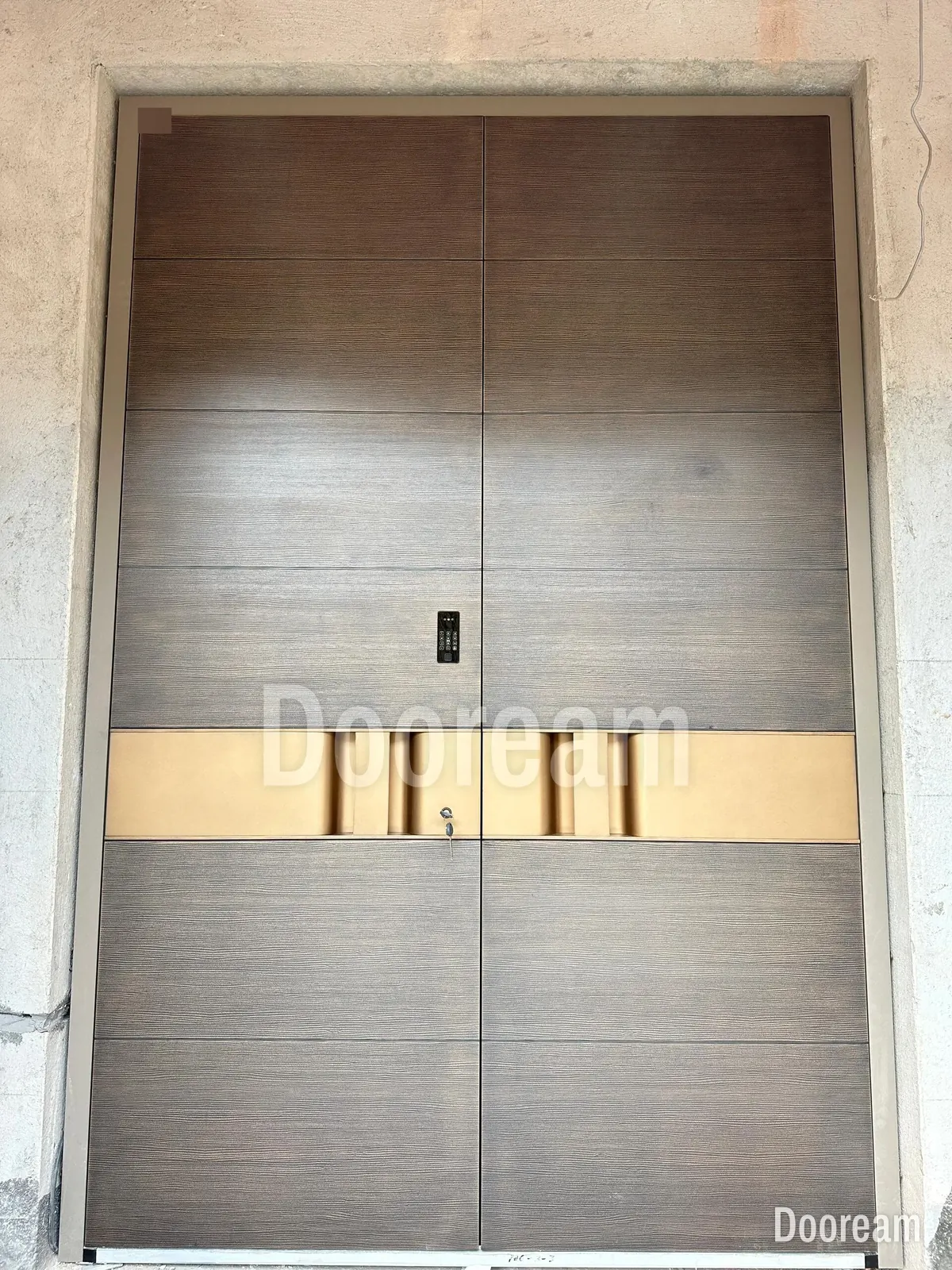
Short answer: work in this order: brief; client sign-off of design, colour and hardware against a signed sample; measured opening; itemised EXW quote; contract and deposit; shop drawing approval; production; check before the balance; freight and import; delivery; installation; handover. Decide early who signs and pays, because that party carries the import, the risk and the warranty. Dooream, a factory in Wuyi, China, makes custom aluminium armoured entrance doors to drawing, from one door, and works with architects.
In what order do you order a custom entrance door for a client?
Design first, then money, then logistics. The client approves design, colour and hardware against a signed sample. The built opening is measured, the factory quotes, the buyer signs and pays the deposit, and nothing is made until one shop drawing revision is approved. Production, the pre-shipment check, shipping, installation and handover follow.
On the most common route, the client buys directly and the main contractor builds the opening. R = does the work, A = approves or signs, C = consulted, I = informed.
| Step | Architect | Client | Contractor | Factory | Installer |
|---|---|---|---|---|---|
| 1. Brief and design intent | R | A | I | C | – |
| 2. Design, colour, hardware and sample sign-off | R | A | I | C | – |
| 3. Measured opening and floor levels | C | – | R | I | C |
| 4. Itemised quote | C | A | I | R | – |
| 5. Contract and deposit | C | A | I | R | – |
| 6. Shop drawing approval | C | A | C | R | C |
| 7. Production | I | I | I | R | – |
| 8. Pre-shipment check and balance | C | A | I | R | – |
| 9. Freight and customs | I | A | I | C | – |
| 10. Site delivery and storage | I | I | R | – | C |
| 11. Installation | I | I | A | C | R |
| 12. Handover documents | C | A | R | C | C |
In step 9 the buyer’s forwarder and customs broker do the work. If the contractor or your practice buys, the client’s A in steps 4, 5, 8 and 9 moves to them. The factory’s side is in ordering custom doors from China.
Who should sign the contract and pay the factory?
Usually the client or the main contractor, less often your practice. Whoever signs is the buyer: it pays the deposit, is usually the importer, carries the risk from handover at the factory under EXW, and holds the factory’s warranty. Decide before the quote, so the quote and contract carry the right name.
| Route | For | Against | Holds the warranty |
|---|---|---|---|
| Client buys | No mark-up; direct contract with the maker | Client imports; the contractor fits a door it did not supply | Client |
| Contractor buys | One party for supply and fitting; delivery tied to the programme | Mark-up; substitutions to check against the signed sample | Contractor, passed on under the building contract |
| Practice buys and resells | Control of sample, drawing and finish | Deposit, currency, import and defect claims sit with the practice | Practice, which owes the client its own obligations |
When the client buys, the building contract should name the door as client-supplied and say who receives, stores, insures and fits it.
If your practice resells, the law may treat it as the seller. In the UK, the Consumer Rights Act 2015 treats a contract for a trader to supply goods to a consumer as including terms that the goods are of satisfactory quality, as described and fit for any purpose the consumer made known. A private client could then claim against your practice. This is not legal advice.
What should the client sign off before the quote?
The design, the colour and the hardware, each in writing: an elevation of the door in its opening, a signed and dated face sample in the agreed finish, and a hardware list. Close every open question here: later changes cost time and redrawing.
- Design intent: single, double, unequal double or pivot; the clear width needed; which side faces outside.
- Signed sample: a carved or cast face sample in the real finish, numbered, with that number on the drawing (samples guide).
- Hardware: lock type, pull handle, pivot or hinges. On a pivot door, agree the pivot position early: it changes the clear opening.
What do you send the factory, and what should the quote show?
Measurements of the built opening, not the design drawing: width and height, wall thickness, finished floor levels inside and outside, opening direction seen from outside, and exposure. Have the contractor or installer measure, and record who did. What to send a door manufacturer lists the rest.
The quote should itemise, per door: sizes and opening direction; face, finish and construction; hardware makes and models; packing and drawings; the Incoterm with place and edition, such as “EXW Wuyi, Incoterms 2020”; payment, production time and warranty; and exclusions, usually freight, duties, local delivery and installation.
Under EXW, the seller delivers at its own premises; the buyer loads at its own risk and handles export clearance (ICC Academy; Incoterms for door imports).
Who approves the shop drawing?
The buyer signs, after two checks. The contractor or installer confirms sizes, floor levels and fixings against the built opening; the architect checks the drawing against the design intent and the signed sample. Approve one numbered revision in writing, because the factory makes the door from that sheet.
Under AIA A201-2017, the contractor reviews shop drawings against the contract documents and verifies field measurements before submitting them (section 3.12.5); the architect checks design intent, not the accuracy of dimensions. The RIBA Plan of Work 2020 puts specialist subcontractor design in Stage 4 and keeps Stage 5 for manufacturing and construction. See our shop drawing checklist.
What happens between deposit and shipment?
Production, then a check before the balance. With us, trade orders are paid 50% deposit and 50% before shipment, and production takes 35–45 days after drawing approval and deposit. Check the finished door against the approved drawing and the signed sample, then release the balance (lead time).
Check by photos and video, a visit or a third-party inspector (pre-shipment inspection). Send the client the photos with your note, and keep both.
Who imports the door and receives it on site?
Usually the buyer, as importer of record, through a freight forwarder and a customs broker. The importer is named on the customs entry, so agree with the broker which party that will be and what it must register. A client or practice based abroad may not be able to import on its own.
- UK: you may need an EORI number to move goods between Great Britain and any other country; if you cannot apply, you appoint someone to deal with customs.
- US: under a CBP interim final rule published in November 2026 and in force from 5 January 2027, a foreign importer of record generally cannot make entry unless it is CTPAT validated or uses a CTPAT-validated licensed customs broker.
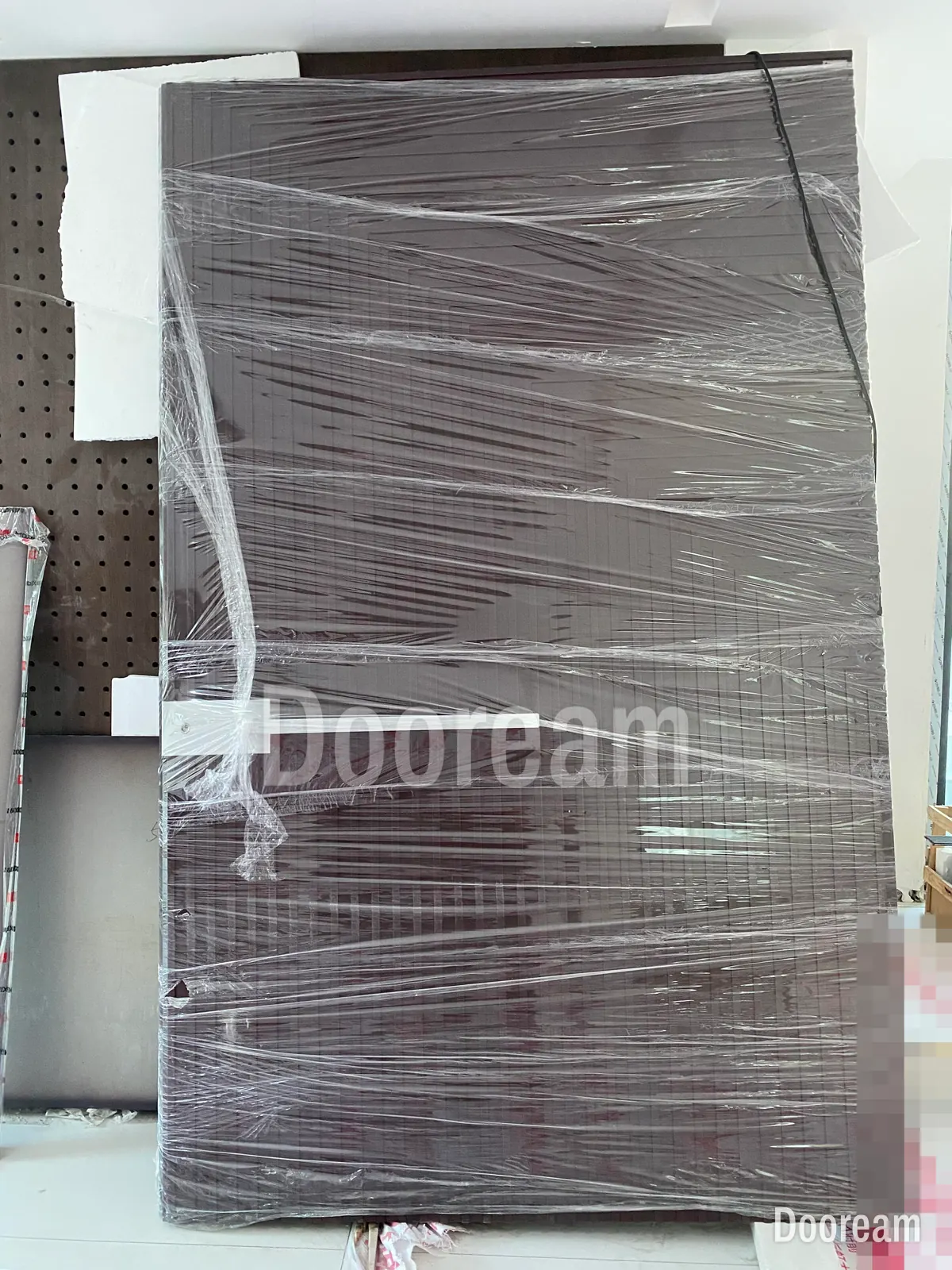
- On site: the contractor unloads, photographs any damage before signing the delivery note, and stores the door dry and protected.
Who installs the door, and what goes in the handover file?
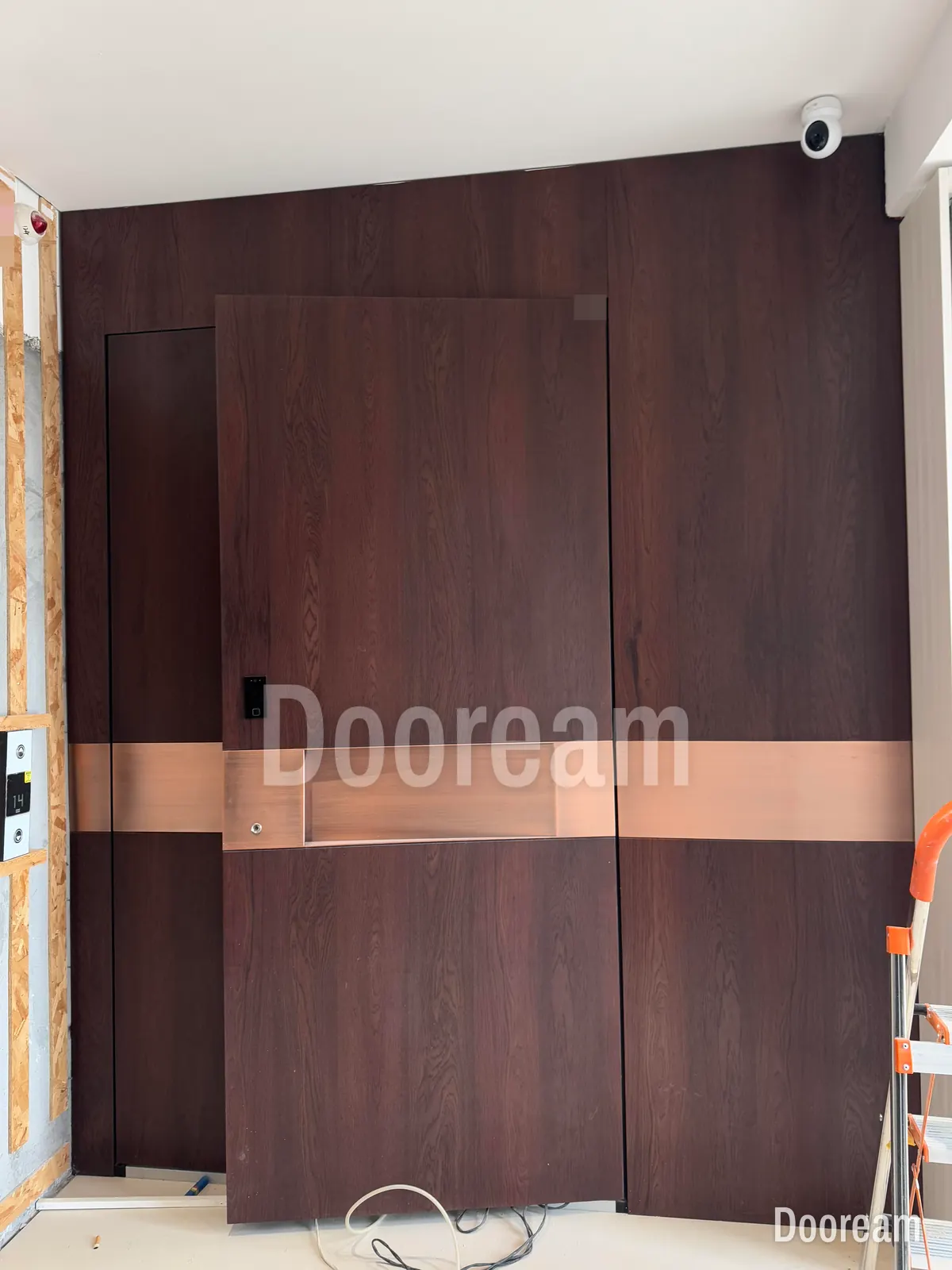
A local installer, appointed by the client or the contractor, working from the factory’s installation drawings. We give remote guidance; we send no installation crews. At handover the client receives one file, so a future installer or warranty claim does not depend on you.
- approved drawing revision and signed sample reference;
- installation drawings;
- hardware makes and models, lock manual, admin codes and cards;
- care instructions for the finish;
- warranty statement with the shipment date;
- pre-shipment photos and video, delivery and installation records.
Which professional practice points should you check?
What your appointment covers, what your insurance covers, and whether you can prove each approval. Ordering a door from abroad for a client can go beyond a standard design service. These points are general, not legal advice; check them against your own appointment, insurance and jurisdiction.
- Appointment: does it cover procurement, reviewing the factory’s drawing and inspecting off site? If not, agree it in writing.
- Insurance: if your practice buys the door, ask your insurer whether supplying goods is covered.
- Approvals: keep the client’s signed design, sample, hardware list, drawing revision and every change.
- Supplier fees: disclose any commission to the client in writing.
Checklist: ordering a villa entrance door for a client
- Agree who signs, pays, imports and installs.
- Write the brief.
- Get signed approval of design, colour, sample and hardware.
- Measure the built opening.
- Send the factory the opening and approvals.
- Check the quote, Incoterm and exclusions.
- Sign in the buyer’s name; pay the deposit.
- Approve one numbered shop drawing revision.
- Book forwarder and customs broker during production.
- Check the finished door before the balance.
- Receive, check and store the crate.
- Install from the factory’s drawings.
- Hand over the file.
How does this work with Dooream?
We make custom aluminium armoured entrance doors with carved or cast aluminium faces in Wuyi, Zhejiang: offset pivot doors up to 4,000 × 8,000 mm, with pivot hinges, most often FritsJurgens, and double or unequal double doors up to 3,000 × 6,000 mm, each made to drawing, from one door (ordering one door). We can post a 20 × 20 cm face sample for your client to sign. Prices are EXW Wuyi; trade orders are paid 50% deposit, 50% before shipment; production takes 35–45 days after drawing approval and deposit. We send photos and video before shipment, and offer factory visits and video tours. Your installer works from our drawings with remote guidance; the warranty runs two years from shipment. Send the opening through our contact page.
Sources, checked November 2026: ICC Academy, FCA and EXW Incoterms 2020 explained (7 January 2025); legislation.gov.uk, Consumer Rights Act 2015, section 2 and Part 1, Chapter 2 (sections 3, 9, 10 and 11); K. Slavens, IRMI, design professional review of submittals under the AIA documents (13 September 2024); P. M. Gart, LBC&C, submittal review: the contractor has requirements too (27 May 2021), on AIA A201-2017 section 3.12.5; RIBA, RIBA Plan of Work 2020 overview; GOV.UK, get an EORI number; U.S. Customs and Border Protection, Heightened Requirements for Foreign Importers of Record, interim final rule (Federal Register public inspection, document 2026-22735).
Quick answers
In what order do you order a custom entrance door for a client?
Brief and design intent; the client's signed approval of design, colour and hardware against a signed sample; a measured opening; an itemised quote; contract and deposit; shop drawing approval; production; a check of the finished door before the balance; freight and import; site delivery and storage; installation; handover.
Should the client, the main contractor or the architect's practice buy the door?
Usually the client or the main contractor. If the client buys, there is no mark-up and the client holds the factory's warranty, but the client imports the door and the contractor fits a door it did not supply. If the contractor buys, one party answers for supply and fitting. If your practice buys and resells, it becomes the supplier and carries the liability; check your appointment and insurance first.
Who signs the shop drawing when the client buys the door?
The client, as buyer, signs one numbered revision after the contractor or installer has checked sizes, floor levels and fixings against the built opening, and the architect has checked the drawing against the design intent and the signed sample. At Dooream, production takes 35–45 days after drawing approval and deposit.