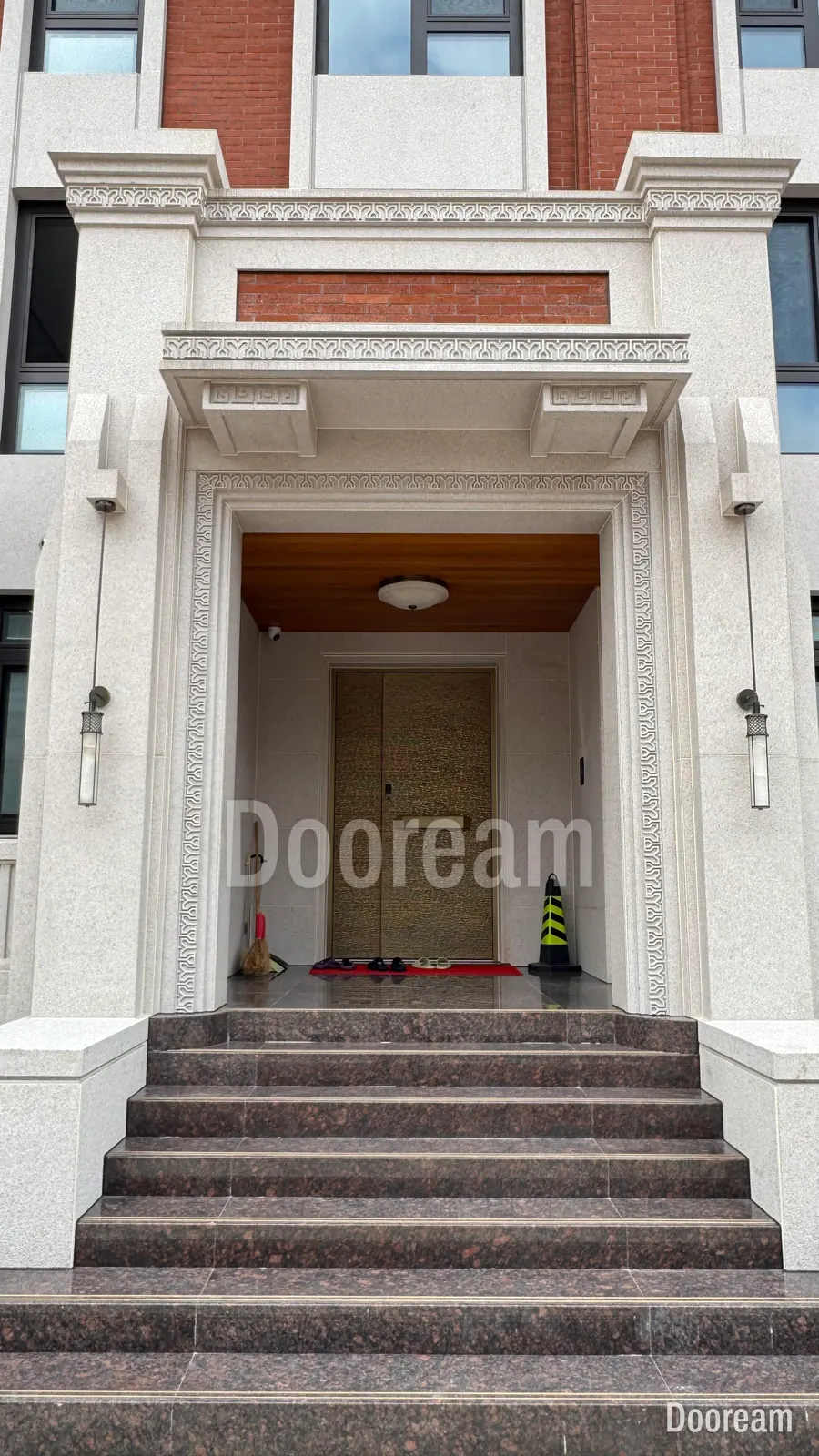
Short answer: check the whole entrance, not just the leaf. An attacker goes for the weakest point: the frame fixing, the hinge or pivot side, the cylinder, glass within reach of the lock, a letter plate, or a wall weaker than the door. The 20 checks below cover each layer and the evidence to ask for.
What should a villa front door security check cover?
Ten layers: the leaf, the frame and its fixing into the wall, the hinge or pivot side, the locks, glass in or beside the door, the threshold and any letter plate, the surrounding walls, lighting and cameras, caller identification, and who holds the keys and codes. A strong leaf does not help if any of these is weak.
A class does not change this: FritsJurgens notes that an EN 1627 class belongs to the whole tested assembly, not the pivot alone, and German police say a proper installation includes an installation certificate. See door security ratings explained.
What are the 20 checks?
Use the table at design stage, again when the door is fitted, and at handover. Each row gives the check, what good looks like and the document that proves it. Where no document exists, record who checked it and when.
| Check | What good looks like | Evidence to ask for |
|---|---|---|
| 1. Leaf build | Metal layers across the whole leaf; extra plate behind the lock | Section through the leaf; leaf weight |
| 2. Edges and faces | Edges closed in metal; faces cannot be prised off from outside | Edge sections; face fixing |
| 3. Frame fixing | Mechanically fixed to the structure; one RC 2 instruction: fixings ≤ 150 mm from corners, ≤ 500 mm apart, gap ≤ 15 mm, packed solid at hinges, locks and fixings | Fixing plan; installation certificate |
| 4. Wall at the opening | As strong as the door; the same instruction: masonry ≥ 115 mm (strength class ≥ 12) or reinforced concrete ≥ 100 mm | Wall type on drawings and in any test report |
| 5. Hinges | Pins not removable from outside; hinge bolts on an outward-opening door | Hinge data against leaf weight |
| 6. Pivot side | Leaf cannot be lifted off the floor plate; locking on both edges; spacer ring at the top pivot | How lifting is prevented, in writing |
| 7. Locking points | At least three; near top and bottom on a tall leaf; full bolt engagement after fitting | Lock model; point heights on the shop drawing |
| 8. Cylinder | EN 1303 key and attack grades; in the UK TS 007 3-star or SS312 Diamond; flush | Certificate and marking |
| 9. Smart lock backup | Mechanical key or outside emergency power; known behaviour when power fails | Data sheet; override method |
| 10. Escape from inside | Opens without a key where the code requires it | Code clause; insurer’s agreement |
| 11. Glass near the lock | Laminated, EN 356 P1A or better, wherever breaking it lets a hand reach the lock | EN 356 class per pane |
| 12. Glazing beads | On the inside | Glazing section |
| 13. Threshold and gap | Small, even gap; leaf closes onto a stop, so nothing passes under to the inside handle | Threshold section |
| 14. Letter plate | Ideally none; if fitted, in the tested range, ≤ 260 × 40 mm, flap, unable to release the lock | TS 008 test or door certificate |
| 15. Sidelights and side walls | One laminated P1A pane in glass within 400 mm of the door; lightweight walls reinforced 600 mm each side | Glass classes; wall build-up |
| 16. Recess | Door visible from the street; hidden doors recessed ≤ 600 mm, any door ≤ 1,000 mm | Plan; porch section |
| 17. Lighting | Door elevation lit so faces show; steady light, not motion sensors alone | Lighting plan |
| 18. Cameras | Colour images of faces at the door; aimed at your own property; footage kept ≥ 31 days | Camera plan; retention setting |
| 19. Caller identification | TS 002 viewer, clear glass or video intercom; chain or limiter | Hardware schedule |
| 20. Keys and codes | Restricted key profile; builders’ keys and installer codes dead at handover; defaults changed | Key card; list of users and codes |
Why is the frame fixing so often the weakest point?
Because a lever attack does not have to break the leaf. It forces the frame sideways into the joint between frame and wall until the bolts leave their keeps. If that joint is hollow, or the fixings are few and far from the lock, the frame bends before the lock or the leaf gives way.
Hence the numbers in rows 3 and 4, from one German maker’s RC 2 instructions, which also end with an installation certificate. England’s Approved Document Q and Secured by Design (SBD), the UK police scheme, ask for frames mechanically fixed to the structure to the maker’s instructions.
Agree the wall before ordering. SBD asks for lightweight framed walls beside a secure doorset to be reinforced over 600 mm, full height, to restrict access to the hardware. Installers can follow our installation checklist.
What changes on a pivot or double door?
A pivot door has no hinges along its edge, so the risk is lifting. FritsJurgens names lifting the leaf off the floor plate as the main weak point of a pivot door. It recommends three-point locks on both sides of the leaf, and a metal spacer ring at the top pivot to close the gap to the ceiling plate.
See also multipoint locks explained, smart locks for double doors and hinges for heavy doors.
What about lighting, cameras and caller identification?
They decide whether an attempt is seen. SBD asks for every elevation with a doorset to be lit, and has not specified motion-sensor (PIR) security lighting for years, as steady light works better. It asks for colour HD camera images; police recommend keeping footage at least 31 days.
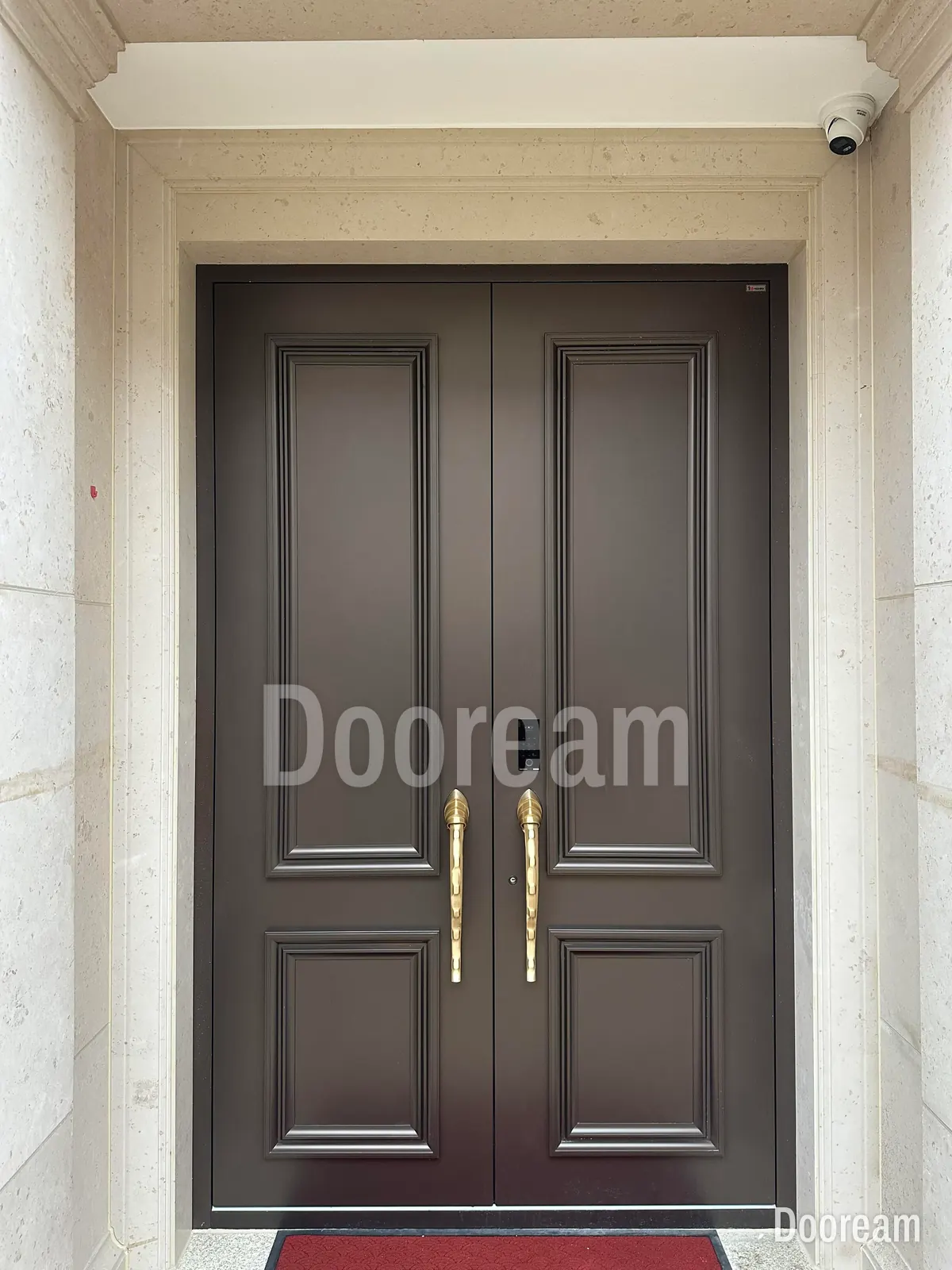
The UK Information Commissioner’s Office says cameras should capture only the owner’s property where possible; filming other people brings data protection duties. Rules differ by country.
SBD and Approved Document Q ask for a door viewer on the main door unless clear glass gives a view, plus a chain or limiter; on a villa a video intercom often does the viewer’s job. Since 29 April 2024, UK rules have barred easily guessed default passwords such as “admin” on connected consumer products, including smart doorbells and cameras. More in entrance lighting and fingerprint locks in hot climates.
Who should hold the keys and codes at handover?
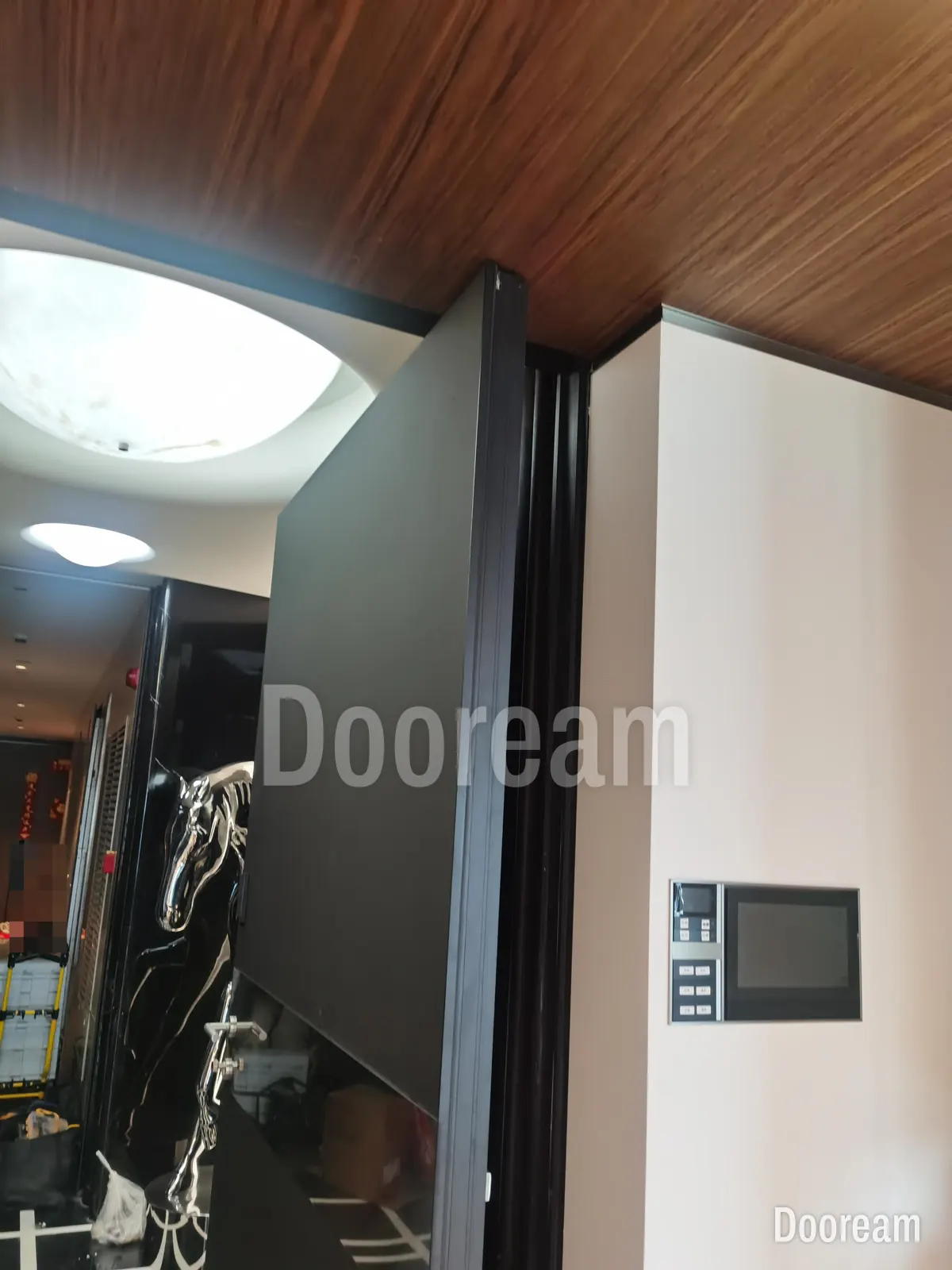
The owner, and the people the owner names. During the build, contractors, installers and whoever programmes the lock hold keys or codes. At handover, change or re-code the cylinder, delete installer and test users, change every default password, hand over the administrator account, and record every credential in a register.
For restricted keys see cylinders and key security. Allianz advises telling the insurer before fitting a smart lock; most insurers, it says, expect locks to BS 3621. Where a door opens from inside without a key, as IRC R311.2 requires of egress doors in the US, the Master Locksmiths Association advises getting the insurer’s written confirmation.
What evidence should you ask the supplier for?
Documents for the complete door, not for one part: the classification and test reports, the installation instructions and certificate, and the test standards of the lock, cylinder, glass and any letter plate. A brochure line saying a door is “anti-theft” or “meets RC 3” is not evidence. Check that:
- The reports name the standard and edition (such as EN 1627 or PAS 24:2022), class, lab and date.
- The tested door matches yours in size, lock, glass, frame and wall type, or yours falls inside the field of application.
- The installation instructions include the fixing plan, and someone signs the installation certificate.
- The parts are identified: lock model, the cylinder’s EN 1303 code and any TS 007 or SS312 Diamond mark, and each pane’s EN 356 class (glass in entrance doors).
- In the UK, where SBD or Approved Document Q applies, the door is certified to PAS 24:2022 or another standard SBD lists. SBD’s Residential Guide 2025 applies to applications made after 1 March 2025; check its current list.
- A door with no rating comes with a statement saying so, and whether a lab test can be arranged and who pays.
Where should the budget go first?
If the insurer, code or client requires a tested class, that comes first and decides the door; German police recommend RC 2 or above. Otherwise, spend first where a weakness is cheap to avoid on the drawings and hard to fix later.
- The wall and frame fixing: hard to improve once the stone is on.
- Locking points and cylinder.
- Anti-lift measures on the hinge or pivot side.
- Laminated glass within reach of the lock.
- Light and one camera that sees faces.
- Key and code control: time, not hardware.
- Extras last: more cameras, alarms, richer faces.
How does this work with Dooream?
Our leaves are built, from outside in, of a face panel, a galvanised steel sheet, an aluminium profile frame with an aluminium honeycomb core, a second galvanised steel sheet and an inner face. We fit multipoint locks and smart locks from KFV, G-U or Wintech, and FritsJurgens pivot hinges on pivot doors. Our doors are not tested to EN 1627 and carry no security rating; if your project needs a test, lab testing can be arranged, usually at the buyer’s cost. We make complete doors to drawings, so mark the wall type, fixings, glass, lock and cylinder on them. Your local installers fit the door from our installation drawings, with remote guidance from us. Our testing and documents page has more; send the opening through our architects page.
Sources, checked November 2026: Secured by Design, Homes 2023 (paragraphs 23.4, 23.20, 23.24–23.31, 26.2, 27.2, 27.7, 36.8, 36.10; copy published by Wandsworth Council); IHS Markit CIS, Secured by Design Residential Guide 2025 record; British Woodworking Federation, Approved Document Q text (Section 1 and Annex B); HORI, RC 2 door installation instructions (published by Casando); German police crime prevention (KPK), Türen und Tore (March 2025); FritsJurgens, exterior pivot doors; Master Locksmiths Association, minimum security requirements, edition 19 (January 2025); Allianz UK, stay insured with the right house locks (5 May 2026); Information Commissioner's Office, domestic CCTV systems; GOV.UK, new laws to protect consumers from cyber criminals come into force (29 April 2024); Montana Department of Labor and Industry, 2021 IRC means of egress (R311.2).
Quick answers
What should a villa front door security checklist cover?
The whole entrance, not just the leaf. Check the leaf, the frame and its fixing into the wall, the hinge or pivot side, the locks and cylinder, glass within reach of the lock, the threshold and any letter plate, the walls and sidelights, lighting and cameras, caller identification, and who holds the keys and codes. An attacker goes for the weakest of these.
What evidence should I ask a door supplier for?
Documents for the complete door, not for one part. Ask for the classification report and test report, with the standard, edition, class, lab and tested size; the installation instructions and installation certificate; the cylinder's EN 1303 code and any TS 007 or SS312 Diamond mark; and the EN 356 class of each pane. A brochure line is not evidence.
Do Dooream doors have a security rating?
No. Our doors are not tested to EN 1627 and carry no security rating. If a project needs a test, lab testing can be arranged, usually at the buyer's cost.