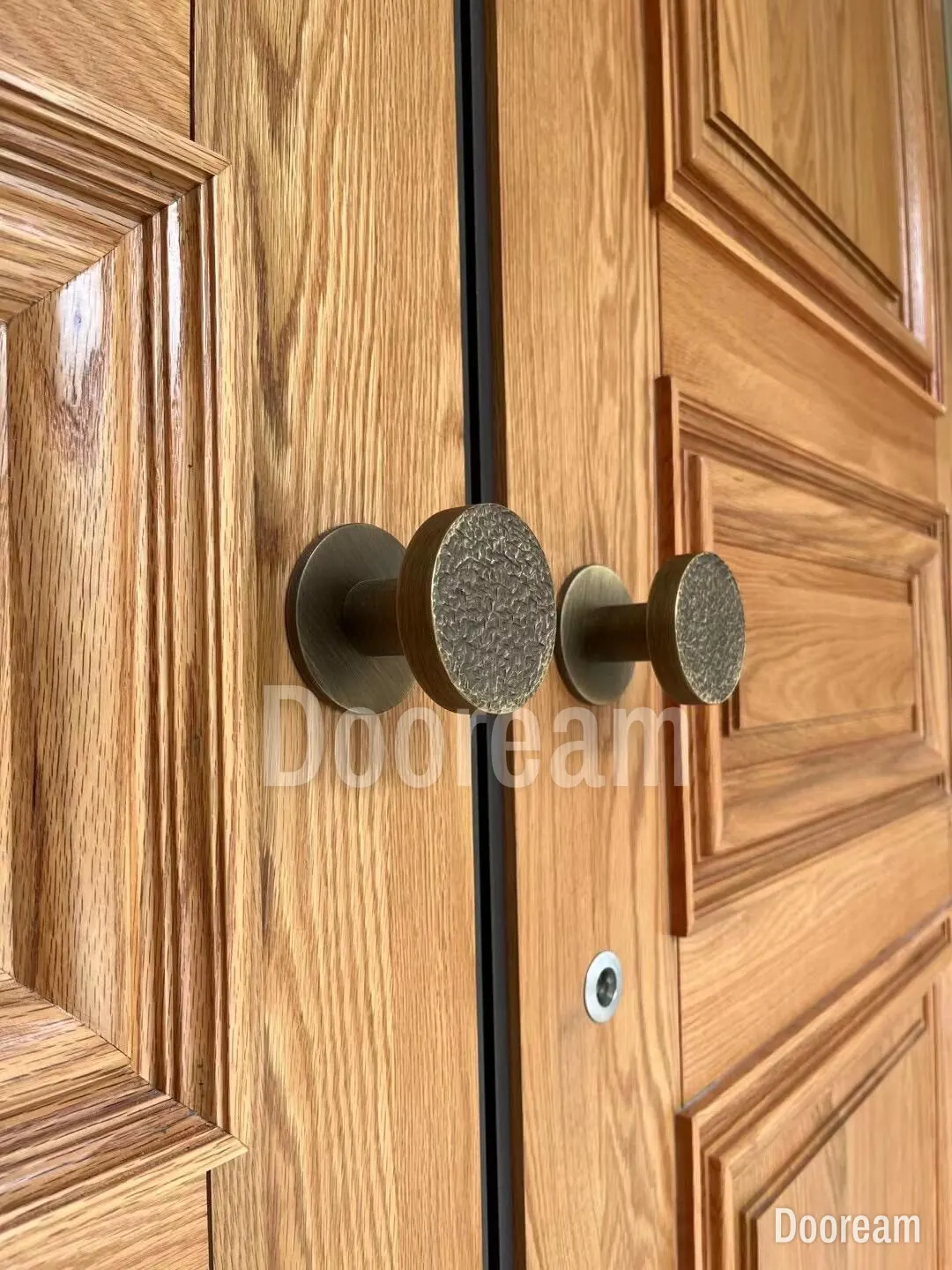
Short answer: fit the cylinder profile the lock case is made for, usually a euro profile on a European multipoint lock, and choose it by test results, not by labels. Look for an EN 1303 code with a high key-related security grade and an attack resistance grade, or TS 007 3-star or SS312 Diamond in the UK, fitted flush. A key is as secure as the control over copying it.
Which cylinder types are there, and which go with a multipoint lock?
A cylinder is the part the key turns, and the lock case decides its shape. European multipoint locks usually take a euro profile cylinder, British lock cases an oval, Scandinavian lock cases a Scandinavian cylinder, and North American locks their own formats. Choose the lock first.
| Cylinder | Made for | With a multipoint lock |
|---|---|---|
| Euro profile (DIN) | European mortise and multipoint lock cases | The usual choice. G-U’s SECURY Automatic, for example, is listed as a euro profile lock, 92 mm from cylinder to spindle |
| Oval | British lock cases | Only with those lock cases |
| Scandinavian | Scandinavian lock cases | Only with those lock cases |
| Rim | Rim locks, such as on storerooms and apartment doors | Not the drive for a multipoint lock |
| North American (mortise, rim, key-in-knob) | ANSI-type locks, knobs and levers | Check the lock; some sold there take a euro profile |
A euro cylinder is ordered by the length of its two halves, such as 35/45 mm, to suit the finished door thickness, including any carved or cast face and the handle roses. Locking points are covered in multipoint locks explained.
How are cylinders attacked, and what resists each attack?
Attacks either break or turn the cylinder by force, or open it by manipulation, leaving little damage. A cylinder resists only what it was tested against, so match each attack to a test or mark. For the rest of the door, see armoured door or steel security door.
| Attack | What happens | What resists it |
|---|---|---|
| Snapping | The cylinder is broken in two, exposing the locking mechanism | A cylinder tested to TS 007 3-star or SS312 Diamond, fitted flush |
| Drilling | The locking elements are drilled through | EN 1303 attack grade A to D, which includes a drilling test; UL 437 |
| Picking | Tools set the locking elements one by one | TS 007 1-star and above; UL 437 |
| Bumping | A manipulation using a specialist tool | TS 007 1-star and above |
| Impressioning | A blank key is used to take impressions of the pins | UL 437 includes it |
| Twisting and pulling | The plug is turned by force, or the cylinder pulled out | EN 1303 plug torque (15 Nm from key grade 3) and attack grades C and D; UL 437 |
| Key copying | A key is copied | A restricted or patented key profile, with a security card |
What does the EN 1303 code on a cylinder mean?
EN 1303 is the European standard for lock cylinders. A tested cylinder carries an eight-position code, and for security the last two positions matter most: key-related security, graded 1 to 6, and attack resistance, graded 0 or A to D. EN 1303:2026 is the current edition; DIN’s version, published in August 2026, replaces the 2015 edition.
The 2015 edition’s positions, as the dhf summarises them:
- Category of use: 1.
- Durability: 4, 5 or 6, for 25,000, 50,000 or 100,000 cycles.
- Door mass: 0.
- Fire: 0, A (smoke-control doors) or B (fire and smoke-control doors).
- Safety: 0.
- Corrosion and temperature: 0 to C; C is high corrosion resistance and −25 °C to +65 °C.
- Key-related security: 1 to 6.
- Attack resistance: 0, A or C (drilling 3/5 minutes), B or D (5/10 minutes); C and D also resist extraction.
| Key-related grade | Minimum effective differs | Minimum movable elements | Plug torque |
|---|---|---|---|
| 1 | 100 | 2 | 2.5 Nm |
| 2 | 300 | 3 | 5 Nm |
| 3 | 15,000 | 5 | 15 Nm |
| 4 | 30,000 | 5 | 15 Nm |
| 5 | 30,000 | 6 | 15 Nm |
| 6 | 100,000 | 6 | 15 Nm |
The 2026 edition keeps eight positions and adds master-key systems to its title. Position 3 is now mechanical coding, with two grades, for single cylinders and master-key systems. It keeps six key-related security grades and five attack resistance grades. Ask which edition a certificate cites.
What do TS 007 stars, SS312 Diamond and the Kitemark mean?
These are British marks for snap resistance. Secured by Design developed TS 007 with the dhf and the Glass and Glazing Federation. A 3-star cylinder is tested against snapping; a 1-star cylinder is not. Sold Secure SS312 Diamond is an alternative test with a heavier tool list. The rule of thumb is three stars in total.
- 1 star: a cylinder with basic approval, not snap-tested.
- 2 star: handles, escutcheons, cylinder guards and other hardware.
- 3 star: a 3-star cylinder alone, or a 1-star cylinder with 2-star hardware.
- Kitemark: the product was tested by a third party; a TS 007 cylinder carries it with its stars.
West Yorkshire Police and East Cambridgeshire District Council advise one of these two routes, or SS312 Diamond.
How are cylinders rated in North America?
ANSI/BHMA A156.5 covers mechanical cylinders, electrified input devices and push-button mechanisms. BHMA grades hardware 1 to 3, with the highest cycle counts at Grade 1; Grade 1 cylinders must pass 40,000 cycles. Attack is tested separately. UL 437 covers picking, impressioning, drilling, prying, pulling, punching and sawing; ANSI/BHMA A156.30 covers high-security cylinders, for physical attack and key control.
How do you control who can copy a key?
By choosing a key profile whose copying is limited. An ordinary key can be copied by any key cutter who stocks the blank. Under a restricted or patented profile, only authorised locksmiths cut keys, often only on sight of the owner’s security card and PIN. Patents run for up to 20 years, so ask when the key’s patent expires.
A registered design does not stop copying, ASSA ABLOY notes. A master-key system lets one key open several cylinders while each keeps its own key: on a villa, the owner’s key opens everything and staff keys only some doors. Ask for the key plan, who holds the card, and how a lost key is handled.
How far should a cylinder stick out?
As little as possible. UK police and councils advise that a cylinder should not protrude from the door or the handle, since a protruding cylinder is what a snapping tool grips. Where it must project, fit a cylinder guard or security escutcheon tested to TS 007. On a deep relief face, plan a flat seat for the cylinder.
Thumb-turn or a key on the inside?
A thumb-turn lets anyone inside lock and unlock without a key, so escape is quick. A cylinder keyed on both sides stops someone who has broken glass beside the door from reaching in to open it, but can trap people inside if the key is not to hand. Codes often decide this.
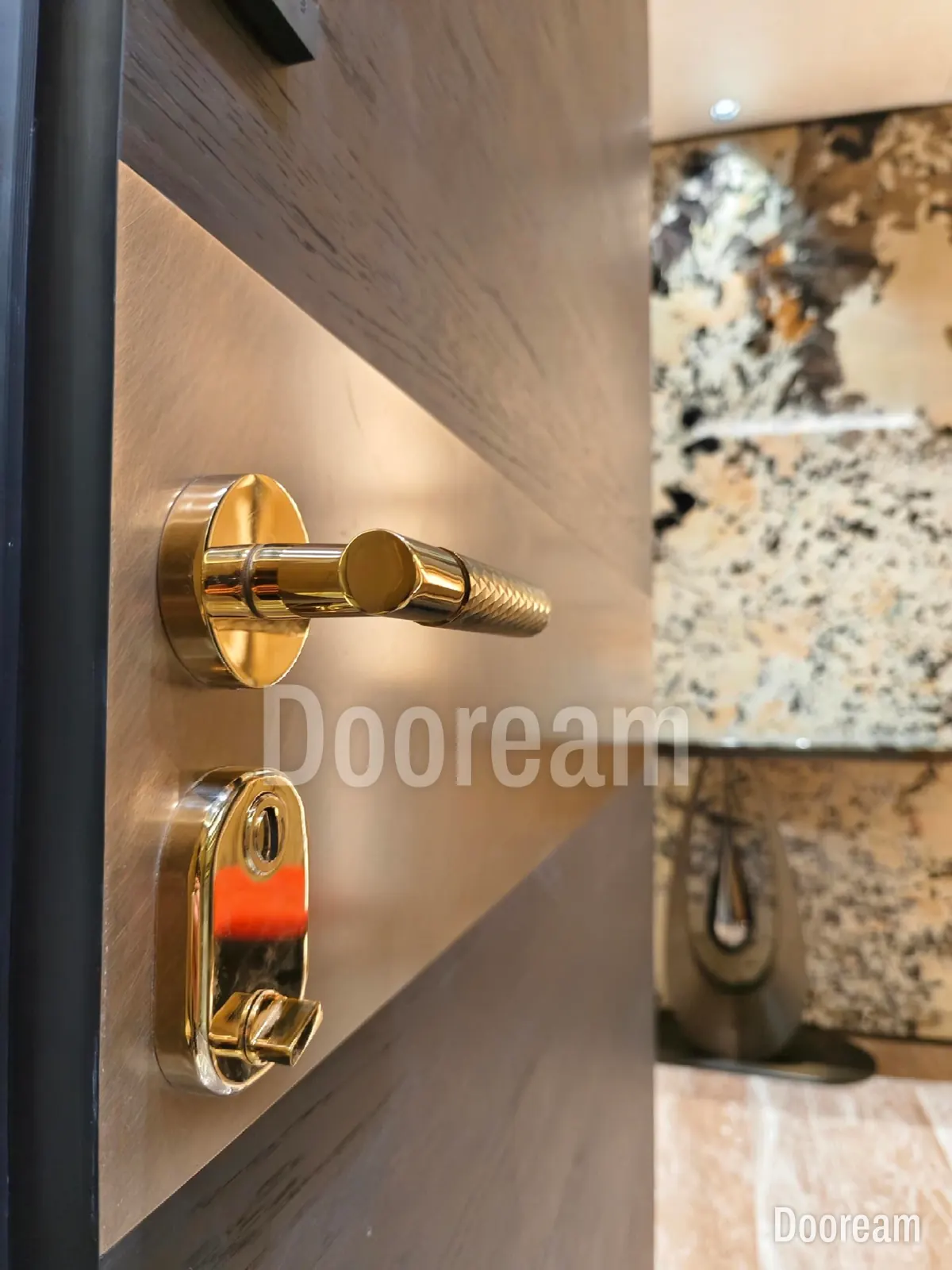
In the US, the International Residential Code (R311.2) says egress doors shall be readily openable from inside the dwelling without a key or special knowledge or effort. Rules differ by country, building type and insurer: the buyer must check local rules. A thumb-turn cylinder’s keyed outer half needs the same rating. For glass near the lock, see glass in entrance doors.
Does a smart lock still need a good cylinder?
Yes, if it has a key override. The override cylinder sits on the outside face like any other, and it is what an attacker goes for when the electronics are ignored. It needs the same grade, snap rating and flush fit as on a mechanical lock, and it is the way in when batteries or electronics fail.
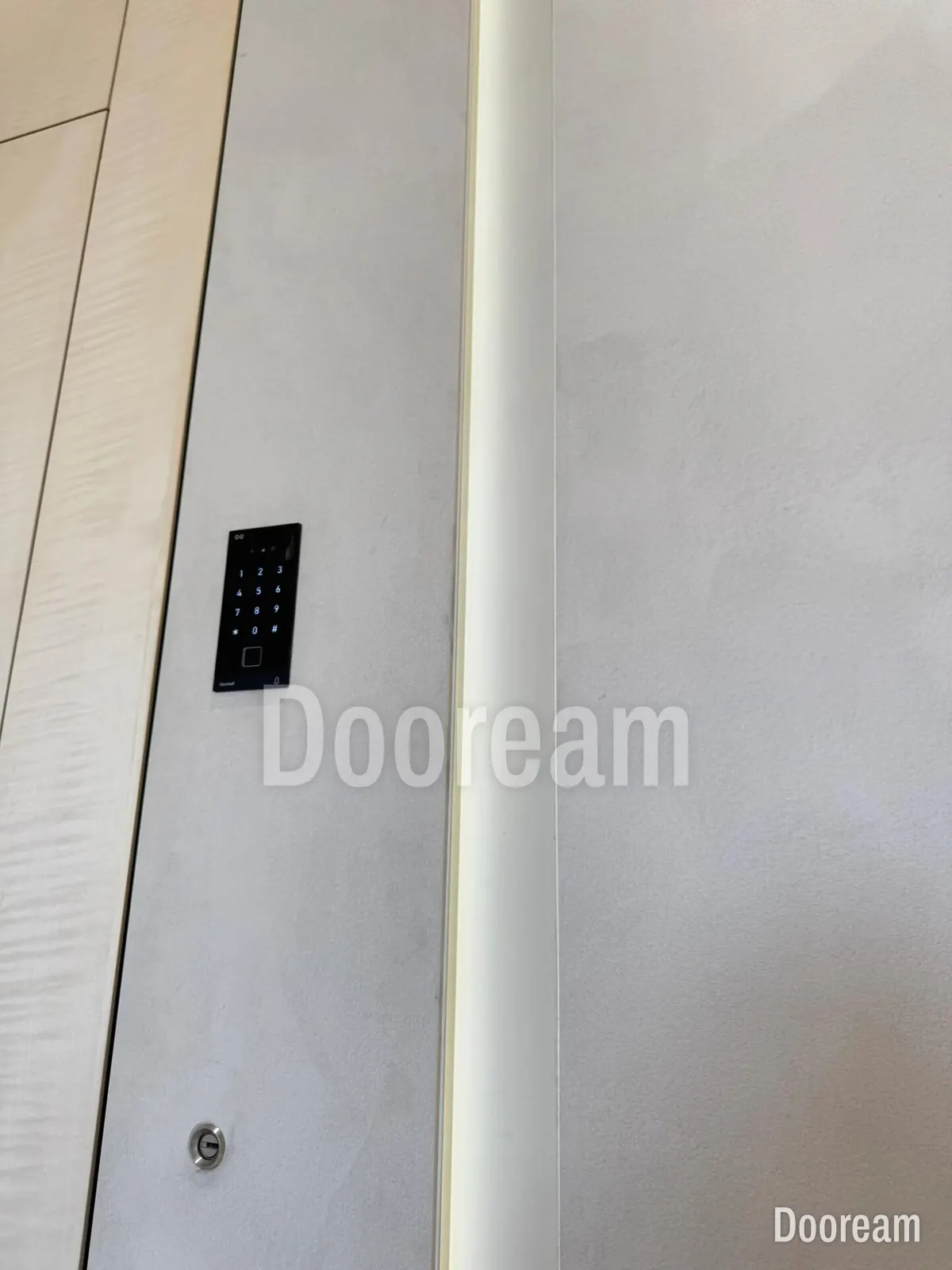
Ask which cylinder the smart lock takes and who keeps the override keys; power and backup are in smart locks on large and pivot doors.
What should you specify?
Write these into the door schedule so factory, locksmith and owner work from one cylinder.
- Lock and profile: lock maker, model and cylinder profile.
- Length: each half, for the finished door thickness.
- Grades: EN 1303 code and edition, or BHMA grade and any UL 437 listing.
- Snap resistance: TS 007 3-star or SS312 Diamond, with the marking.
- Projection: flush with the door or handle, or a guard or escutcheon.
- Inside: thumb-turn or key, checked against local escape rules.
- Keys: restricted or patented profile, security card, patent expiry, master-key plan.
- Smart lock: the override cylinder, its rating, and who holds its keys.
- Timing: the final cylinder fitted at the factory or after handover, so builders’ keys do not open the house.
How does this work with Dooream?
We fit the hardware the buyer chooses and test it in our workshop before crating: KFV smart locks (KFV is the door-lock brand of the German SIEGENIA Group), G-U locking systems including BKS and Werock, and Wintech smart locks. Each door page lists the lock it is shown with, such as KFV on Lattice or Wintech on Malachite. We do not publish a cylinder grade, TS 007 rating or key profile for the cylinders we fit. Specify the cylinder you need, by grade, anti-snap mark and key system, and we fit what you specify, or ask us which cylinder comes with a given lock. Our doors hold no EN 1627 rating (compliance; see door security ratings explained). See the locks we fit, and send your opening and cylinder through our contact page.
Sources, checked November 2026: Estonian Centre for Standardisation, EVS-EN 1303:2026 scope and classification; DIN Media, DIN EN 1303:2026-08; DIN, EN 1303:2026 table of contents; HOPPE, BS EN 1303 cylinders for locks (from the dhf best practice guide); dhf, TS 007; Master Locksmiths Association, lock snapping and the most secure cylinder; West Yorkshire Police, advice on euro cylinder locks (published by Walton Parish Council); East Cambridgeshire District Council, lock snapping; ABLOY, mechanical door cylinders; All About Doors, GU SECURY Automatic 45/92; BHMA, A156.5-2020 cylinders and input devices for locks; ANSI Webstore, BHMA door locking standards; Allegion, ANSI/BHMA hardware grades; UL Standards & Engagement, UL 437 key locks; Locksmith Ledger, protecting against unauthorized access; ASSA ABLOY, understanding patent protection; Montana Department of Labor and Industry, 2021 IRC means of egress (R311.2).
Quick answers
Which cylinder should a front door with a multipoint lock have?
The profile the lock case is made for, usually a euro profile on European multipoint locks, sized so it does not stick out of the door or handle. In the UK, police advise TS 007 3-star or Sold Secure SS312 Diamond. Elsewhere, ask for the EN 1303 code, with a high key-related security grade and an attack resistance grade.
What does the EN 1303 code on a cylinder mean?
It has eight positions, for category of use, durability, door mass (mechanical coding in the 2026 edition), fire, safety, corrosion and temperature, key-related security graded 1 to 6, and attack resistance graded 0 or A to D. The last two matter most for security.
Can someone copy my key?
An ordinary key can be copied by any key cutter who stocks the blank. A patented key profile can only be cut by authorised locksmiths, often only when the owner shows a security card and PIN. Patents run for up to 20 years, so ask when the key's patent expires.