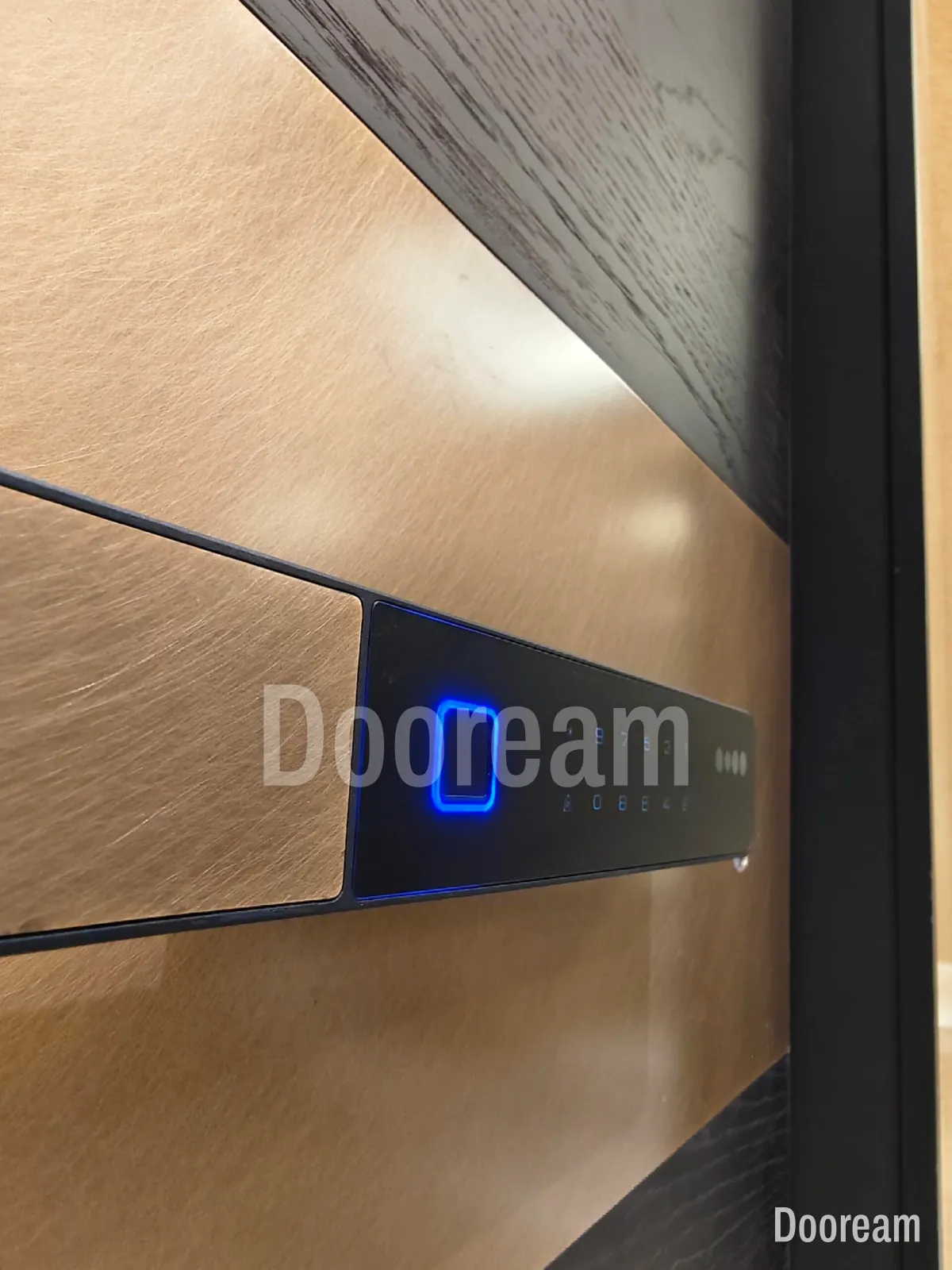
Short answer: yes, if the reader is rated for the temperature it actually reaches and is kept out of direct sun. The published ranges of two outdoor fingerprint readers, ekey’s dLine and SIEGENIA’s scanner, stop at 70 °C, while a dark door face in low sun on a 46 °C Gulf afternoon can run hotter. Shade the reader, keep the batteries inside, enrol several fingers and keep a mechanical key.
Do fingerprint door locks work in hot, sunny climates?
They do when the reader is rated for the temperature it reaches, sits in shade and can read the users’ fingers. Heat causes trouble in three ways: it pushes electronics past their rated range, it limits batteries, and it leaves fingers too dry or too sweaty to read.
How does a fingerprint reader work, and which type suits heat?
Most door readers are capacitive. A silicon sensor measures the electric field to the skin, which changes with the distance to ridges and valleys, Xia and O’Gorman explain in their 2003 review of capture devices. ekey’s dLine is a capacitive area sensor at 508 dpi.
| Sensor | How it reads | What to watch in heat |
|---|---|---|
| Capacitive, touch (area) | Electric field between sensor and ridges | Dry skin weakens the image; the coating takes the wear |
| Optical | A camera images the finger on a prism (frustrated total internal reflection) | Plastic platens and coatings can scratch and collect dirt |
| Thermal | Heat difference between ridges and valleys | Image weakest when the sensor is at skin temperature |
Prefer a touch sensor to a swipe sensor. In a study of commercial sensors published on NIST’s website, Fernandez-Saavedra and colleagues found acquisition errors “higher for devices that require a non-static interaction”.
How hot does the reader get on a Gulf summer afternoon?
Hotter than the air whenever sun reaches it. On 1 August 2026 the UAE’s National Center of Meteorology recorded 50 °C at Al Shawamekh, Abu Dhabi, and inland areas often pass 45–46 °C in that season, Khaleej Times reported.
For a summer afternoon, LBNL’s Ronnen Levinson puts a grey surface reflecting 20% of sunlight 38 K above the air, a standard red tile reflecting 10% 44 K above it, and a bright white one reflecting 85% only 5 K above it. These are roof figures. A door facing east or west takes low sun almost head-on, so the worked example below, our own arithmetic, takes between half and the full roof figure at 46 °C air.
| Door face | Reflects | Roof rise (LBNL) | Face at 46 °C air |
|---|---|---|---|
| Bright white | 85% | 5 K | 49–51 °C |
| Grey | 20% | 38 K | 65–84 °C |
| Dark colour | 10% | 44 K | 68–90 °C |
| In full shade | about 46 °C |
ekey rates its dLine fingerprint reader −25 to 70 °C, IP56 with its decorative element fitted. SIEGENIA, the group behind KFV, gives its access-control fingerprint scanner an ambient range in the door of −25 to +70 °C and IP54 on the front. A shaded reader stays about 24 K inside that limit; a dark sunlit one can pass it. SIEGENIA’s figure is the ambient temperature in the door, and a reader in sun runs hotter than the air around it.
The IP code says nothing about heat. Under IEC 60529 a first digit 5 is dust-protected, 6 dust-tight; a second digit 4 means protected against splashing water, 6 against powerful water jets. For dust, see keeping sand and dust out.
Where should the reader go?
In shade for the hottest hours. A reader needs less canopy than the sill. With a canopy at 3,000 mm and the reader at, say, 1,300 mm, the reader sits 1,700 mm below it; with sun 60° above the horizon, square to the façade, 1.7 ÷ tan 60° ≈ 1.0 m of canopy shades it, against 1.73 m for the sill (our arithmetic). See canopy design.
- Orientation. In the Gulf, midday sun is high and mostly from the south; low east and west sun gets under canopies. See entrance doors for hot climates.
- Recess and side walls. On a double or pivot door, put the reader on the side a wall shades in the afternoon.
- Housings and covers. A hood must shade without trapping heat or water. Ask whether it changes the IP rating: ekey’s IP56 applies with its decorative element fitted.
How should the lock be powered in the heat?
By battery or by wire; either way, keep heat-sensitive parts inside. Energizer rates its alkaline AA cell from −18 to 55 °C and its lithium iron disulfide AA cell from −40 to 60 °C. Both limits are below a sunlit outside face in our example, but well above a hall at room temperature.
- Batteries. Ask where the battery compartment is, which cells the maker approves, how early the low-battery warning comes and how it shows: light, sound or app.
- Wired. ekey’s dLine runs on 10–30 V DC; G-U’s Fingerprint kit (08.2023) uses an ekey scanner on 12–24 V DC from a 230 V AC supply. No cells to overheat, but a cable must reach the leaf; on a pivot, see smart locks on large and pivot doors.
- Emergency. Ask whether the lock can be powered from outside, and keep a mechanical key with a good override cylinder.
How do you enrol fingers so the lock reads them in August?
Enrol at the door, in the conditions of use, and give every person more than one way in. ekey says its scanner reads the ridges of the front phalanx, and that a finger too dry or too cold cannot be registered properly.
- Enrol at least two fingers per person, one on each hand. ekey’s fix for a dry or cold finger includes using a different finger.
- If you enrolled in winter or air-conditioning, add a finger again in the hot season.
- Place the front segment of the finger flat and centred on the sensor.
- Test each finger several times; re-enrol any that fail.
- Give staff and guests a PIN, card or app as well.
For a dry finger, ekey suggests warming it by friction or running it across the forehead. For a wet finger or sensor, dry both with a soft, non-abrasive cloth.
What happens to the fingerprint data?
The reader stores features of each finger, not a picture. The UK Information Commissioner’s Office says that stored features become a biometric template, and that templates are difficult to reverse engineer. On-device verification, it says, “reduces the potential impact of a large data breach when compared to on-server storage”.
Ask whether templates stay in the reader or lock, or are synced to an app’s server, whether they are encrypted, and how a user is deleted. Under UK GDPR, an organisation using biometric recognition processes special category data; check local rules for staff, rentals and offices.
Which failures are common in heat, and what fixes them?
Start by telling a rejection from a fault. ekey quotes its dLine reader at a false rejection rate of 1 in 100 and a false acceptance rate of 1 in 10,000,000, with recognition in 1 second. Dry, wet or dusty fingers push rejections up; a reader past its rated range may stop working altogether.
| Symptom | Likely cause | Fix |
|---|---|---|
| Fails in the afternoon, works in the morning | Reader in sun, past its range | Shade; move the reader; check the rating |
| Rejects dry fingers | Dry skin; ridges not read | Friction or forehead; another enrolled finger |
| Rejects after exercise or washing | Wet finger or sensor | Dry finger and sensor with a soft cloth |
| Gradual decline | Dust or skin oil on the sensor | Wipe with a soft, non-abrasive cloth, damp if gritty |
| Lock dead or weak | Flat or hot batteries | Cells inside; change at first warning; key |
| Unlocks but sticks in the afternoon | Hot leaf grown or bowed against its keeps | Reset keeps; see multipoint locks |
What should you specify?
Treat the reader as a component in its own right, with figures the lock maker confirms in writing. Put these points on the door schedule, so factory, installer and lock supplier work from one page:
- Reader position, orientation, hours of direct sun, and the canopy, recess or hood that shades it.
- The lock maker’s published operating range and IP code, against your design face temperature.
- Sensor type: capacitive or optical, touch not swipe.
- Power: battery position and approved cells, or wired supply and cable route.
- Low-battery warning, outside emergency power and a mechanical override key.
- Second opening method for each user.
- Template storage, encryption and deletion.
- Enrolment and testing at handover, in summer conditions.
How does this work with Dooream?
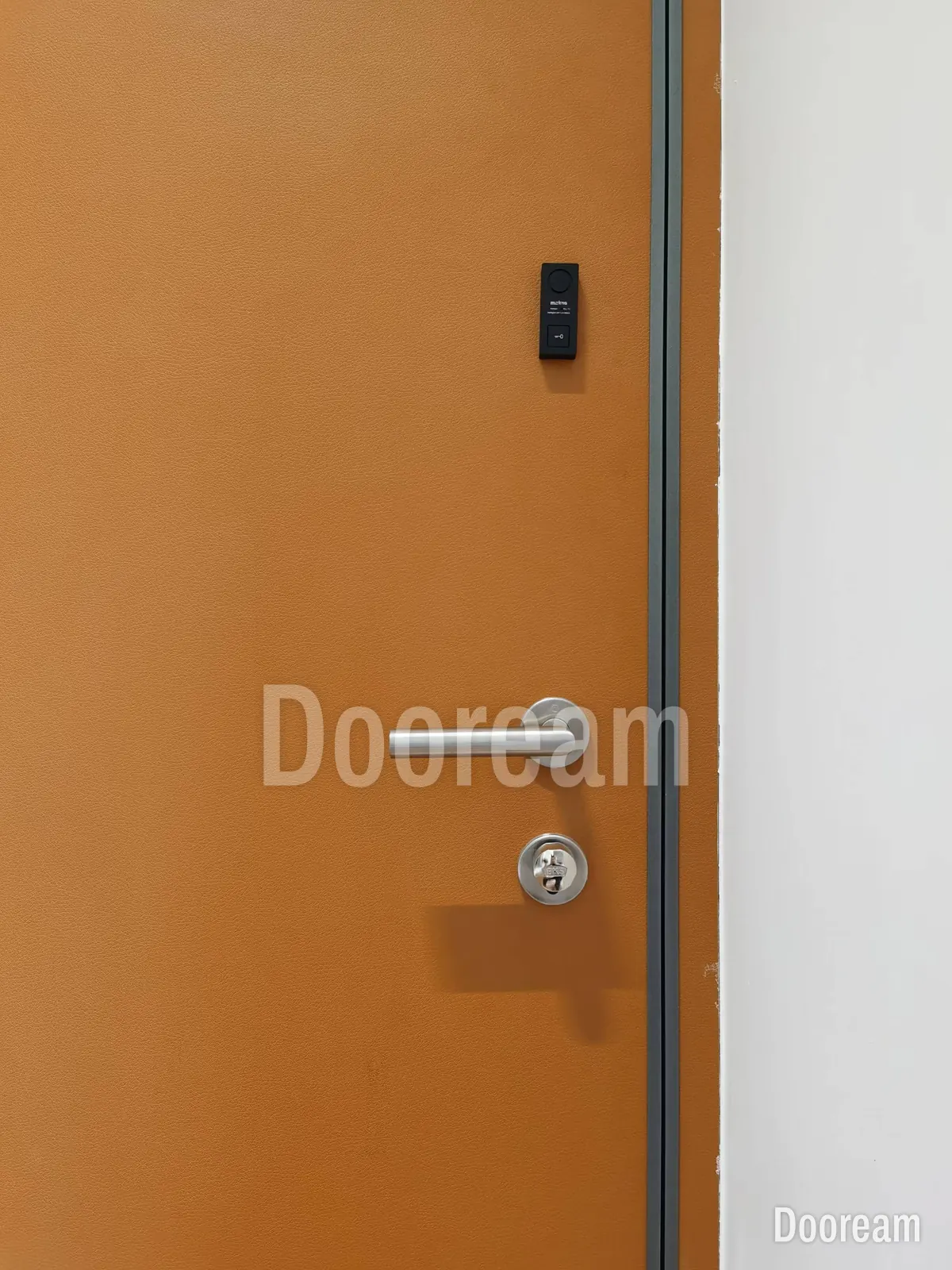
We fit smart locks from KFV (the door-lock brand of the German SIEGENIA Group), G-U (including BKS and Werock) and Wintech, or a lock the buyer chooses, and test them in our workshop before crating. Each door page lists the lock it is shown with: Malachite, Contour and Black Warrior, for example, are shown with a Wintech fingerprint smart lock. We do not quote operating temperatures, IP ratings or battery life for these locks; ask for the lock maker’s data sheet for your model and check it against the table above. Most of our doors are finished in PVDF paint; choose the colour around the reader with heat in mind. Mark the reader, shade and cable route on the drawing. Your local installers fit the door from our installation drawings, with our remote guidance. Send the opening, orientation and lock choice through our contact page.
Sources, checked November 2026: ekey, dLine fingerprint data sheet, why is my finger too dry or too cold? and why is my finger too wet?; SIEGENIA, access control systems; G-U, Fingerprint instructions (08.2023); W. Xia and L. O'Gorman, innovations in fingerprint capture devices (Pattern Recognition, 2003); B. Fernandez-Saavedra and colleagues, Carlos III University of Madrid, biometric performance and usability study of commercial fingerprint sensors (NIST); Khaleej Times, UAE hits 50 °C for first time this year (1 August 2026, citing the National Center of Meteorology); R. Levinson, Lawrence Berkeley National Laboratory, cool roof Q&A (draft, July 2009, US Department of Energy site, archived); Hammond Manufacturing, IEC 60529 IP code tables; Energizer, L91 and E91 data sheets; Information Commissioner's Office, biometric recognition (October 2025) and keeping biometric data secure (November 2024).
Quick answers
Do fingerprint door locks work in hot climates like the Gulf?
Yes, if the reader is rated for the temperature it actually reaches and is kept out of direct sun. ekey rates its dLine reader, and SIEGENIA its access-control scanner, from −25 to 70 °C. By our arithmetic from LBNL figures, a grey door face in low sun on a 46 °C afternoon can reach 65 to 84 °C, so shade the reader, keep batteries inside and keep a mechanical key.
Why does my fingerprint lock fail more often in summer?
Check the fingers and the sensor before the lock. ekey says a finger that is too dry or too cold cannot be read properly, and advises warming it by friction, running it across the forehead or using another finger. A wet finger or sensor should be dried with a soft, non-abrasive cloth. Enrol several fingers per person.
Which batteries suit a smart lock in the heat?
Use the cells the lock maker approves, and keep them in the inside unit. Energizer rates its alkaline AA cell from −18 to 55 °C and its lithium iron disulfide AA cell from −40 to 60 °C, both below what a sunlit outside face can reach. Change them at the first low-battery warning.