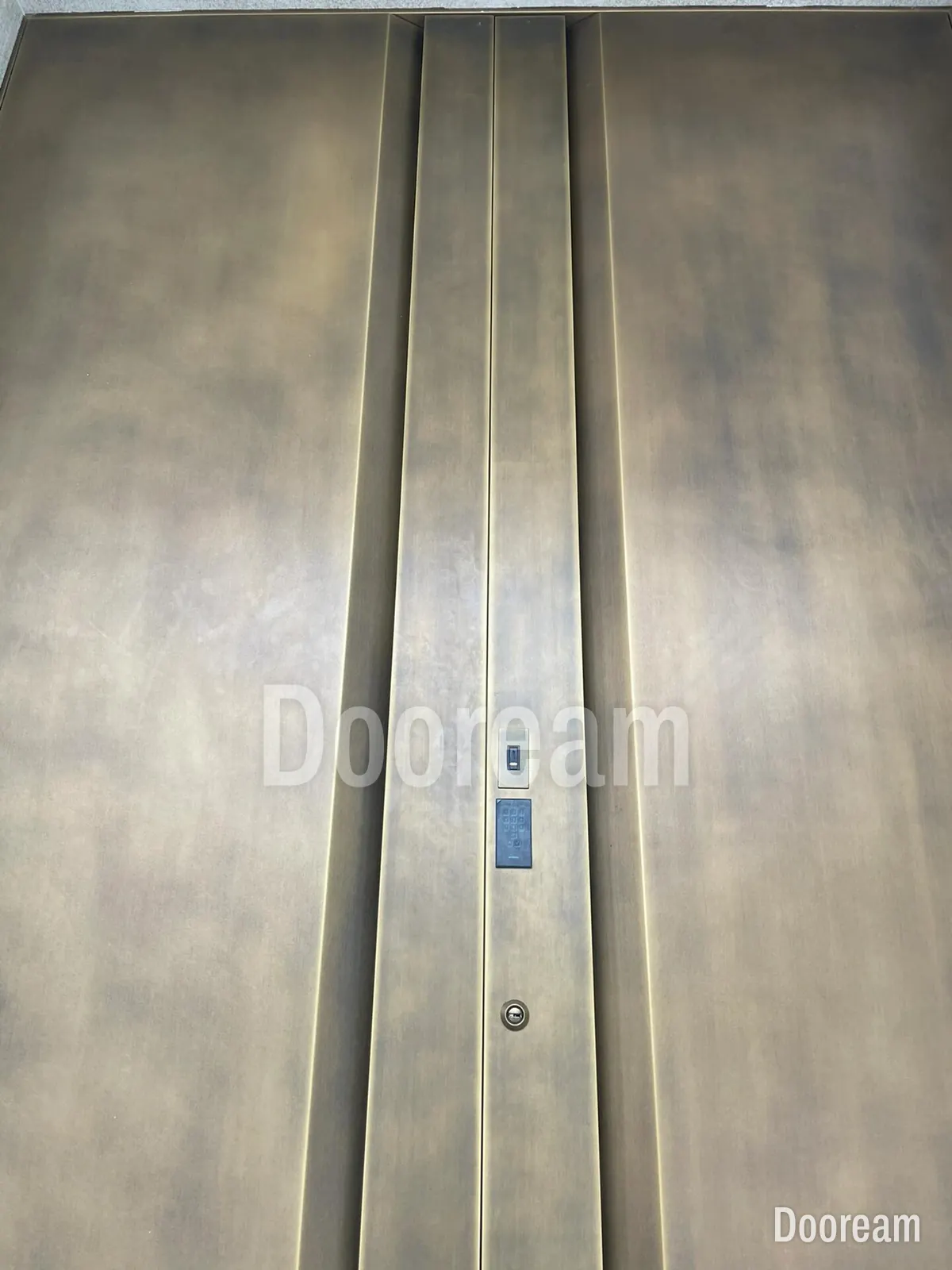
Short answer: a battery smart lock warns you first, and when the cells are flat it simply stops: the bolts stay where they were, so a locked door stays locked. You get in with the mechanical key, or by powering the outside unit from a 9 V battery or a USB-C power bank. A mains-powered motor lock on an entrance door should fail secure: locked from outside in a power cut, with the key still working and the inside handle or thumb-turn always opening it.
What happens when a smart lock’s battery runs flat?
The electronics stop, the motor or clutch cannot move, and nothing else changes. A locked door stays locked; an unlocked one stays unlocked. Before that, the lock should warn you by light, sound or app. A building power cut does nothing to a battery lock, but it does stop a mains-powered one.
| Type | In a building power cut | When its own power fails |
|---|---|---|
| Battery smart lock, cells usually in the inside unit | Carries on; the app stops if the router goes off | Warns, then stops; bolts stay where they were |
| Mains, self-locking multipoint with motor opener | Stays locked; key from outside, lever or turn from inside | The same |
| Mains, bolts thrown and drawn by motor | Cannot lock or open by motor; stays as it was | The same, unless a backup battery takes over |
The last two differ. G-U describes its SECURY Automatic as self-locking, with the A-opener motor only drawing the latch bolts back; KFV says its A-opener lock “locks mechanically automatically if the door is closed”. A lock whose motor also throws the bolts cannot lock without power: KFV lists an interrupted supply as a cause of its GEP lock not locking automatically. The bolts themselves are in multipoint locks explained.
How do lock makers state battery life?
In openings or months, under their own assumptions. These are three makers’ figures for their own locks, not tests of our doors and not the locks we fit.
| Lock (maker’s data) | Battery | Stated life | Warning and backup |
|---|---|---|---|
| Yale Assure Lock SL | 4 × AA alkaline | Not stated in its instructions | Indicator flashes red; 9 V terminals below the touchscreen; no key |
| dormakaba E-Plex 2000 | 3 × AA alkaline | At least 100,000 openings “under typical operating conditions” | Red and green LEDs flash together on a valid code; still opens |
| TP-Link Tapo DL110 | 10,000 mAh rechargeable lithium-ion | Up to 1 year on Wi-Fi, 2 on Bluetooth, at 20 unlocks a day in TP-Link’s lab tests | USB-C emergency power; mechanical key |
A villa with staff and deliveries may open more than 20 times a day. Wi-Fi costs battery: TP-Link’s figure halves on Wi-Fi, and it says actual life “may vary due to device settings, router specifications, usage, and environmental factors”.
TP-Link rates the DL110’s exterior assembly from −30 to 70 °C, but the interior assembly, which holds the battery, only from −10 to 55 °C. Keep the cells inside and the reader in shade; see fingerprint locks in hot climates.
How do you get in when the lock is dead?
Use the key, or give the outside unit enough power to wake up. Yale says to hold a 9 V battery, either way round, to the terminals below the touchscreen, wake the lock and enter the PIN. TP-Link lists a USB-C socket on the DL110 for emergency power. You still need a valid code, card or finger.
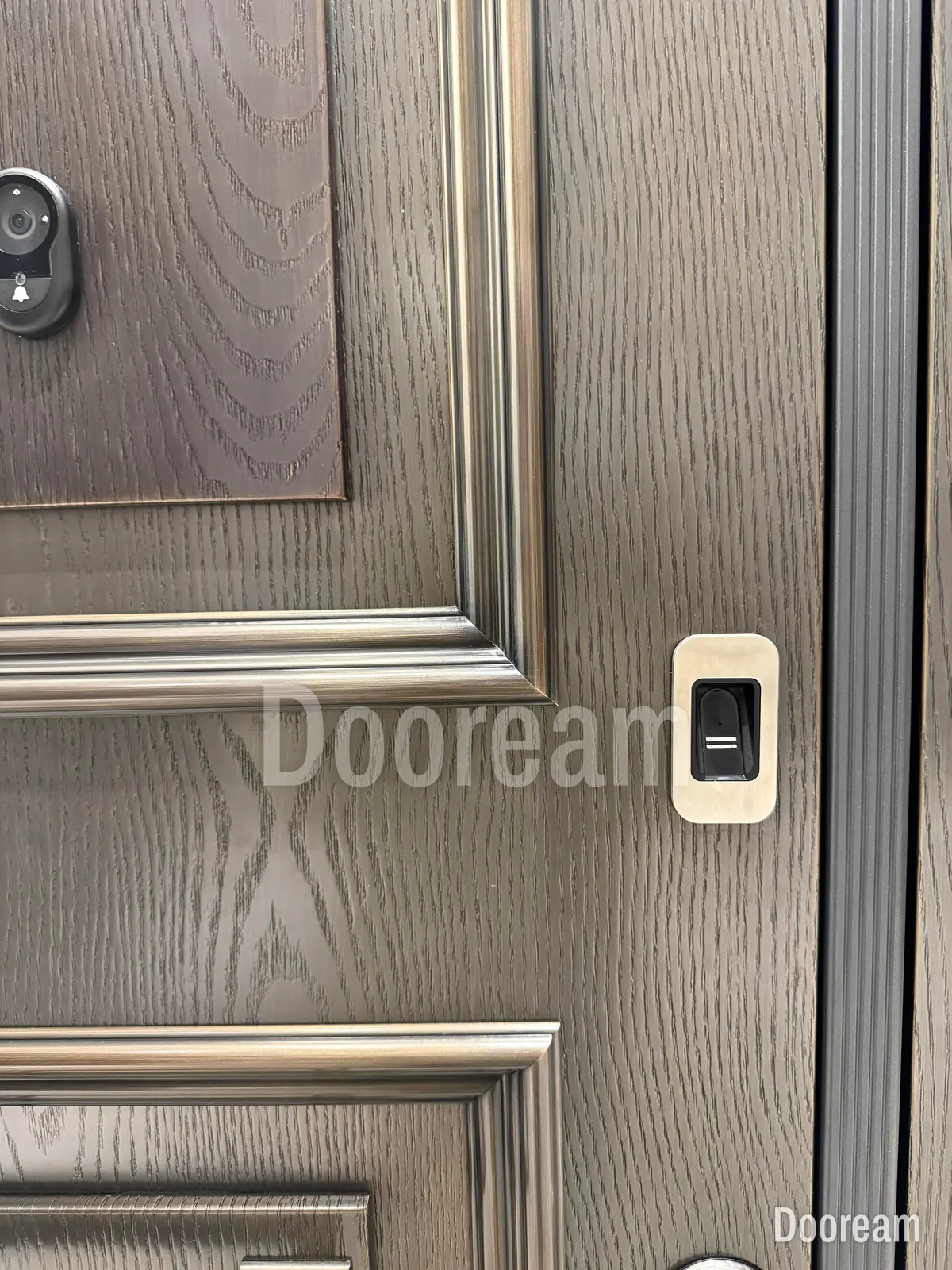
- Try the mechanical key in the override cylinder.
- No key: power the outside unit from a 9 V battery or USB-C power bank, as the maker specifies.
- Open, then change all the cells at once; Yale asks for four new alkaline cells.
Why does the key cylinder still matter?
It is the only way in that needs no power at all. Yale’s Assure Lock SL has no mechanical override, and Yale recommends it where the house has other entry points. A villa often has one main entrance, so ask for a key. The override cylinder is also what an attacker reaches, so grade it like any cylinder: see lock cylinders and key security.
What do fail-secure and fail-safe mean for an entrance door?
They describe what an electrified lock does when power is removed. Allegion defines fail safe products as “unlocked when power is removed” and fail secure products as “locked when power is removed”. For an entrance door, specify fail-secure: a power cut should leave the house locked, not open.
Allegion says a fail-safe lock leaves the door unlocked in a power failure, “which is an obvious security risk”, and suits doors that must allow free access on a fire alarm or power failure, such as stairwell doors that need re-entry. Electromagnetic locks, Allegion says, are only available fail safe; keep them, and fail-safe strikes, off a villa’s main door.
Fail-secure does not mean trapped: Allegion adds that most products give free egress either way. SIEGENIA says the KFV GENIUS allows “manual locking and release via cylinder at any time – even during power failure”, and G-U says its SECURY Automatic with A-opener can always be worked by key from both sides.
Can you always get out from inside?
You must be able to. The inside lever or thumb-turn should open the door mechanically, with no power, key, code or app. G-U says that with the central deadbolt retracted, its SECURY Automatic opens from inside by lever handle “at any time”. If someone throws the deadbolt with the key, the handle alone will not open it, so fit a thumb-turn inside, where local rules allow it.
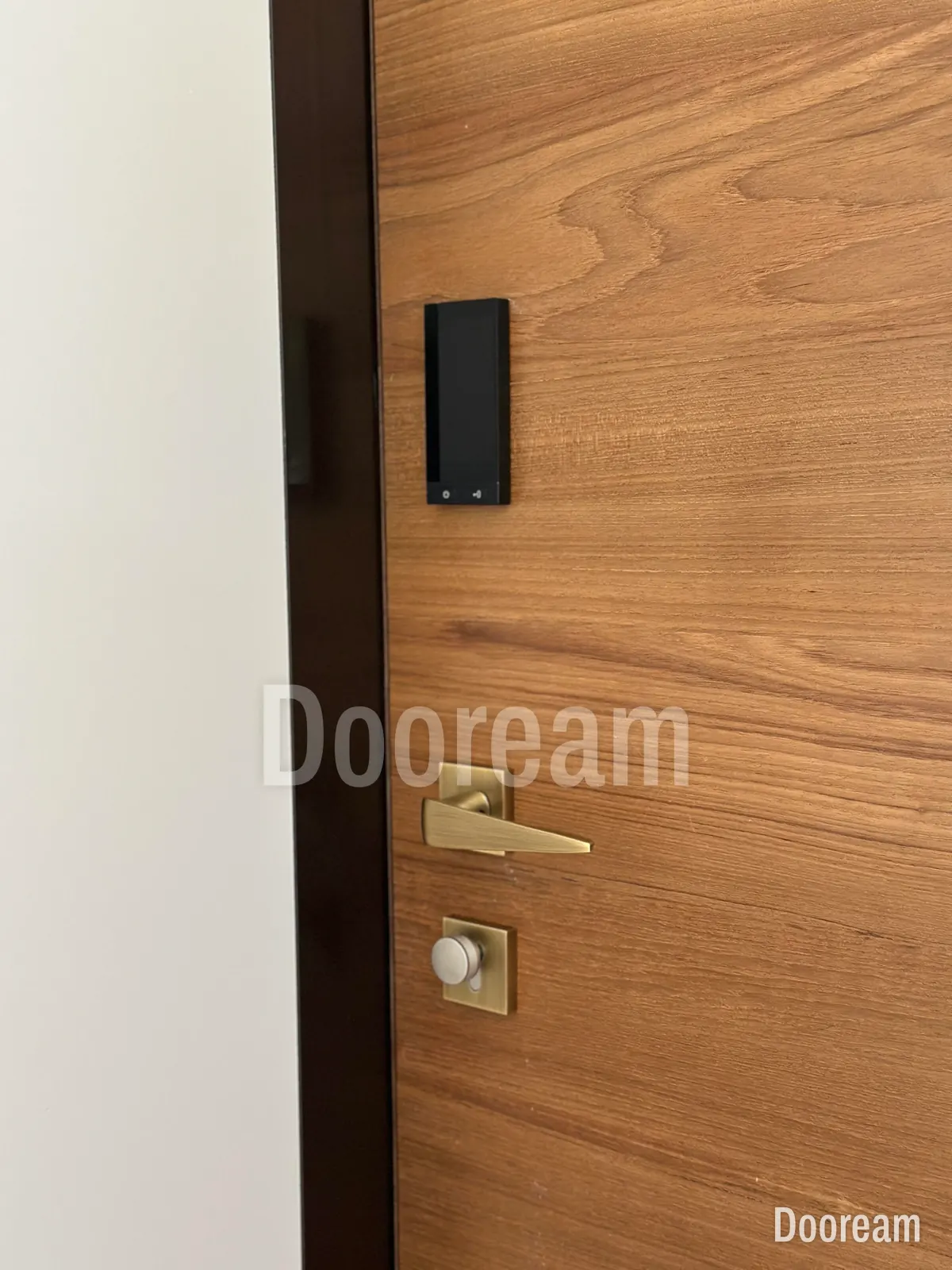
Escape routes have standards for this. EN 179 covers emergency exit devices worked by a lever handle or push pad; ASSA ABLOY describes them for areas where all users know the building. EN 1125 covers panic exit devices with a bar, which ASSA ABLOY calls a legal requirement in public access areas. Building rules, not the standards, decide which doors need them; check them for your building type. KFV makes motor locks in EN 179 and EN 1125 versions and states that opening by the lever handle in the direction of escape “is always possible”.
How do you keep a mains-powered lock working in a power cut?
Give its power supply a backup. KFV lists a rechargeable battery “for uninterrupted emergency power supply” as an accessory for its GEP motor locks, which run on 24 V DC (19–32 V DC), and gives a minimum standby time of 33.6 hours with its UPS connected. G-U’s A-opener runs on 12 V AC or 12–24 V DC, stabilised, at 1 A.
- Battery in the power supply: ask its standby time and replacement interval.
- Building UPS or generator circuit: for the lock’s supply, intercom, router and hub.
- Access: put supply and battery in a cupboard you can reach, not in the leaf.
- Cable route: plan it before the ceiling is closed; for pivots, see smart locks on large and pivot doors.
What happens in each situation, and what should you specify?
| Situation | What happens | What to specify |
|---|---|---|
| Batteries low | Warning; lock still works for a while | An alert that reaches the user; cells inside |
| Batteries flat, door locked | Electronics stop; bolts stay thrown | Key override; 9 V or USB-C contacts outside |
| Power cut, self-locking motor lock | Stays locked | Fail-secure lock; key outside, lever or turn inside |
| Power cut, motor-locking lock left open | Cannot lock | Backup battery or UPS |
| Fail-safe magnet or strike on the entrance | Door unlocked | Do not use one on the main door |
| Router or hub off | App and remote opening stop | Router and hub on the UPS; ask which ways in work offline |
What should you check, and how often?
- Handover: note the battery type, the compartment and where the keys are.
- First warning: change all cells together, with the type the maker approves; log the date.
- Spares: cells, plus a 9 V battery or USB-C power bank and cable, kept where you can reach them from outside.
- Yearly, mains lock: switch off the supply; check the key from outside, the lever or turn from inside, and what happens when power returns.
- Yearly: test the backup battery or UPS; replace it when its maker says.
The rest is in our entrance door maintenance schedule.
How does this work with Dooream?
We fit smart locks from KFV, G-U or Wintech, including fingerprint options, or a lock the buyer chooses; our standard mechanical option is a 9-point steel multipoint lock. Battery type, battery life, IP rating, temperature range and power supply depend on the lock model, so ask for the lock maker’s data sheet for your model and check it against the tables above. Mark on the drawing whether the lock is battery or wired, the inside lever or thumb-turn, the key override, and where the power supply and backup will sit. Your local installers fit the door from our installation drawings, with our remote guidance. See the locks we fit, and send your opening and lock choice through our contact page.
Sources, checked November 2026: SIEGENIA, GENIUS drive for door systems; KFV (SIEGENIA), assembly instructions, electromechanical multi-point lock GEP 2.2 and 2.3 (09.2026) and operating instructions, KFV A-opener 2.2 (09.2019); G-U, GU-SECURY Automatic with A-opener, assembly and operating instructions (01.2023) and A-opener flyer (01/2025); Yale, Assure Lock SL installation and programming instructions (Rev C); dormakaba, battery life and replacement, E-Plex 2000; TP-Link, Tapo DL110 data sheet; Allegion, L. Greene, fail safe vs. fail secure; BSI, BS EN 179:2008 scope; ASSA ABLOY, panic and emergency escape hardware.
Quick answers
What happens to a smart door lock when the battery dies?
It should warn first, by light, sound or app, and when the cells are flat the electronics stop. The bolts stay where they were, so a locked door stays locked. You get in with the mechanical key, or by powering the outside unit for a moment, from a 9 V battery on Yale's Assure Lock SL or USB-C on TP-Link's Tapo DL110, and then using your code or finger.
Does a mains-powered smart lock unlock in a power cut?
It should not, on an entrance door. Specify a fail-secure lock, one that stays locked without power. SIEGENIA says its KFV GENIUS lock can be locked and released with the cylinder at any time, even during a power failure. Allegion calls a fail-safe lock, which unlocks when power is removed, an obvious security risk on a door that must stay secure.
Can you always get out from inside if a smart lock has no power?
You should be able to. The inside lever or thumb-turn must open the door mechanically, with no power, key or code. G-U says its SECURY Automatic opens from inside by lever handle at any time once the central deadbolt is retracted, so fit a thumb-turn inside if the deadbolt is used. EN 179 and EN 1125 cover exit devices on escape routes; building rules decide where they are required.