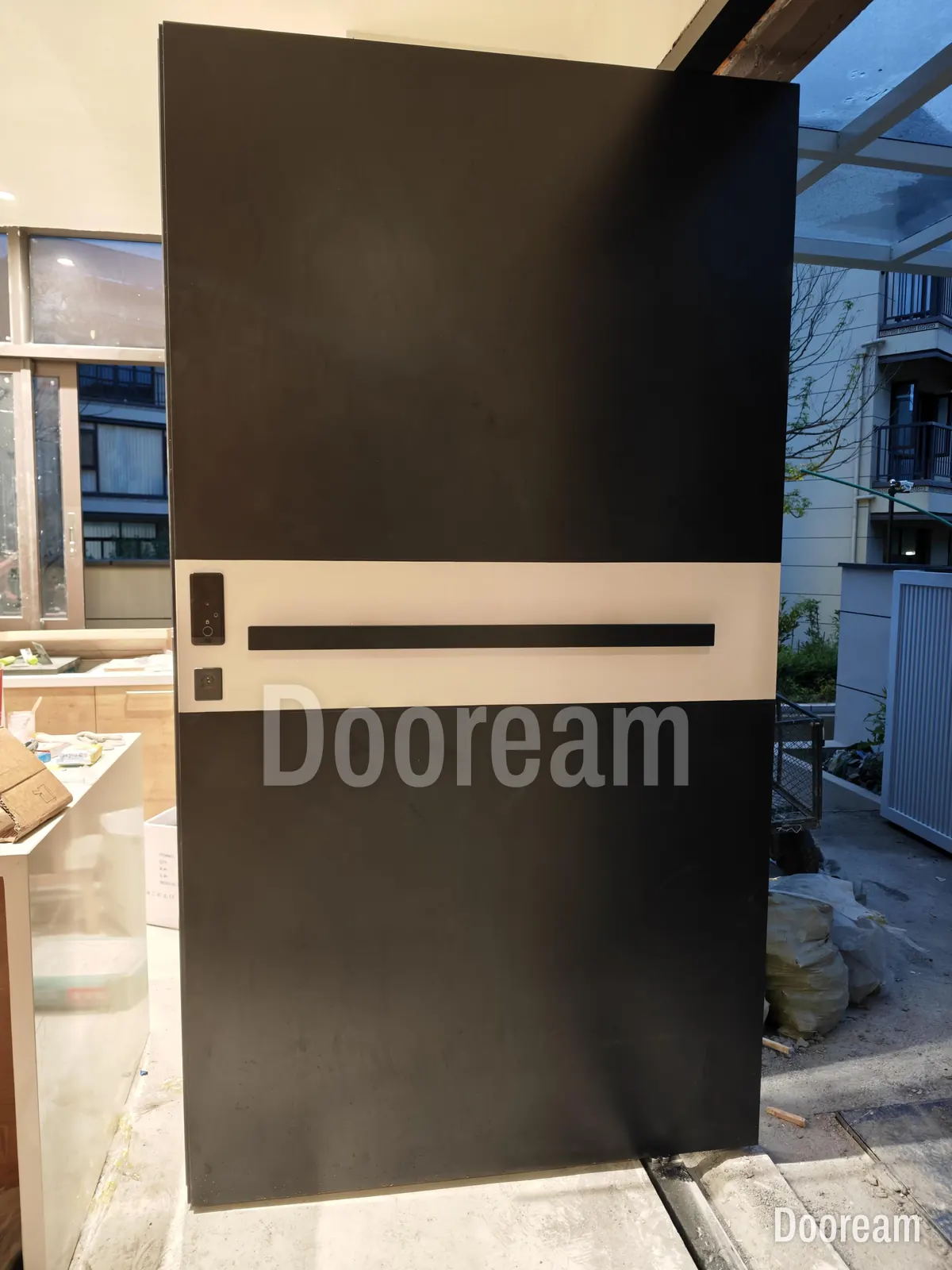
Short answer: mostly with little force: through an unlocked door, by forcing the lock, by levering the leaf or by reaching the inside handle. Each attack has a matching defence, and a door holds only as well as its weakest one, so specify against each and ask for a whole-door test.
How do burglars actually get in through a front door?
Mostly through the door, often with little force. In the Crime Survey for England and Wales for the year to March 2025, published by the ONS in March 2026, a door was the way in, or the way tried, in 76% of domestic burglaries. The front of the house was the point of entry in 60%.
| Method at the door | All incidents | Burglar got in | Attempt failed |
|---|---|---|---|
| Forced the lock | 29% | 15% | 44% |
| Door was not locked | 14% | 25% | 3% |
| Pushed past the person who opened it | 10% | 10% | 11% |
| Had a key | 3% | 6% | 0.2% |
| Kicked, smashed or rammed the door | 0.7% | 0% | 1.4% |
| Broke the door’s glass | 0.6% | 0% | 1.2% |
Victims could give more than one answer, and the base is 245 incidents, so treat small figures as rough. About two in five were attempts. German police counted 44.9% of the 82,920 residential burglaries of 2025 as attempts, proof to them that prevention works. Failed attempts mostly forced the lock; successful burglars most often found the door unlocked.
How are cylinders attacked: snapping, bumping, picking and drilling?
The cylinder is the part of the lock reachable from outside. Snapping breaks a euro cylinder in two, bumping and picking move its pins without the key, and drilling or pulling destroys or removes it. A cylinder resists only the attacks it was tested against, and only if nothing sticks out to grip.
The Master Locksmiths Association says a TS 007 1-star cylinder should resist drilling, bumping and picking, and a 3-star one is also tested against snapping; Sold Secure SS312 Diamond uses a heavier tool list. German police call for a protective escutcheon, ideally with a cylinder cover; without one, the cylinder must sit flush with it, within ±3 mm, and have pull-out protection. EN 1630, the manual attack test for doors, does not directly cover picking. Grades: lock cylinders and key security.
How is a door levered open, and what holds it?
With a bar, a large screwdriver or wedges, worked in at the lock side, the hinge side or between frame and wall until the bolts leave their keeps. What holds is several locking points engaging keeps fixed through the frame into the structure, and a hinge side that cannot be levered out.
German police say hook bolts raise resistance at the lock side, where roller cams alone are not enough. Frame spreading pushes the jambs apart with a jack or wedges; what stops it is a frame fixed at close centres and packed solid (security checklist, multipoint locks).
Exposed hinges. On an outward-opening door the pins can be driven out or cut and the leaf levered out, lock still thrown. UK police list this among the methods testers try; US police advise non-removable pins. On a pivot door the risk is lifting; see what makes an armoured door secure.
Do kicking and shoulder charges still work?
Rarely as the way in, but they find every weak fixing. The ONS put kicked, smashed or rammed doors at 0.7% of domestic burglaries, yet German police warn that many outer doors give way to physical force alone, without any tool.
EN 1629 simulates shoulder charges and kicks with a 50 kg pendulum on two pneumatic tyres, and UK police guidance treats bodily force as covered by it and the EN 1628 static test.
How do letterbox, thumb-turn and glass attacks work?
A wire, a hooked tool or an arm goes in through a letter plate, a gap or a broken pane, then turns the inside thumb-turn, pulls the lever or lifts keys off a hook. Where the lock opens from inside without a key, reaching the turn is enough. Remove the route, or what it reaches.
The dhf’s TS 008:2022+A1:2025 tests letter plates: Level 1 covers removal of post and thumb-turn manipulation, Level 2 adds fishing, and the aperture is capped at 260 × 40 mm. A mailbox at the gate removes the route. A key-locked inside cylinder stops a reaching hand but can trap people inside: check escape rules.
Glass. Broken door glass was the method in under 1% of ONS incidents, but a pane beside a thumb-turn makes fishing easy; US police flag glass within 40 in (about 1 m) of a lock. Use laminated glass, beads inside (glass in entrance doors).
How are smart locks attacked?
Rarely by breaking the electronics; more often around them: relaying the owner’s phone signal, learning the code, or waiting for the power to fail and attacking the backup. The bolts still hold the door, so a smart lock needs the same locking points and cylinder as a mechanical one.
- Relay. In 2022, NCC Group relayed Bluetooth Low Energy signals so that Kwikset/Weiser Kevo smart locks believed the owner’s phone was near. It advises a deliberate action to unlock, and passive unlock switched off.
- Code observation. Codes can be watched or filmed, and heat gives them away: University of Glasgow researchers revealed 86% of passwords typed on keyboards and phone screens from thermal images taken within 20 seconds. Door keypads were not tested. Use long codes or fingerprints, changed when staff change.
- Power loss. Ask what the bolts do when power fails and how the door then opens from outside, usually by a key cylinder that needs the tests above.
What about unlocked doors and keys?
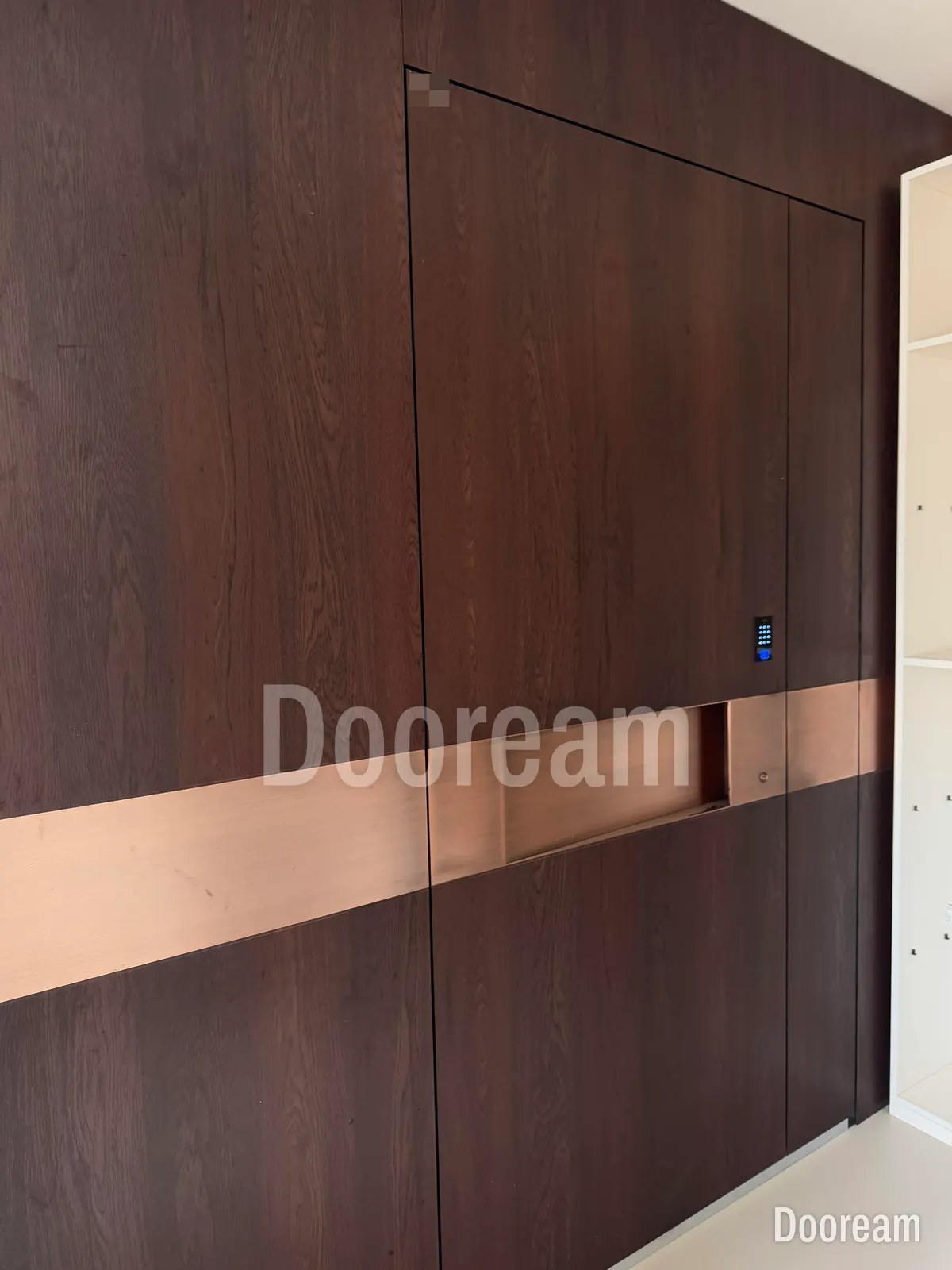
They are the cheapest way in, and no rating covers them. In the ONS figures, an unlocked door was the way in for 25% of burglaries where the burglar got in, and a key for 6%. A lock that bolts itself whenever the door closes, and keys that cannot be copied freely, close most of that gap.
German police warn against a door only pulled shut, and advise never hiding a key outside and replacing the cylinder when a key is lost. Against push-ins, plan a video intercom.
How do lab tests recreate these attacks?
A burglar-resistance test attacks the complete door as a burglar would. Under EN 1627 the door takes static loads (EN 1628), the tyre pendulum (EN 1629) and, in most classes, a manual attack with set tools (EN 1630). Testers first probe for the quickest way through, then attack it against the clock.
UK police guidance asks pre-tests to “fully explore all potential vulnerabilities”. Tool sets rise from hand tools (A1) to heavy grinders (A6); classes and times are in door security ratings explained.
Which defence answers which attack?
Use this table at specification stage: the attack, what resists it and what to write into the door schedule. Where a project needs a tested class, the test report for the whole door comes before any line here.
| Attack | What resists it | What to specify |
|---|---|---|
| Cylinder snapping | Snap-tested cylinder, flush or covered | TS 007 3-star or SS312 Diamond; protective escutcheon |
| Bumping, picking, drilling | Cylinder tested against each | TS 007 1-star or above, or the EN 1303 code |
| Lock-side prying | Hook bolts into keeps fixed to the structure | Locking points: number, type, height |
| Hinge-side prying, exposed hinges | Hinge bolts, non-removable pins, anti-lift | Hinge type and hinge-side protection |
| Frame spreading | A stiff frame, fixed and packed to a strong wall | Fixing plan and wall type |
| Kicking, shoulder charge | Stiff leaf; keeps fixed into the structure | Keep fixings; a dynamic test if a class is required |
| Letterbox, thumb-turn fishing | No route to the inside turn, lever or keys | No letter plate, or TS 008 Level 2 |
| Glass near the lock | Laminated glass, inside beads | EN 356 class for each pane within reach |
| Smart-lock relay | A deliberate action to unlock | Passive unlock off, or a second factor |
| Code observation | Long codes, biometrics | Code rules; reset at handover |
| Power loss | Known failure mode, rated backup | Backup method; rated override cylinder |
| Unlocked door, copied key | Self-locking bolts, key control | Automatic multipoint lock; restricted keys |
What should you check before signing off?
Check these on the shop drawing; the 20-item checklist covers the rest of the entrance.
- Cylinder: snap and drill rating, flush position.
- Lock side: locking points near top, middle and bottom.
- Hinge side: how levering and lifting are stopped.
- Frame: fixing plan, wall type, packing.
- Openings: no letter plate, gap or pane near the inside turn.
- Smart lock: passive unlock, code rules, power failure, override cylinder.
- Daily use: self-locking bolts, a key register.
- Evidence: a whole-door test report where a class is required.
How does this work with Dooream?
Our leaves are built, from outside in, of a face panel, a galvanised steel sheet, an aluminium profile frame with an aluminium honeycomb core, a second galvanised steel sheet and an inner face. We fit smart locks from KFV, G-U and Wintech, and FritsJurgens pivot hinges on pivot doors. Our doors hold no security rating (no EN 1627 class, PAS 24, LPS 1175 or TS 007 rating), and we claim no resistance to any attack above. Lab testing can be arranged, usually at the buyer’s cost. We build to drawings: mark the cylinder, locking points, hinge side, glass and letter plate on them. Your local installers fit the door from our installation drawings, with remote guidance from us. Send the opening through our architects page or dealers page.
Sources, checked November 2026: Office for National Statistics, Nature of crime: burglary, year ending March 2025 (Crime Survey for England and Wales, released 26 March 2026; tables 2a, 3a, 3b and 3c); Polizeiliche Kriminalprävention (polizei-beratung.de), Tag des Einbruchschutzes (20 October 2026, PKS 2025) and Sicher wohnen (edition 07/2024); Master Locksmiths Association, most secure lock to prevent lock snapping; dhf, TS 008:2022+A1:2025 letter plate assemblies; Secured by Design, interpretive document for BS EN 1627–1630 (issue 7, March 2013); iTeh Standards, SIST EN 1629:2021 preview and SIST EN 1630:2021 preview; Oxnard Police Department and California Attorney General's Crime and Violence Prevention Center, home security hardware; NCC Group, Bluetooth Low Energy relay attack (16 May 2022); University of Glasgow, AI-driven thermal attack reveals passwords in seconds (10 October 2022).
Quick answers
How do burglars usually get in through a front door?
Often with little force. In the Crime Survey for England and Wales for the year to March 2025, a door was the way in, or the way tried, in 76% of domestic burglaries. Where the burglar got in, 25% went through a door that was not locked and 15% forced the lock; forcing the lock was the method in 44% of failed attempts.
What stops a burglar snapping, bumping or picking a lock cylinder?
A cylinder tested against that attack and fitted flush. The Master Locksmiths Association says a TS 007 1-star cylinder should resist drilling, bumping and picking, and a 3-star cylinder is also tested against snapping. German police call for a protective escutcheon, with the cylinder flush within ±3 mm where it has no cylinder cover.
Are Dooream doors tested against these attacks?
No. Our doors hold no security rating, no EN 1627 class, PAS 24, LPS 1175 or TS 007 rating, and we do not claim they resist any of these attacks for any length of time. If a project needs a tested door, lab testing can be arranged, usually at the buyer's cost.