
A stone-look pivot entrance can connect a large door to the surrounding facade through its colour, veining and panel layout. Dooream develops custom entrance designs with architects, designers, builders and door importers. Start with a reference image; we can discuss the material route before the final specification is ready.
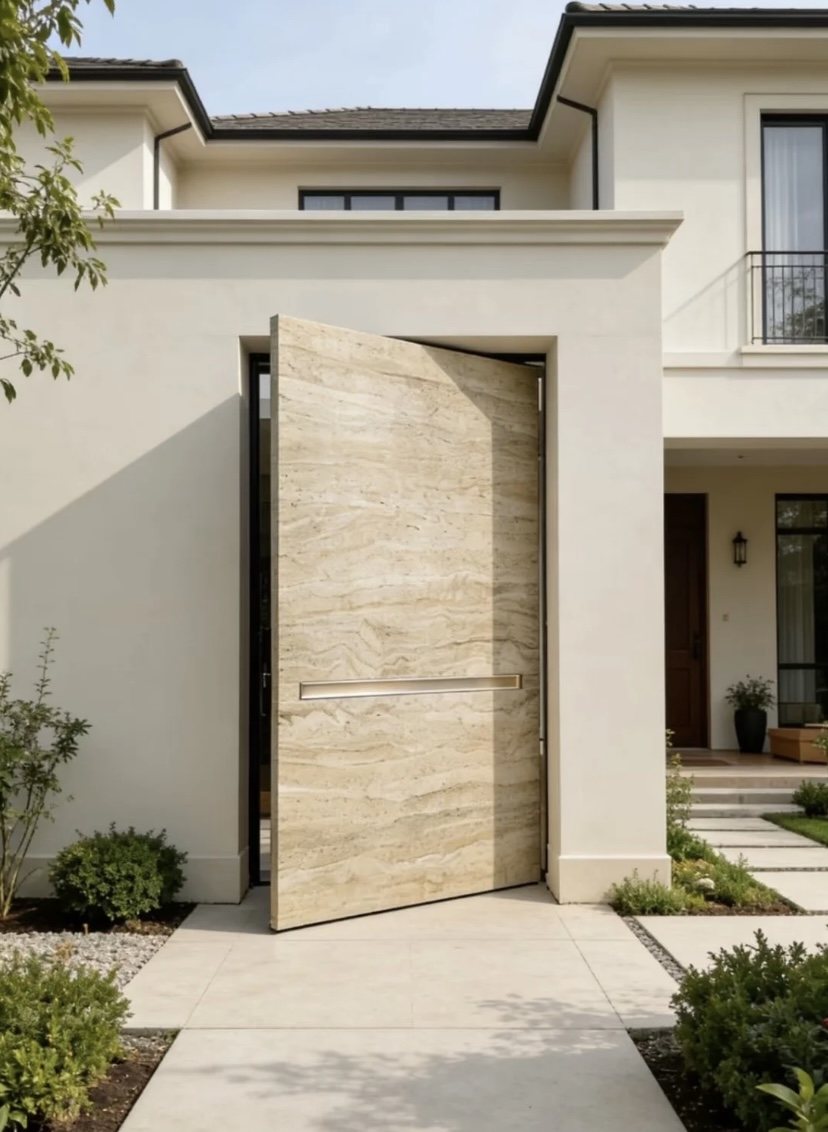
Stone-Look Is an Appearance, Not a Material Specification
A marble-like pattern does not tell you whether the door uses a decorative finish or a separate cladding panel. Dooream can discuss stone-look directions and slab-clad configurations. The actual material, substrate, thickness and fixing method need to be identified for your door.
If your architect has selected a particular stone, ceramic or slab product, send its name or datasheet with the reference. We will review that request rather than assume the pictured surface is natural marble or sintered stone.
Plan the Veining around the Moving Door
- Panel boundaries: mark which part opens and which parts are fixed. A joint in the wall is not necessarily a joint in the door.
- Pattern direction: discuss whether the vein should continue across the frame, fixed panels or adjacent cladding. Confirm the proposed layout before manufacture.
- Handle and access: coordinate the pull, lock and any reader with the pattern so they do not interrupt the intended focal point.
For a wider entrance, compare pivot doors with sidelights and double entrances with a transom.
Review the Complete Exterior Configuration
Share the project country and whether the entrance is sheltered or directly exposed to sun and rain. Surface choice, door construction, frame, seals, threshold and hardware must be reviewed together. A stone appearance alone does not establish weather, thermal, fire or security performance.
For a large pivot leaf, the selected surface is also part of the weight and hardware review. Final dimensions and the complete build-up determine the configuration; a reference photograph is not evidence of a maximum door size or pivot capacity.
Confirm the Surface with a Sample
Use a physical sample to review colour and texture alongside the facade material. Ask whether it represents the actual proposed door surface. Sample size, cost and timing are confirmed separately. Compare the full entrance-door finish collection or a warmer wood-grain direction.
Stone-Look Pivot Door Questions
Can you work from a reference image without final drawings?
Yes. A reference image and a brief description of the project are enough to begin the design conversation. Opening dimensions, quantity, materials and lock requirements are confirmed as the quotation develops.
Can the door match the adjacent wall panels?
We can review the colour, pattern direction and panel divisions together. Send the facade elevation or material reference. The proposed surface and its relationship to the wall should be confirmed with samples and drawings, not assumed from screen colours.
Is a stone-look pivot door made from natural stone?
Not necessarily. Stone-look describes a visual effect. The quotation and approved specification should identify the actual surface material; the images here do not certify natural-stone construction.
Can a professional buyer start with one custom door?
Yes. A dealer, architect, contractor or developer can discuss a single custom door or sample order. Configuration, price and delivery scope are reviewed for that order.
Bring Your Entrance Reference
Send Alan the image and tell him what you want to retain: the surface, panel proportions or handle. Detailed drawings can follow. Browse the custom pivot-door collection for other design directions.